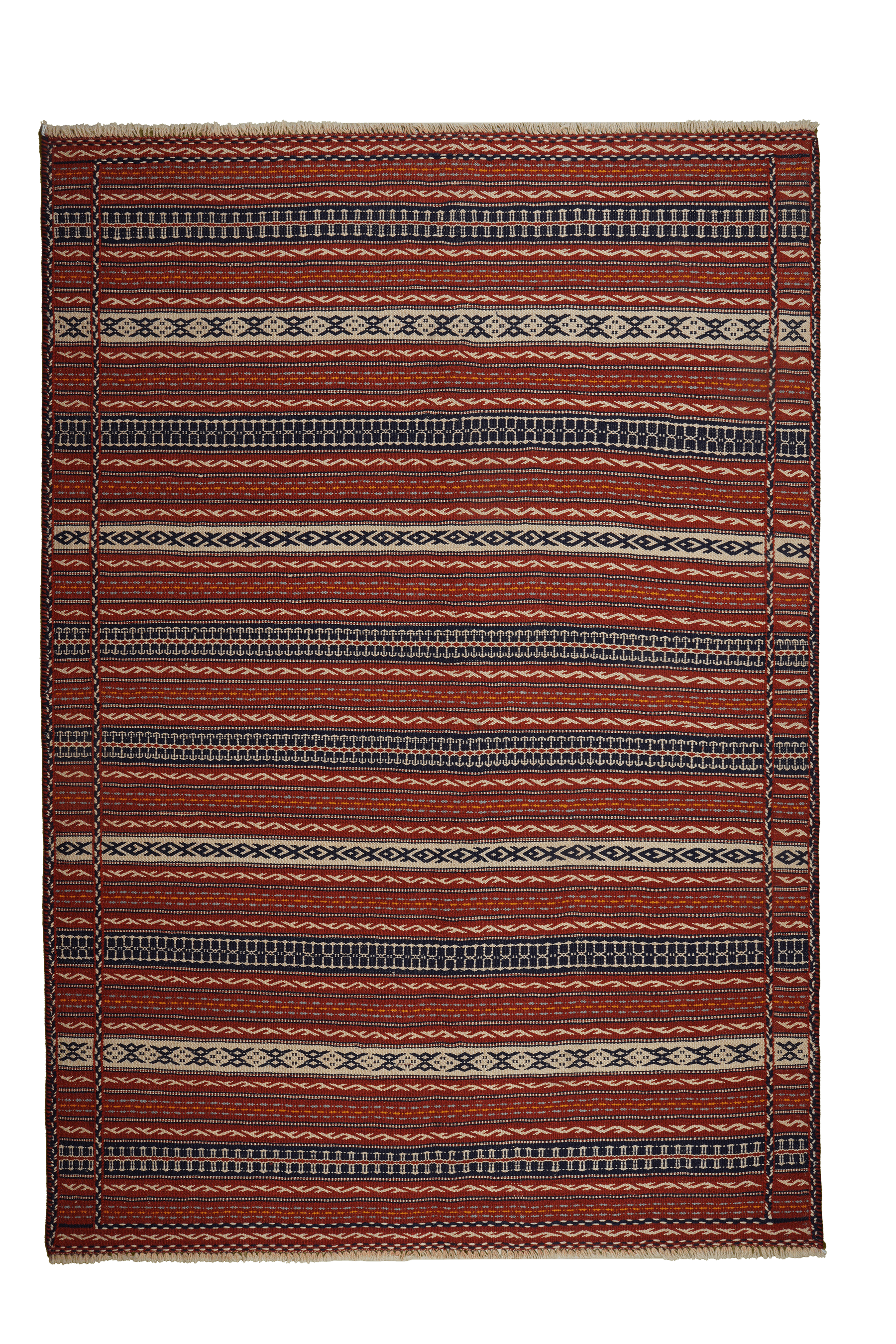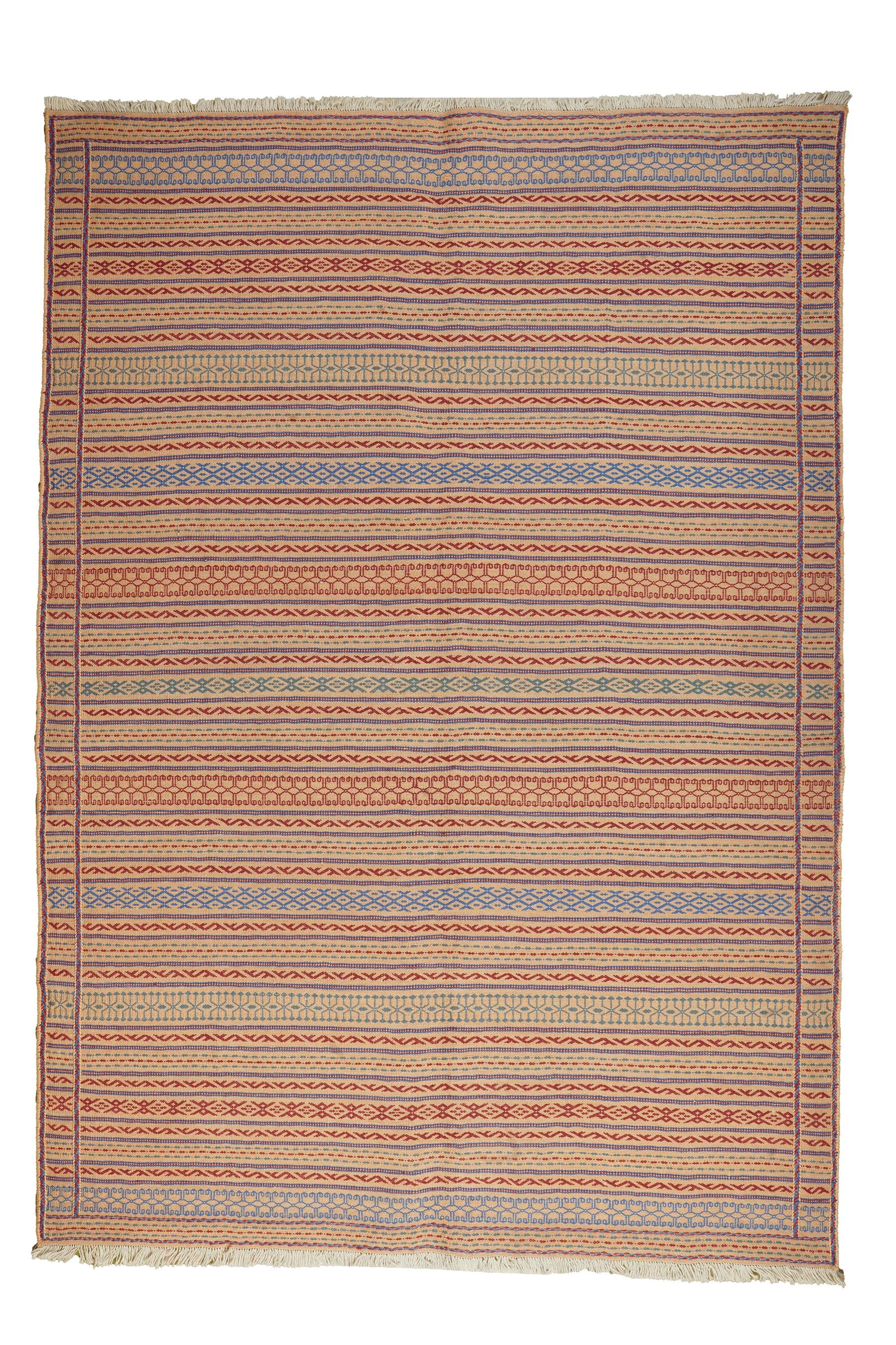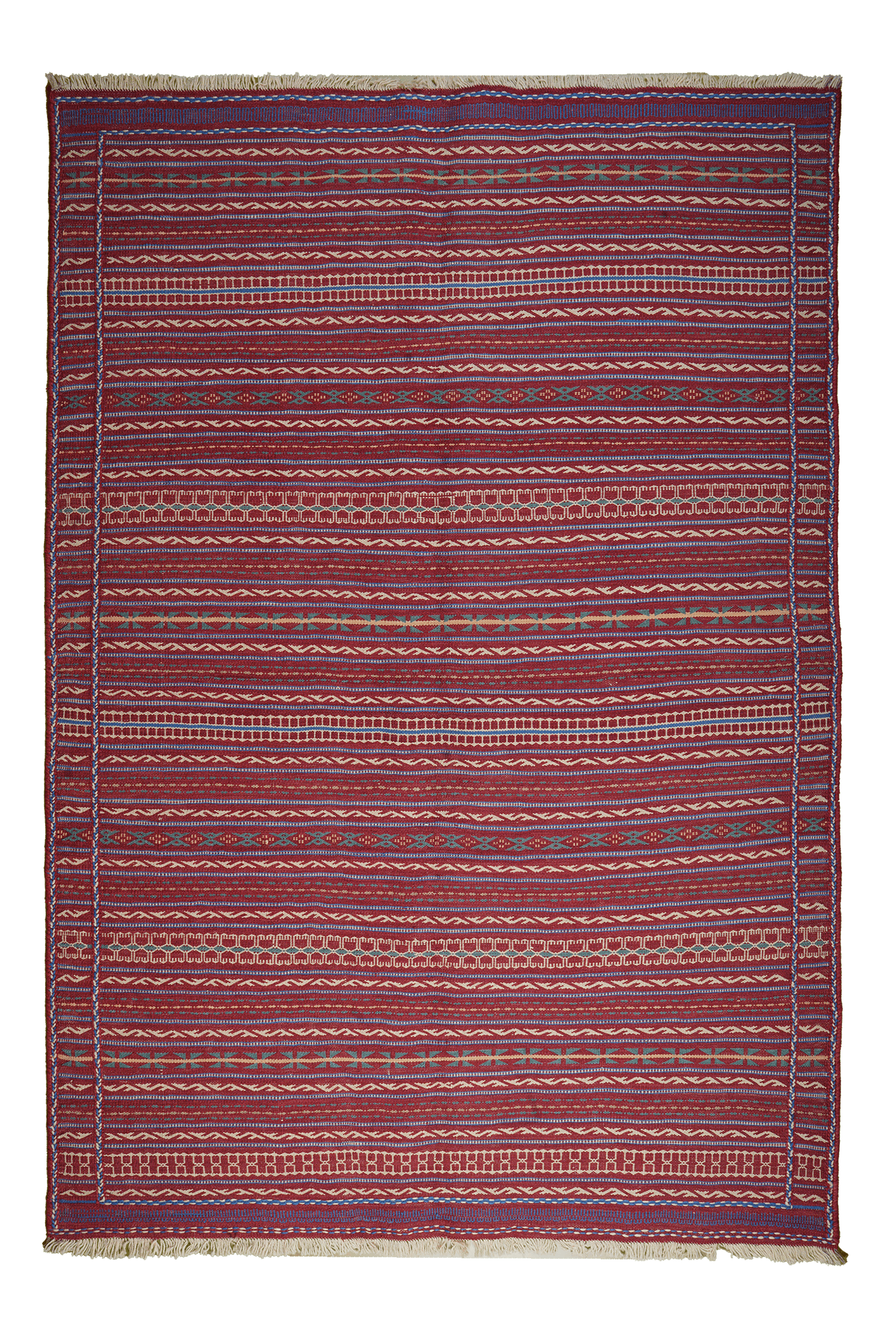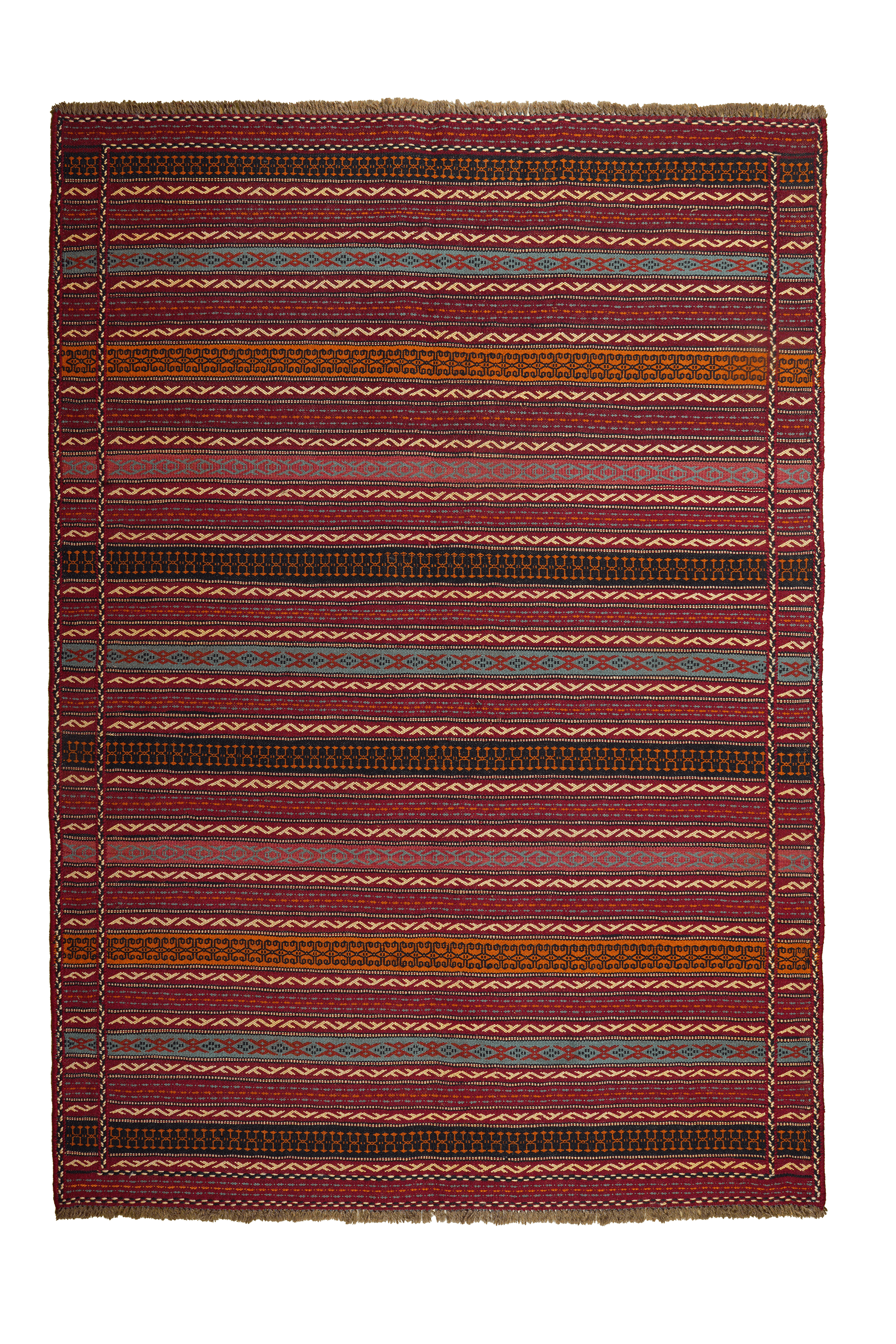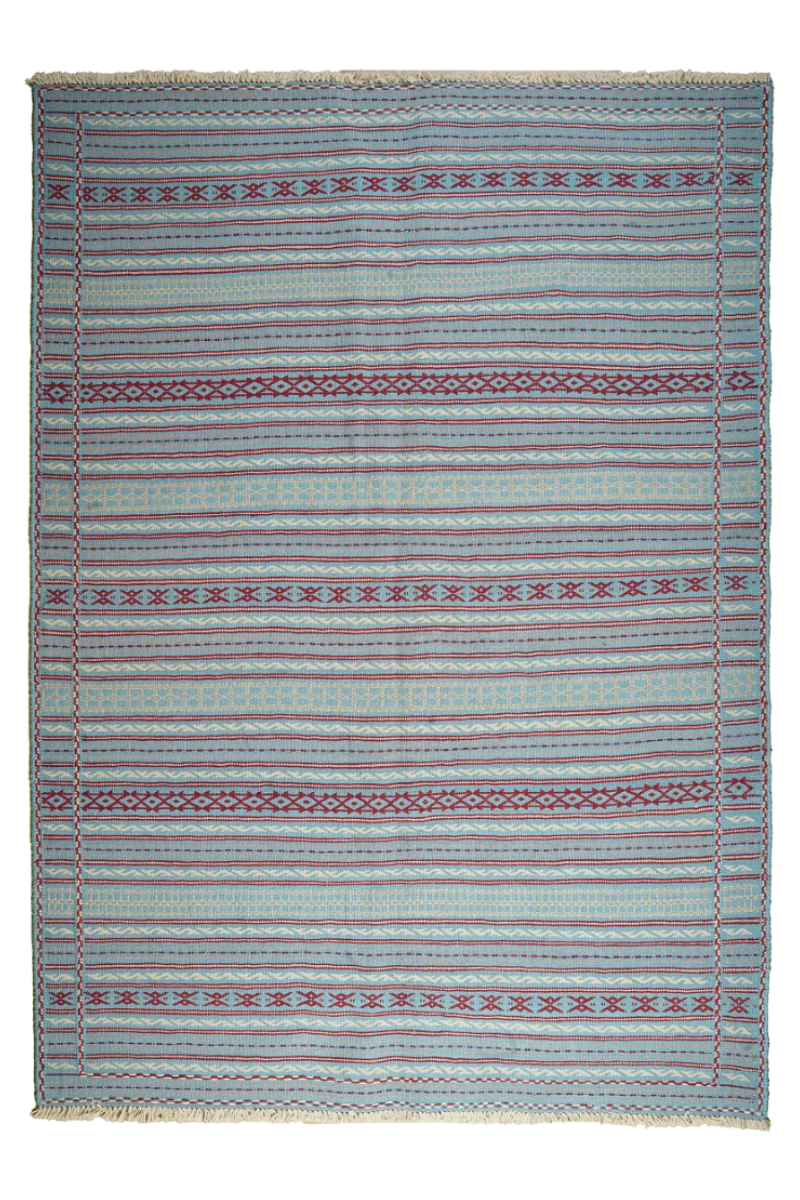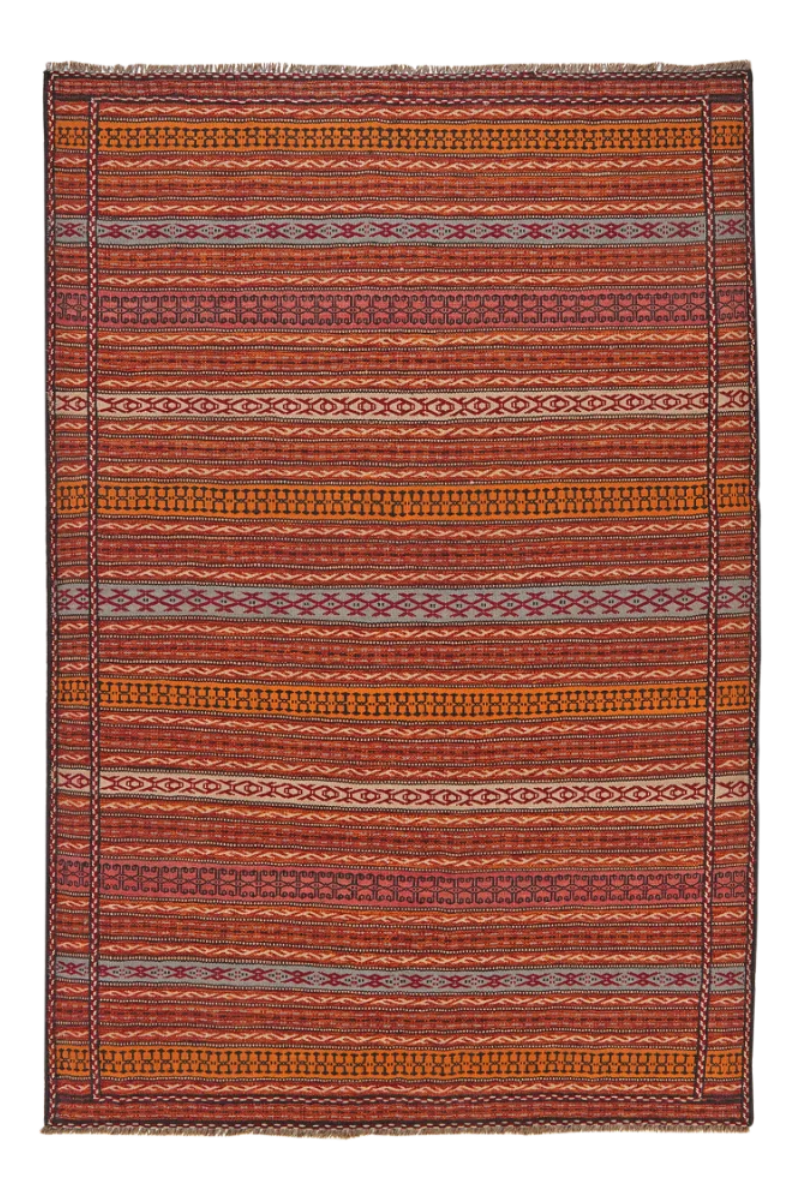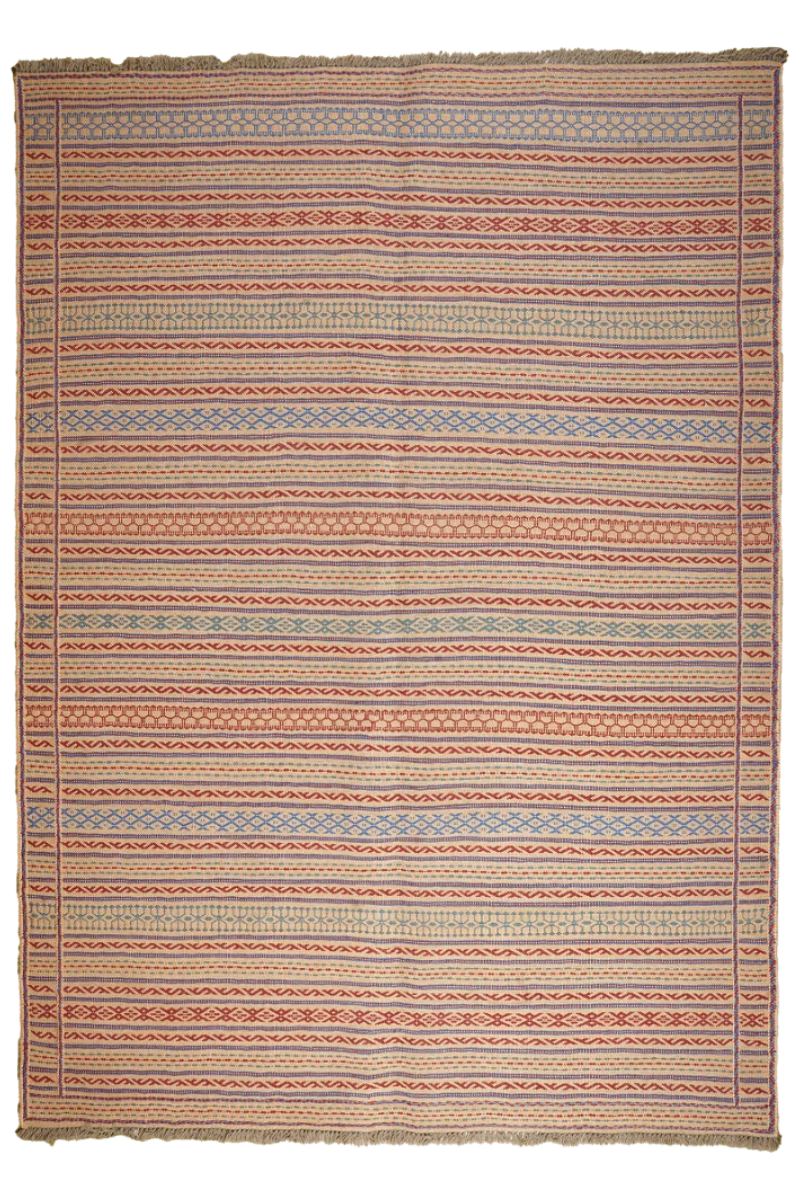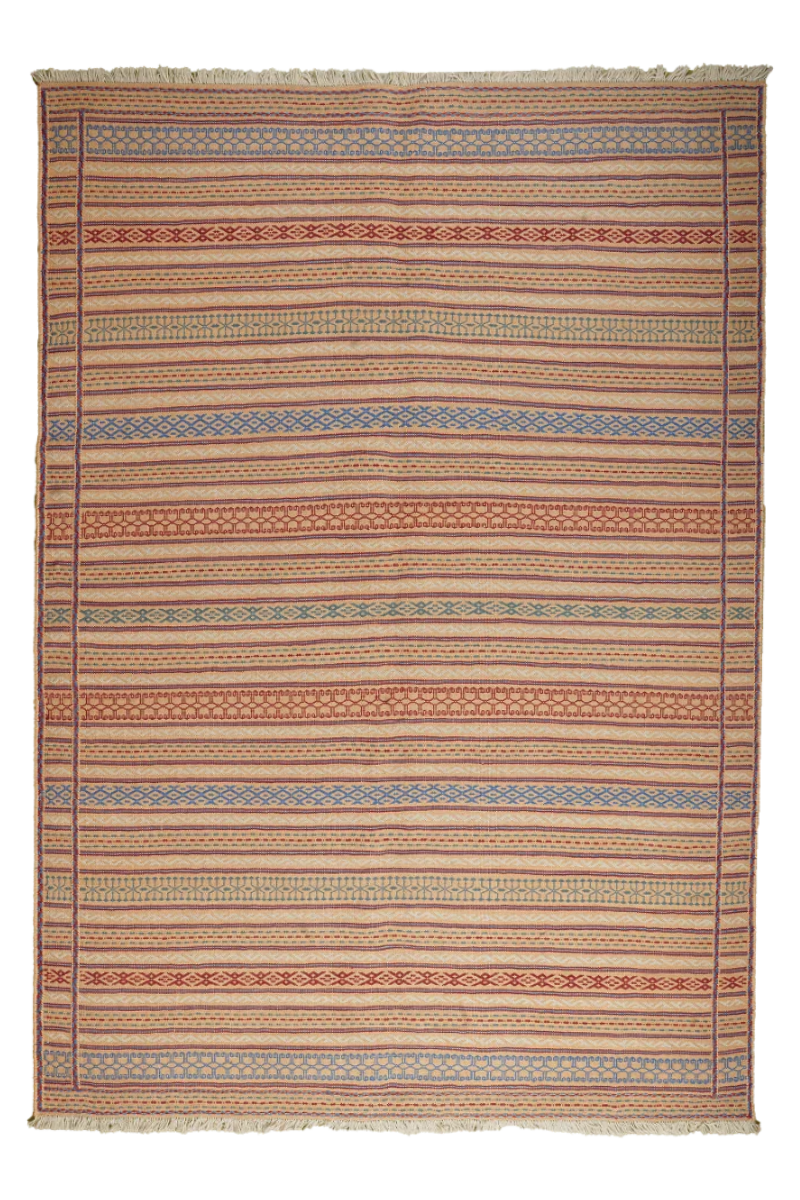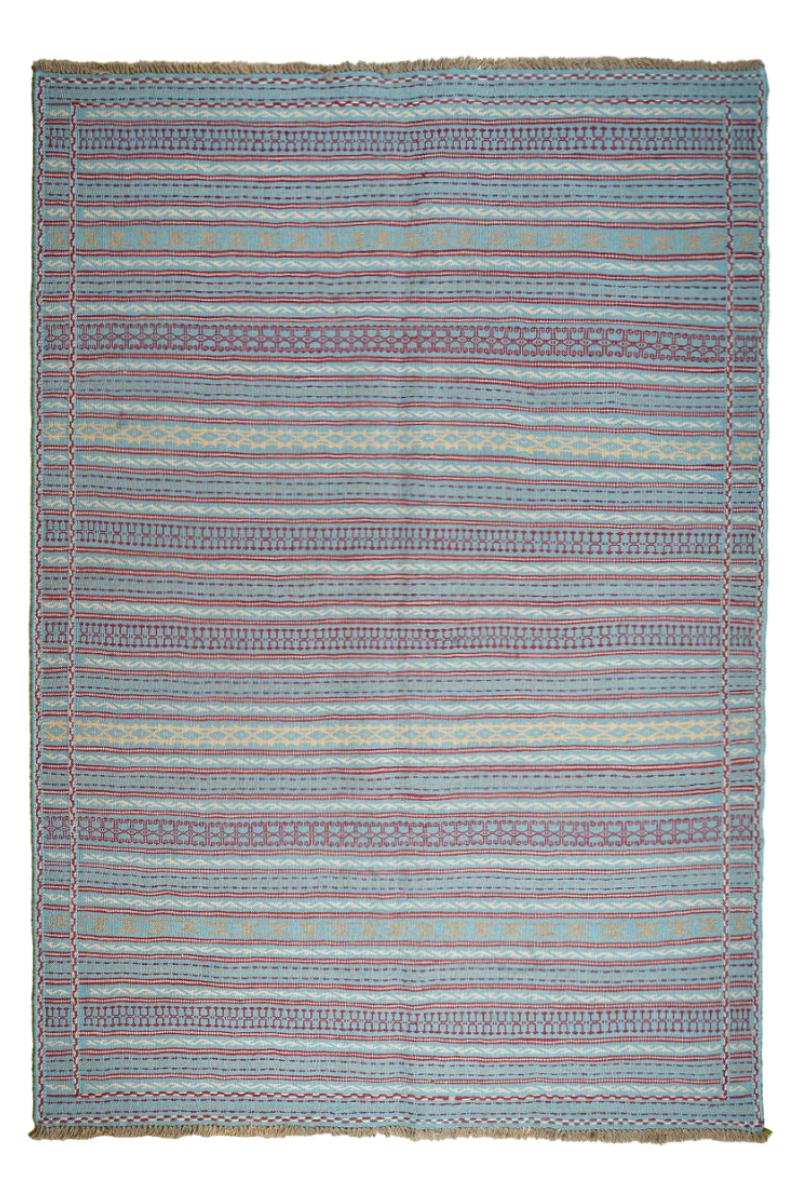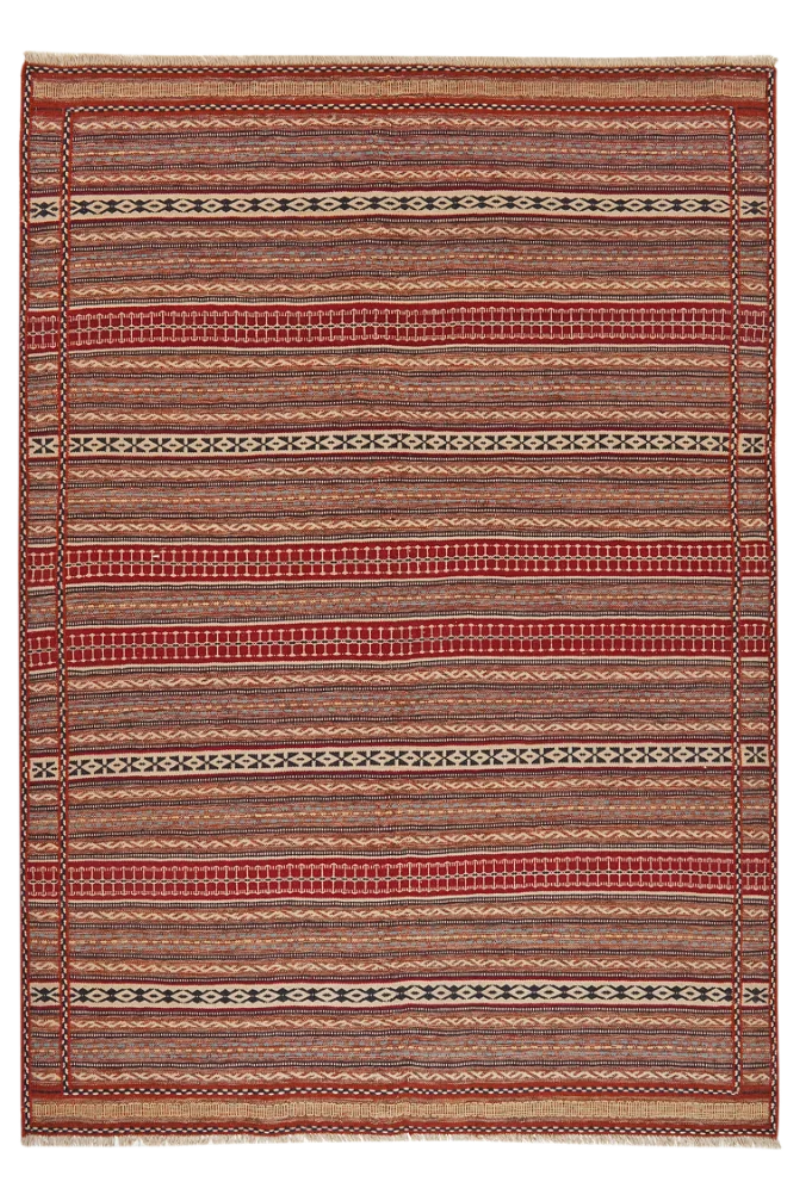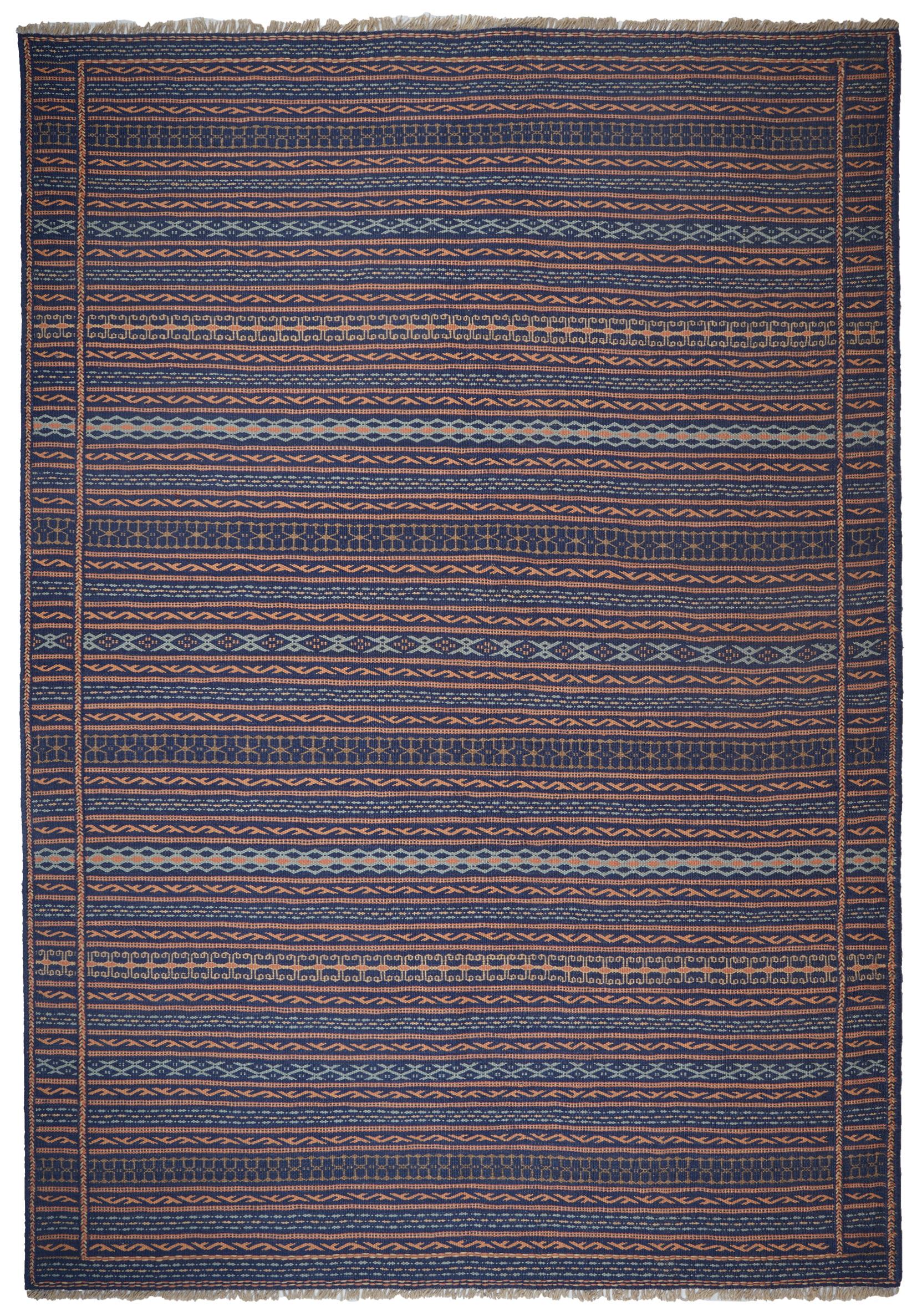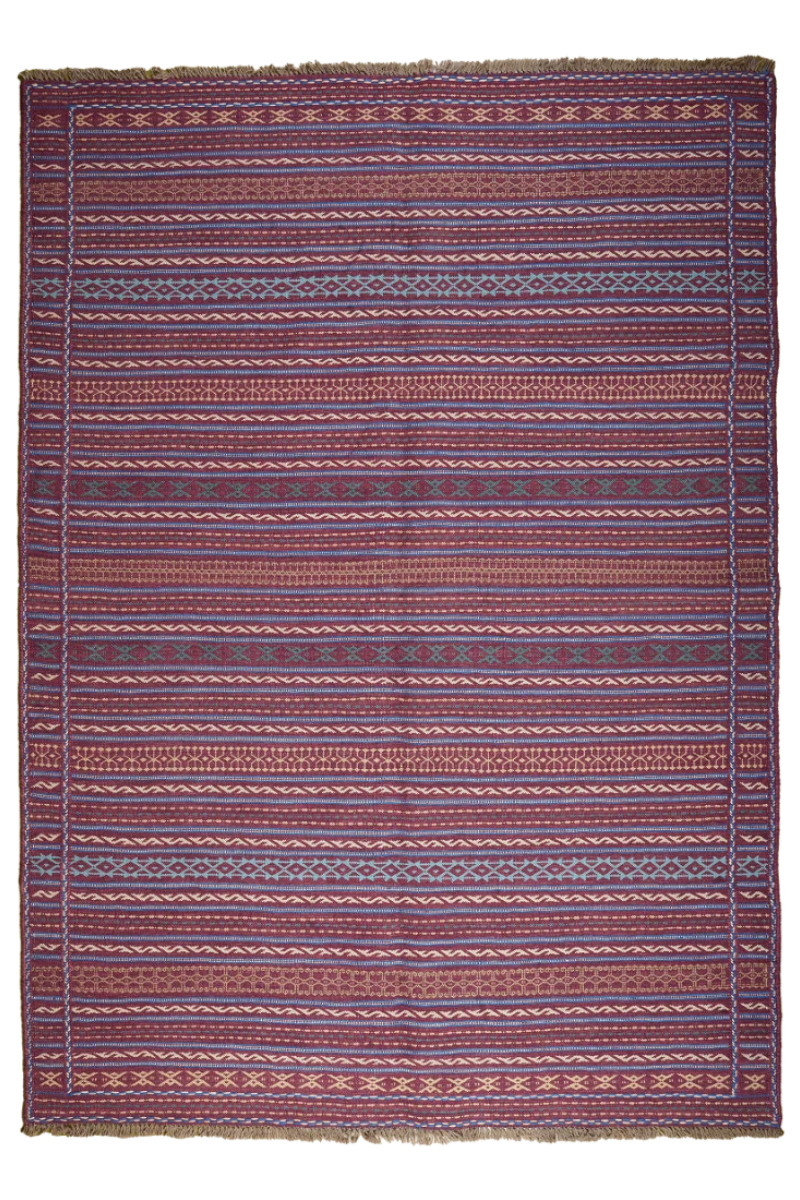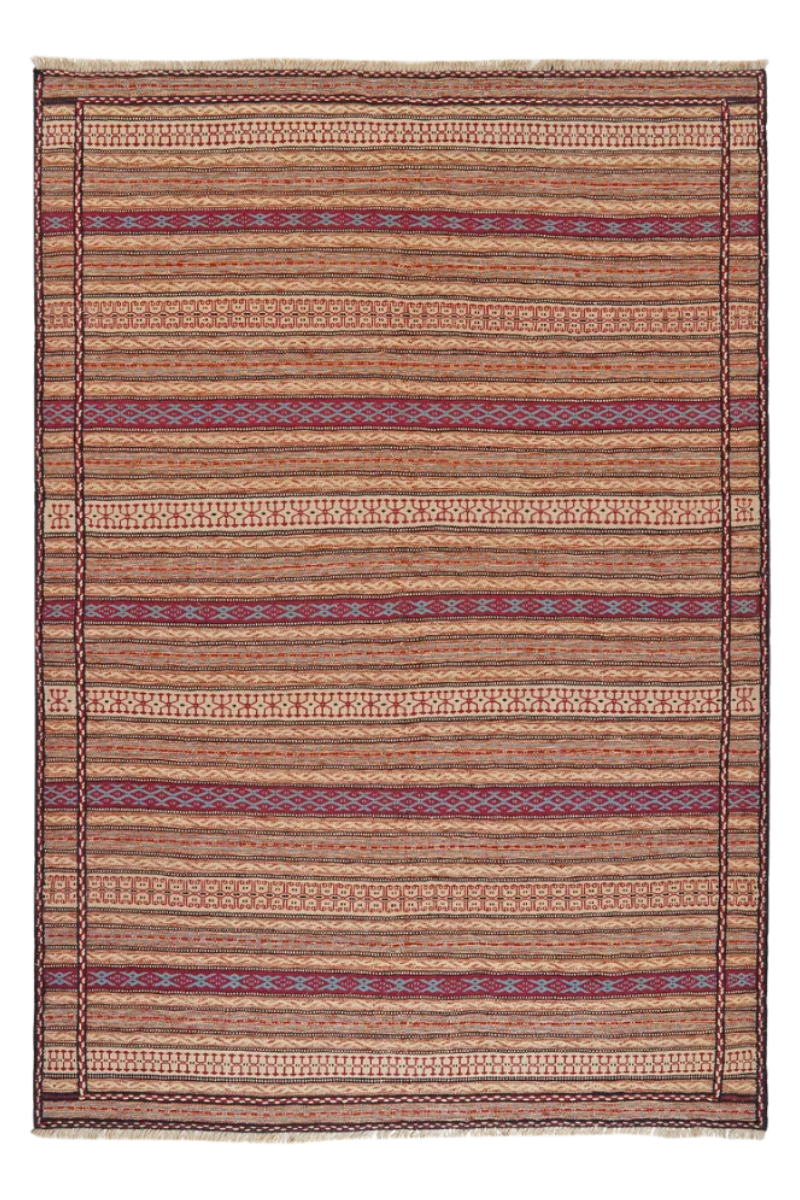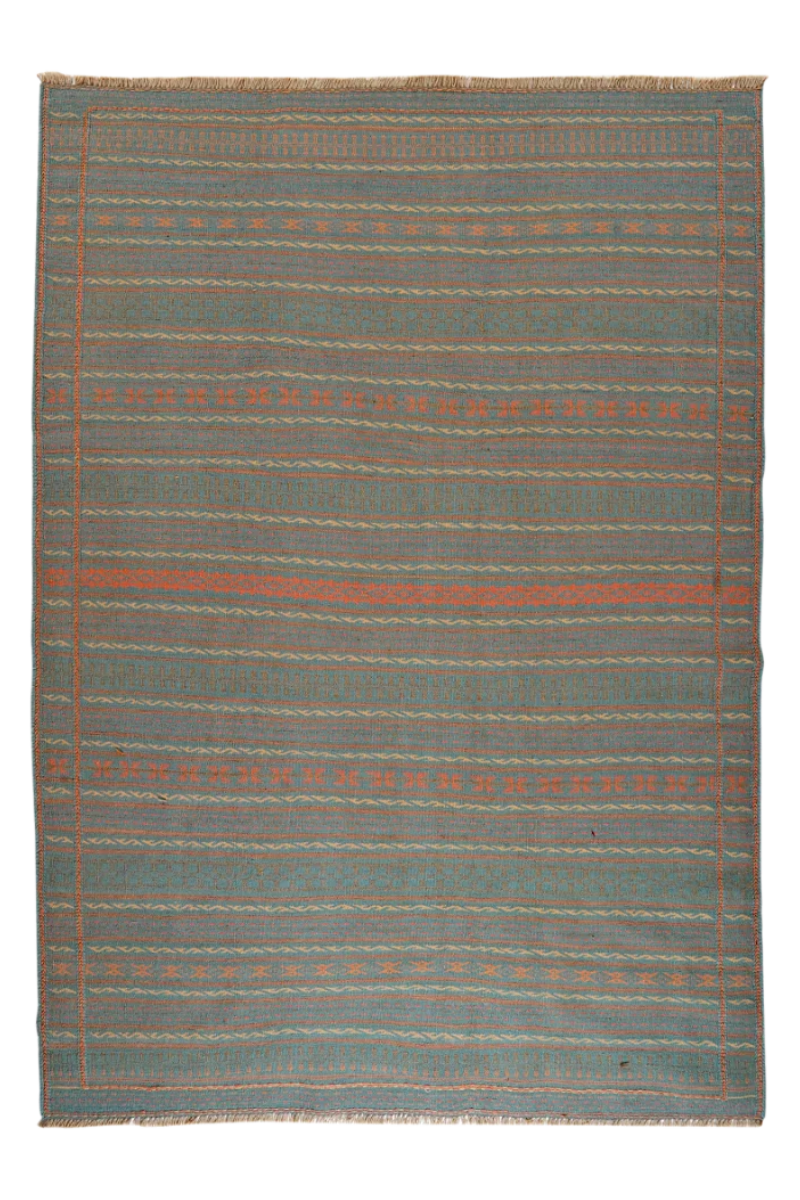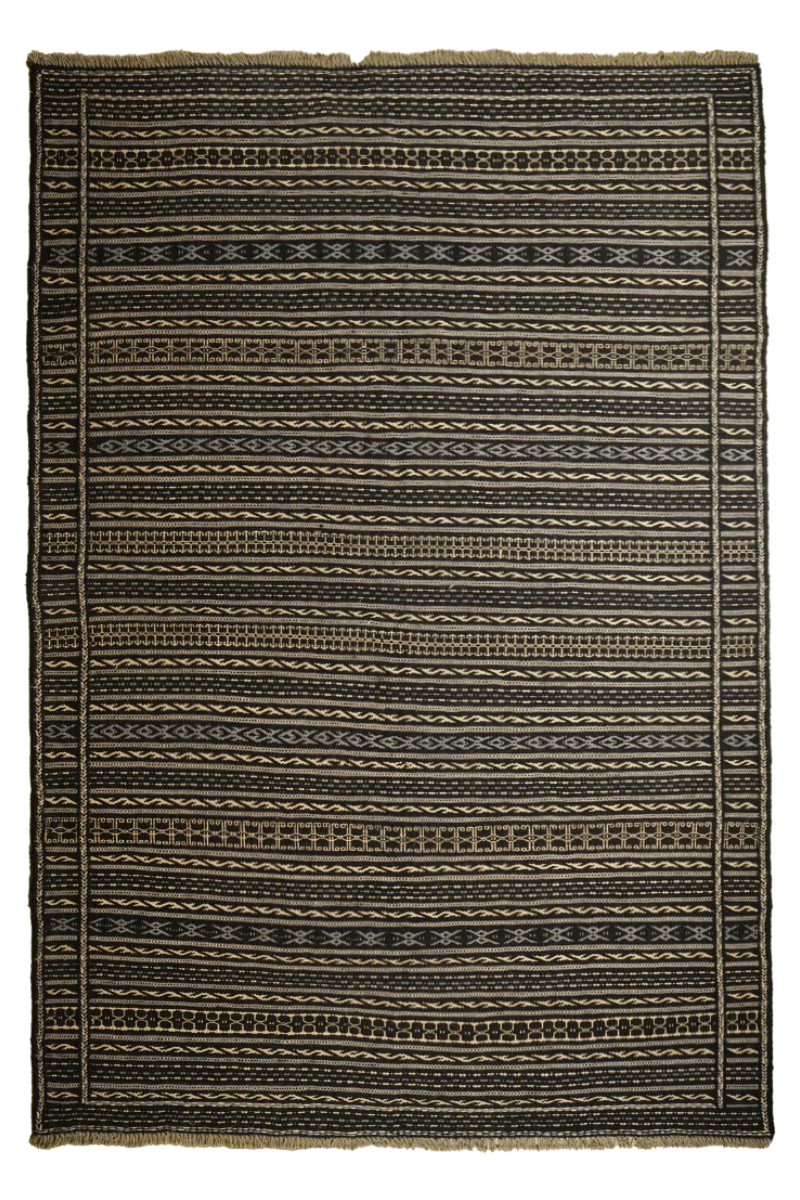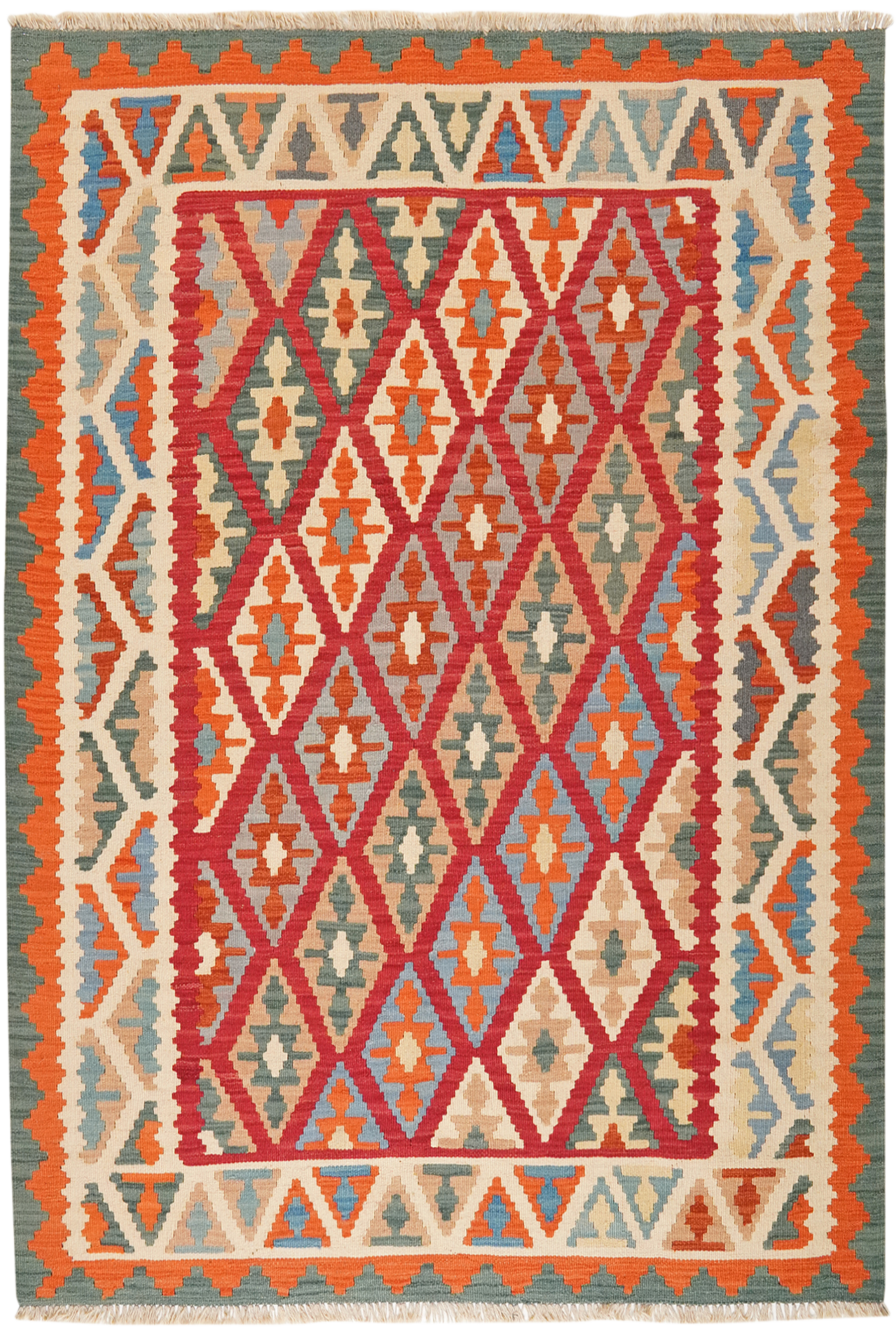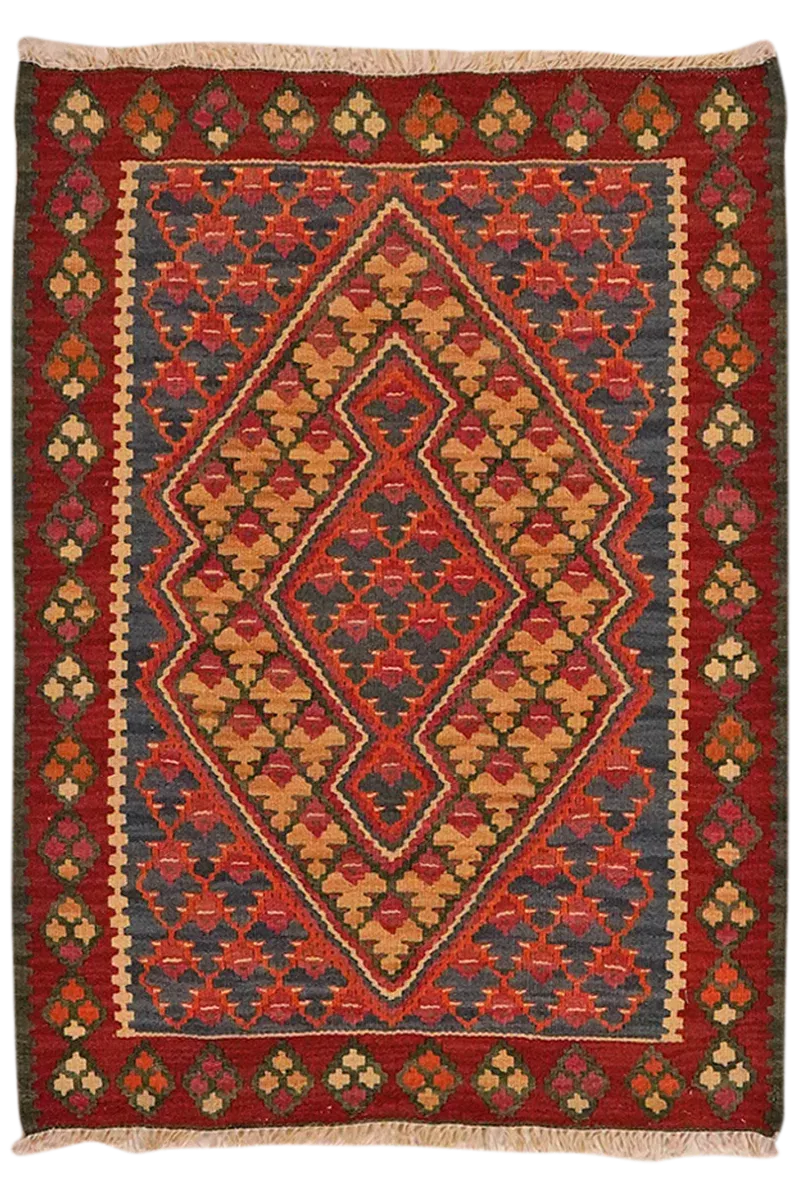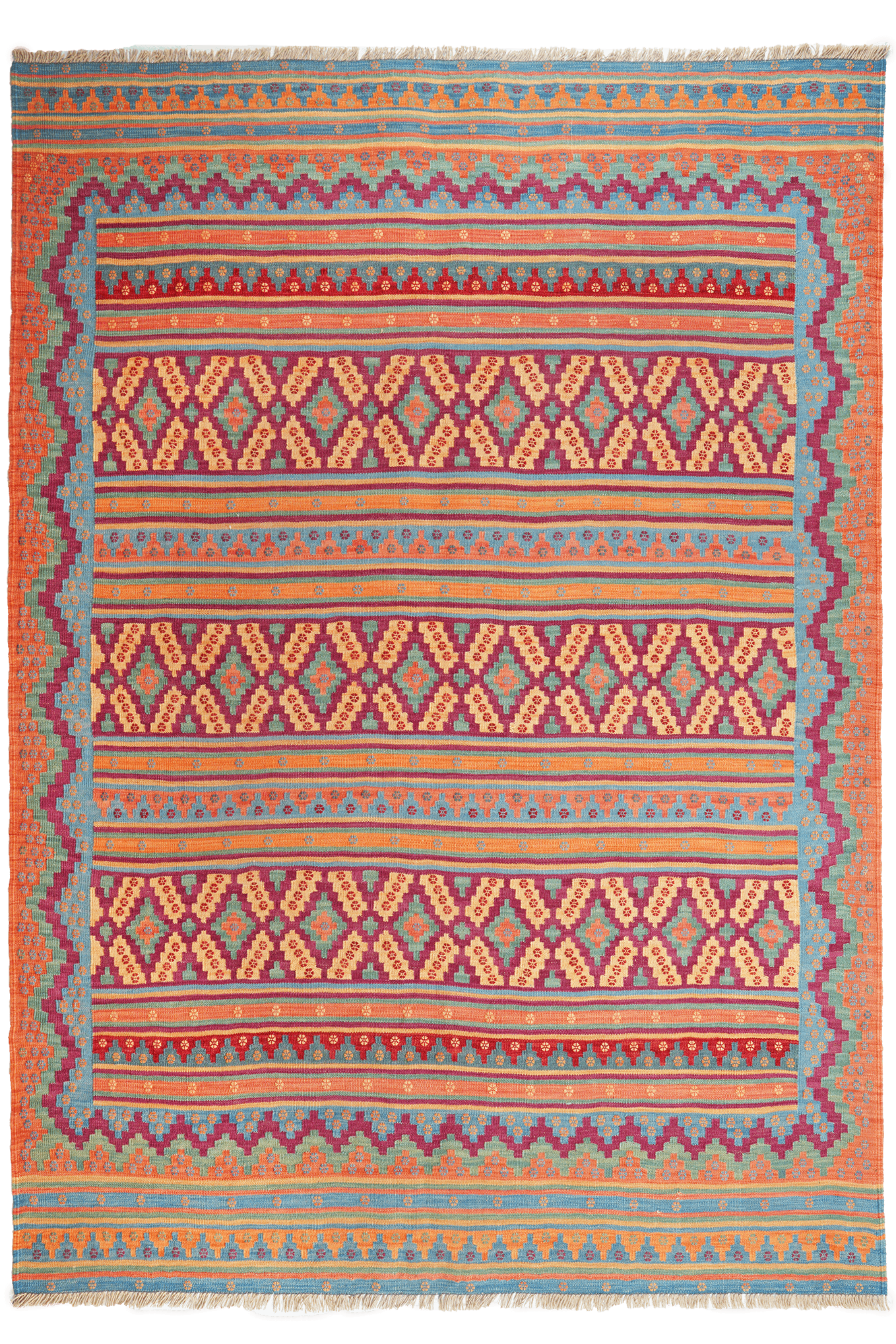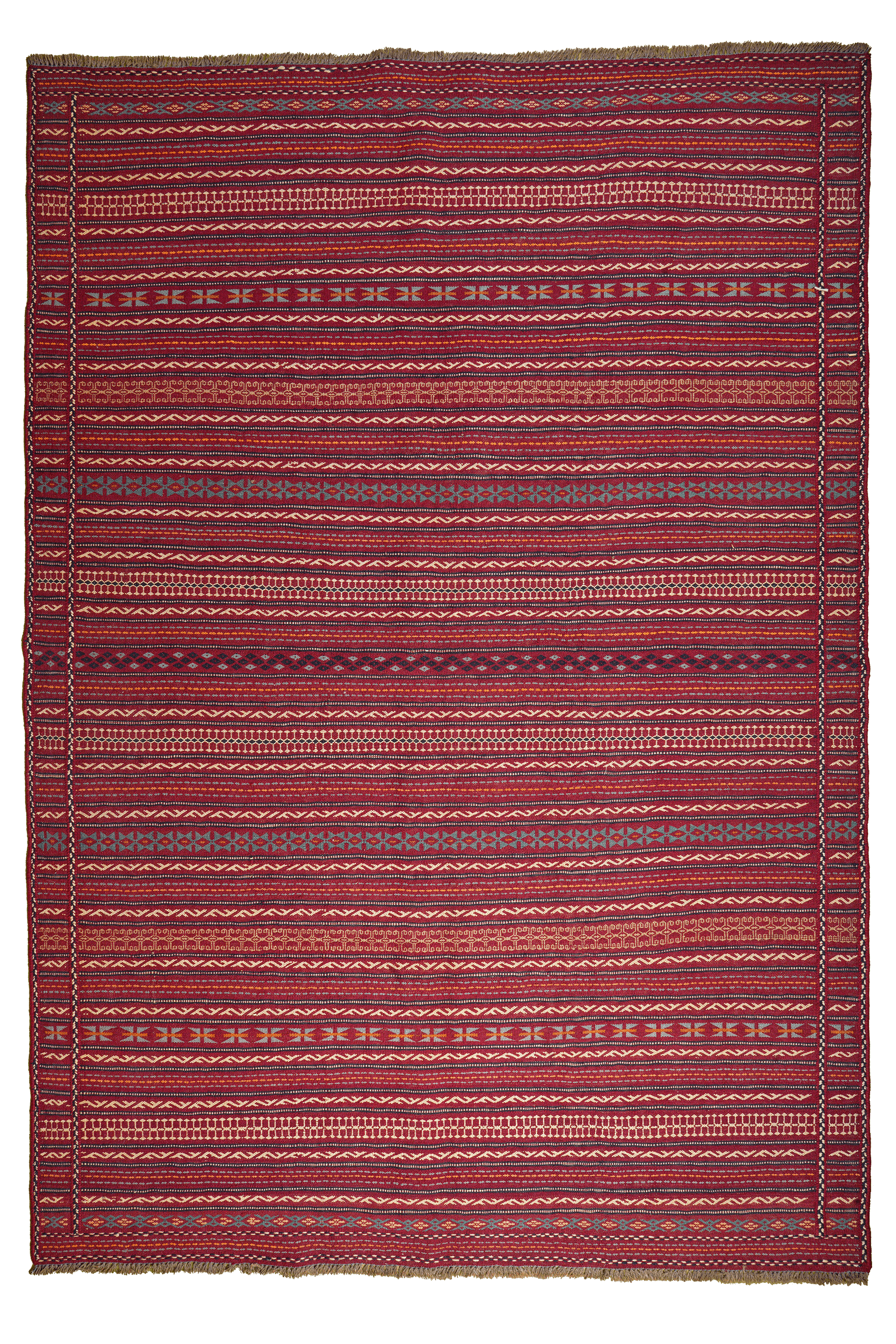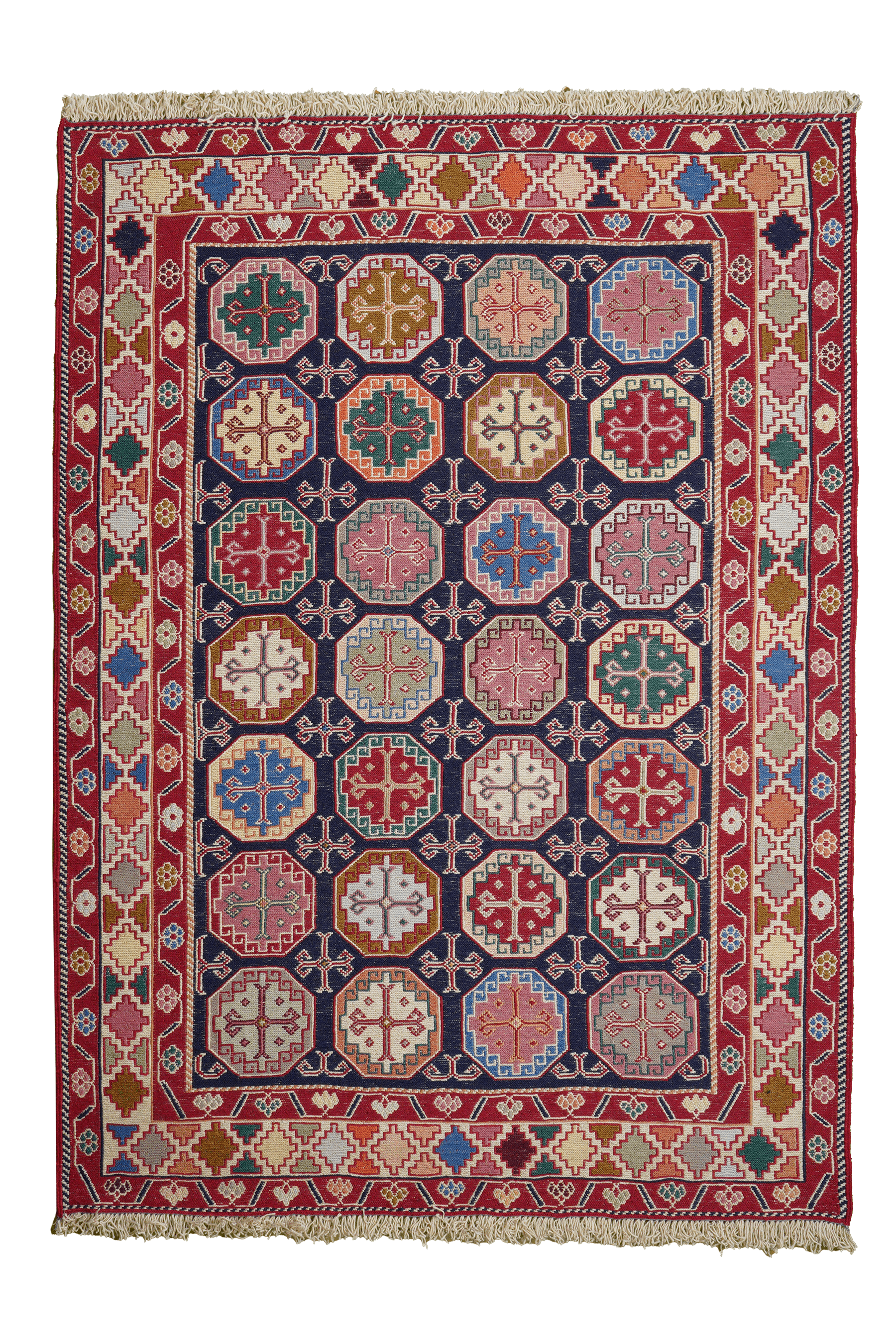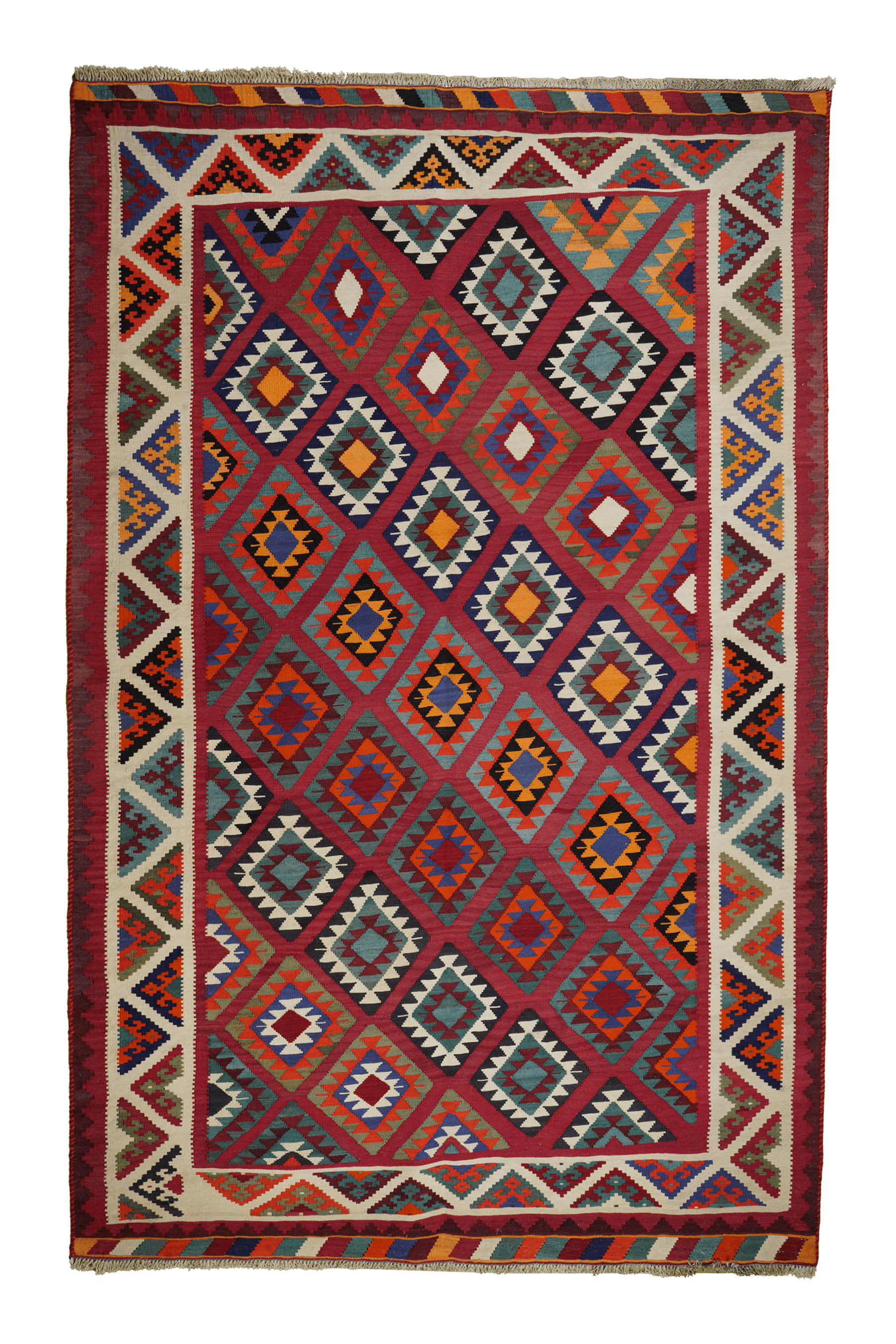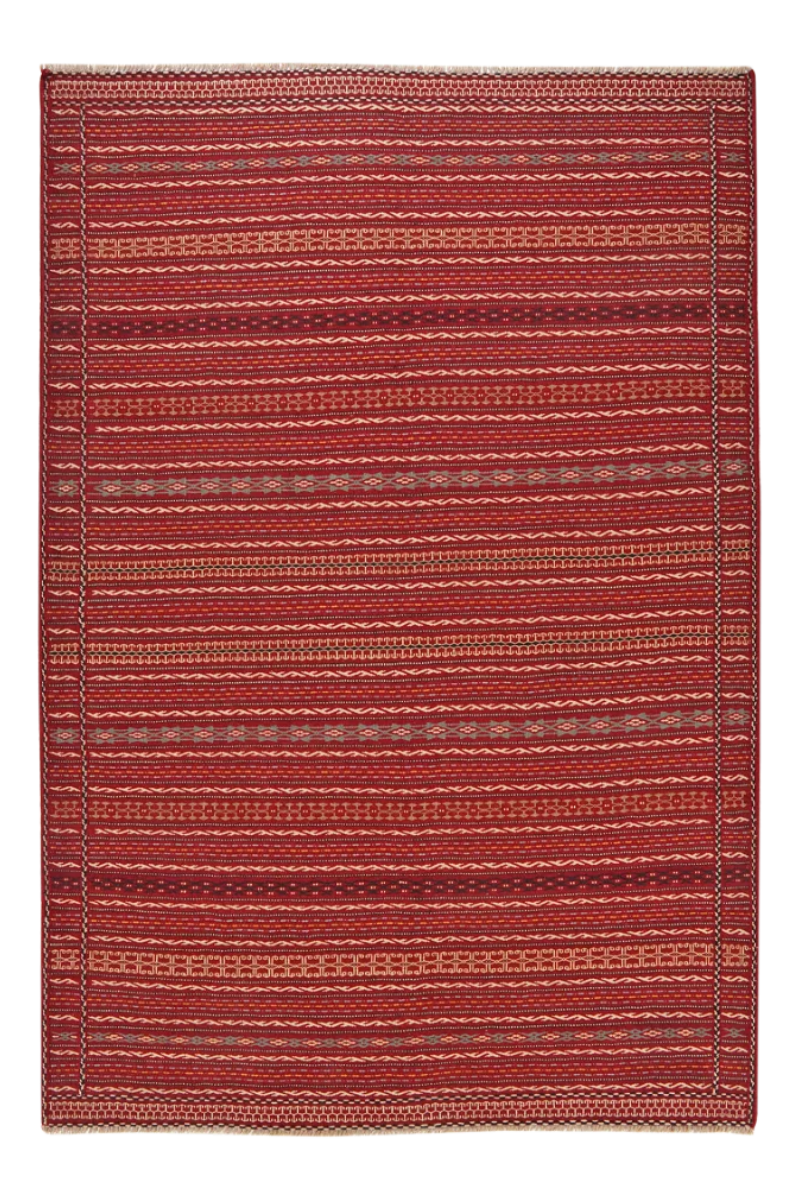
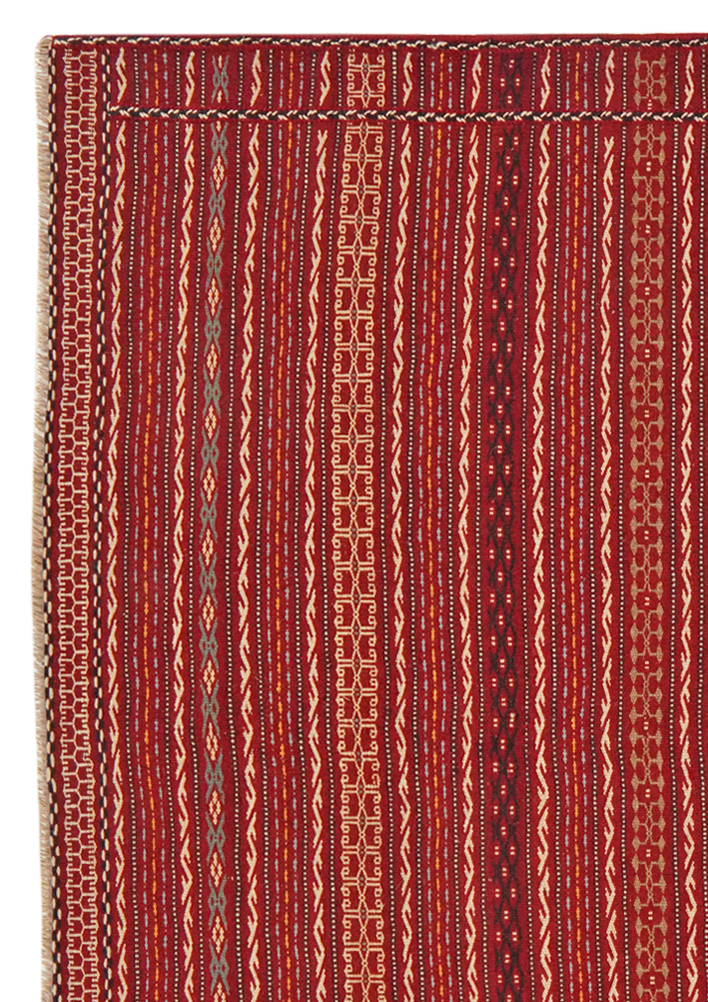
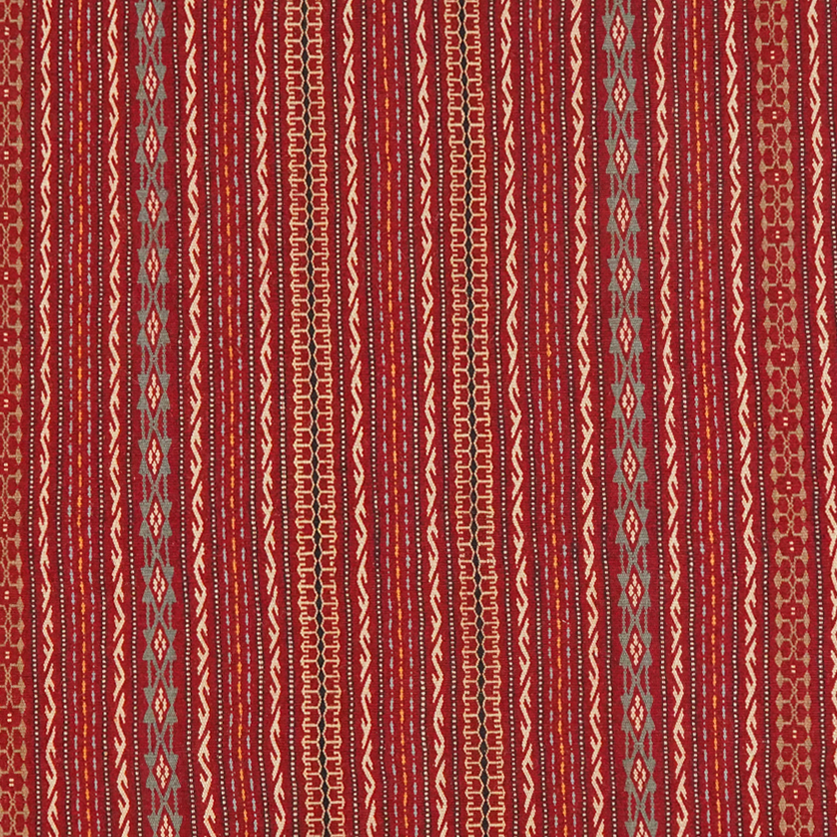
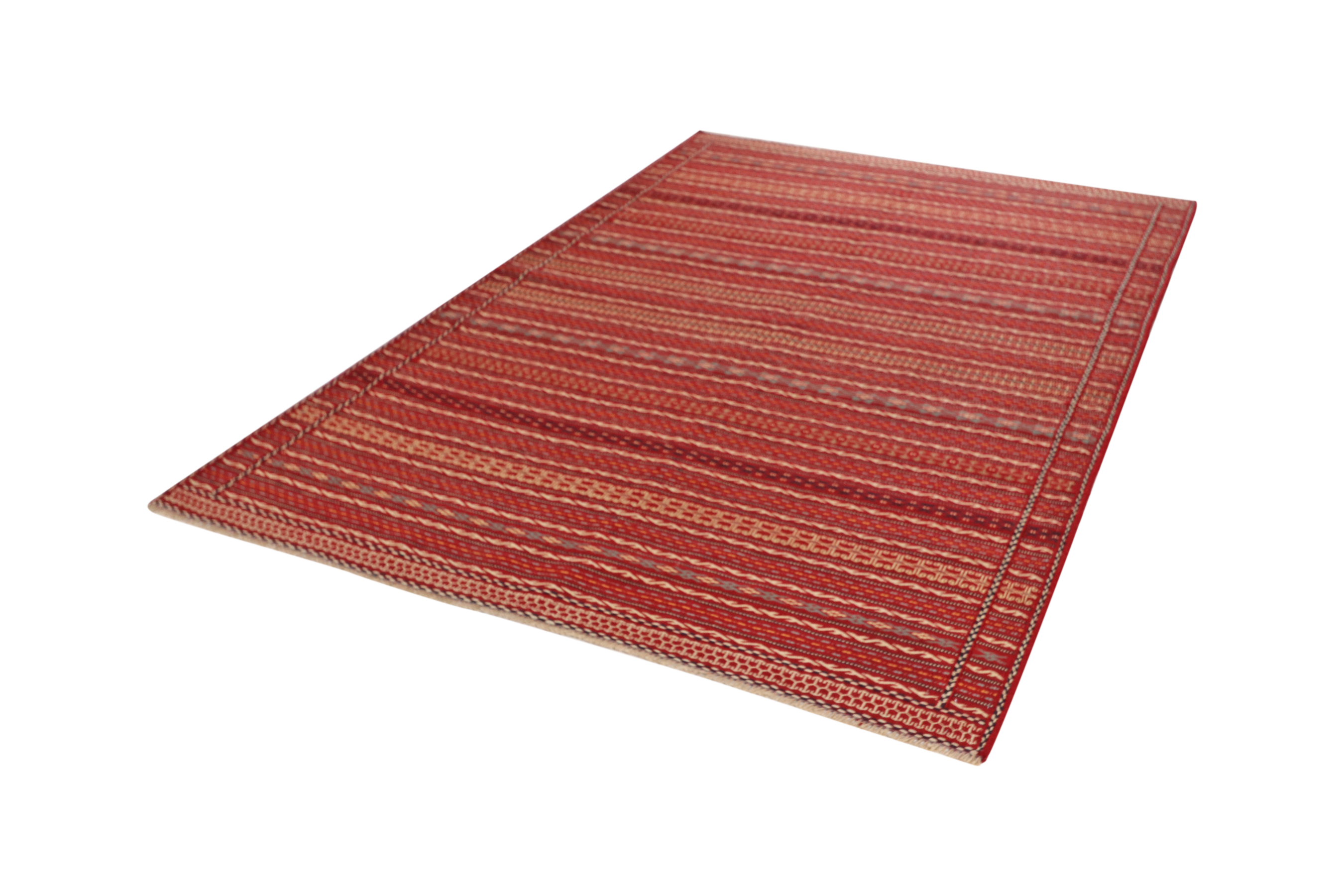
Kelim Kordi
| Kategorie: | Kelim Kordi |
|---|---|
| Length (in cm): | 241 |
| Width (in cm): | 166 |
| Sqm: | 4 |
| Pile (in mm): | approx. 5 |
| Weight (in kg): | ca. 6 |
| Knots/m²: | Kelim, Kelim |
| Sizecode: | 170x240 |
| Color: | beige |
| border: | Red, beige |
| Pattern: | Streifen |
| Usable area: | 100% virgin wool |
| Backing fabric: | 100% virgin wool |
| Type of manufacture: | Handgefertigt |
Rugtales Sumak
Handwoven treasures from nomadic traditions. Colorful, vibrant, and durable. These flatweaves are creations of art made on traditional looms. Whether as a rug, wall hanging, or decoration - Kilims add a touch of lived culture and personal charm to any space.

Certifications
It is incredibly important to us to financially and socially support the countries from which we source our rugs
Kelim is a flat weave created by interlocking warp and weft.
Sumak is also flat, but thicker, stronger, and more textured because the yarn is wrapped, not interlocked. Sumak feels more substantial and durable.
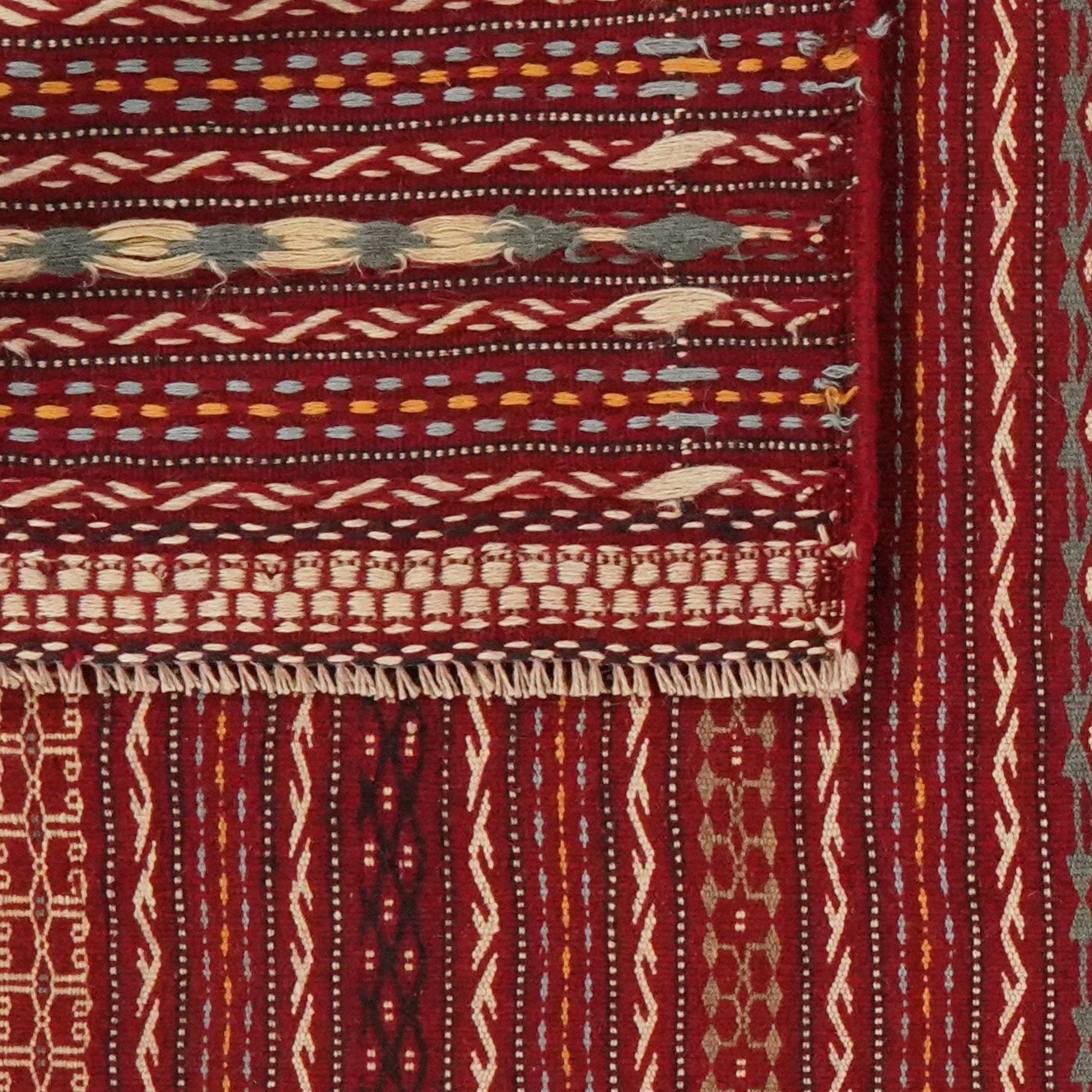
“Kelim Sumak” is a category name used in Europe to show that Sumak rugs belong to the Kelim family but have a different weaving structure. It helps customers understand they are flat-woven but not classic Kelims. Usually Sumak Kelim have an embroidered front and a differentiated back, which differentiates them from other Kelim.
Yes. Genuine Sumak rugs are handwoven and usually crafted by tribal or village weavers in Iran, the Caucasus, and parts of Turkey.
Sumak weaving uses an extra wrapping thread on top of the base weave, creating a heavier, sturdier, and more textured fabric.
Very. Sumak rugs are known for strength and longevity. They are perfect for living rooms, hallways, and dining areas because they don’t shed and stay flat.
Many traditional Sumak pieces use natural vegetable dyes that give earthy, rich colors. Newer ones may use a mix of natural and modern dyes depending on the workshop.
This is part of the authentic weaving technique. The wrapped yarn creates “floats” on the back — a key sign the rug is real Sumak and not machine-made.
Typical motifs include diamonds, hooked medallions, tribal animals, protection symbols, and geometric borders. These designs come from tribes like Shahsavan, Qashqai, and Kurdish groups.
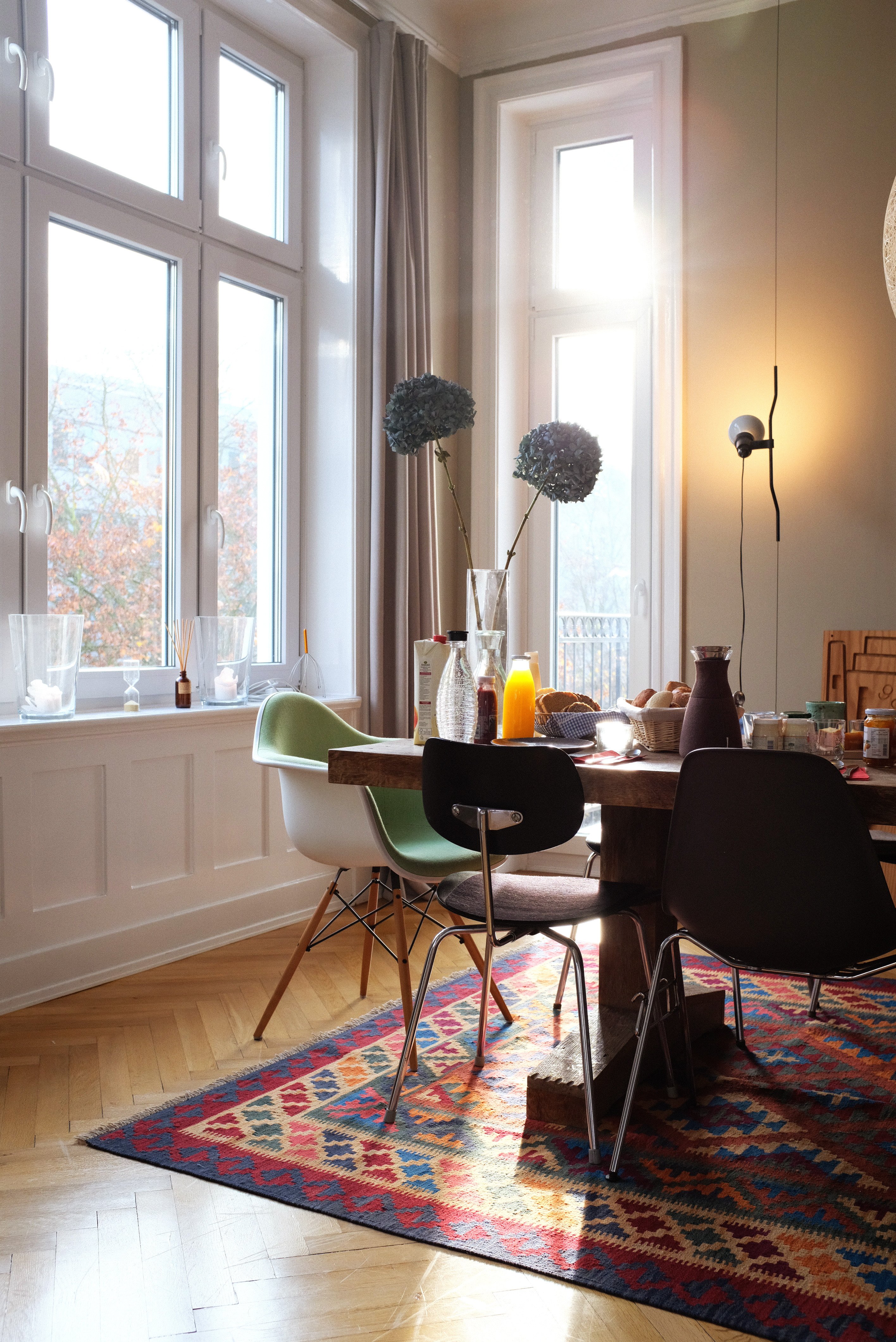
Yes. Sumak rugs have bold tribal patterns and a textured look that fits perfectly with Scandinavian, boho, rustic, and modern minimalist interiors.
Sumak weaving is more complex and time-consuming. The extra wrapping technique requires skilled artisans and produces a thicker, more durable textile — which increases the cost.