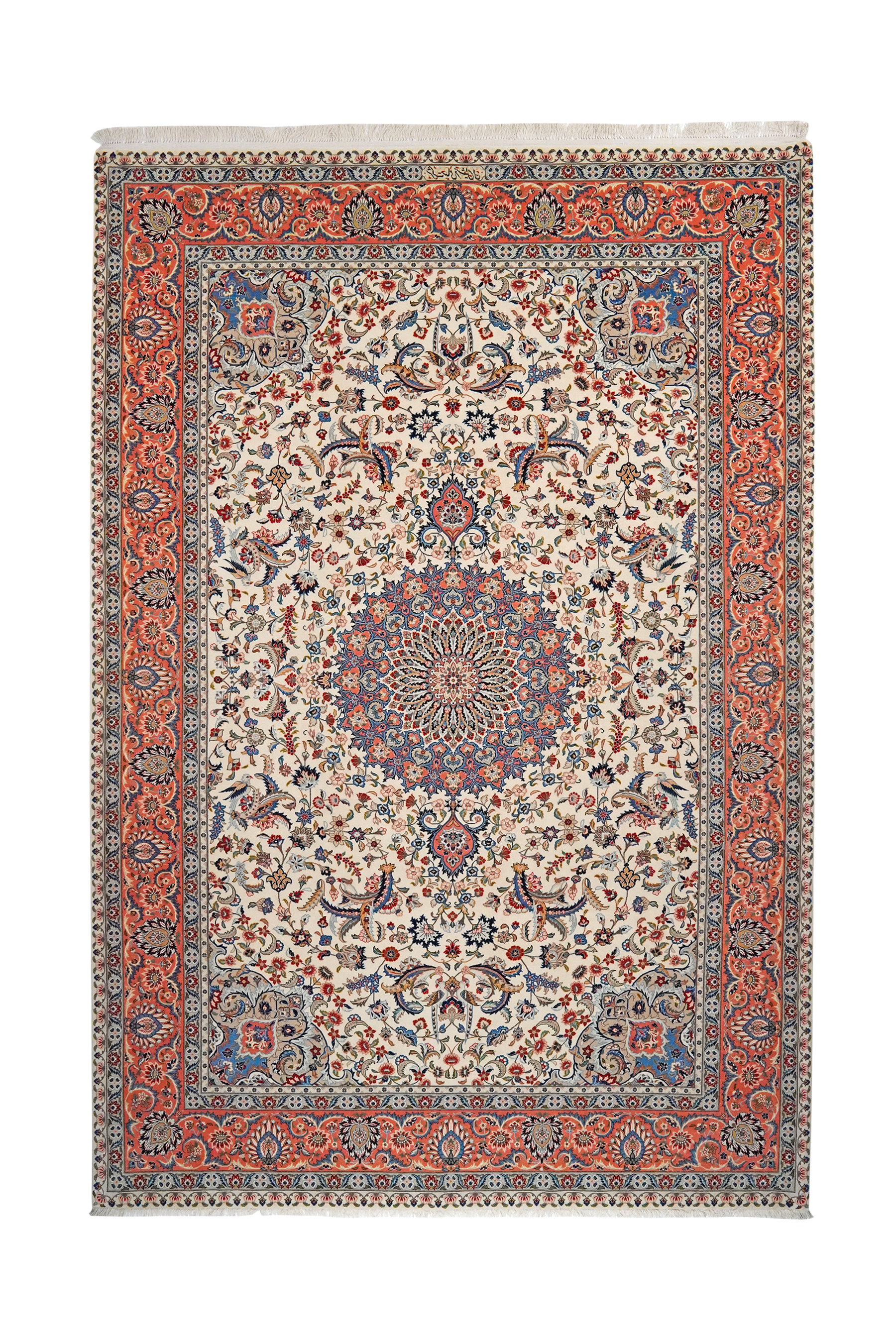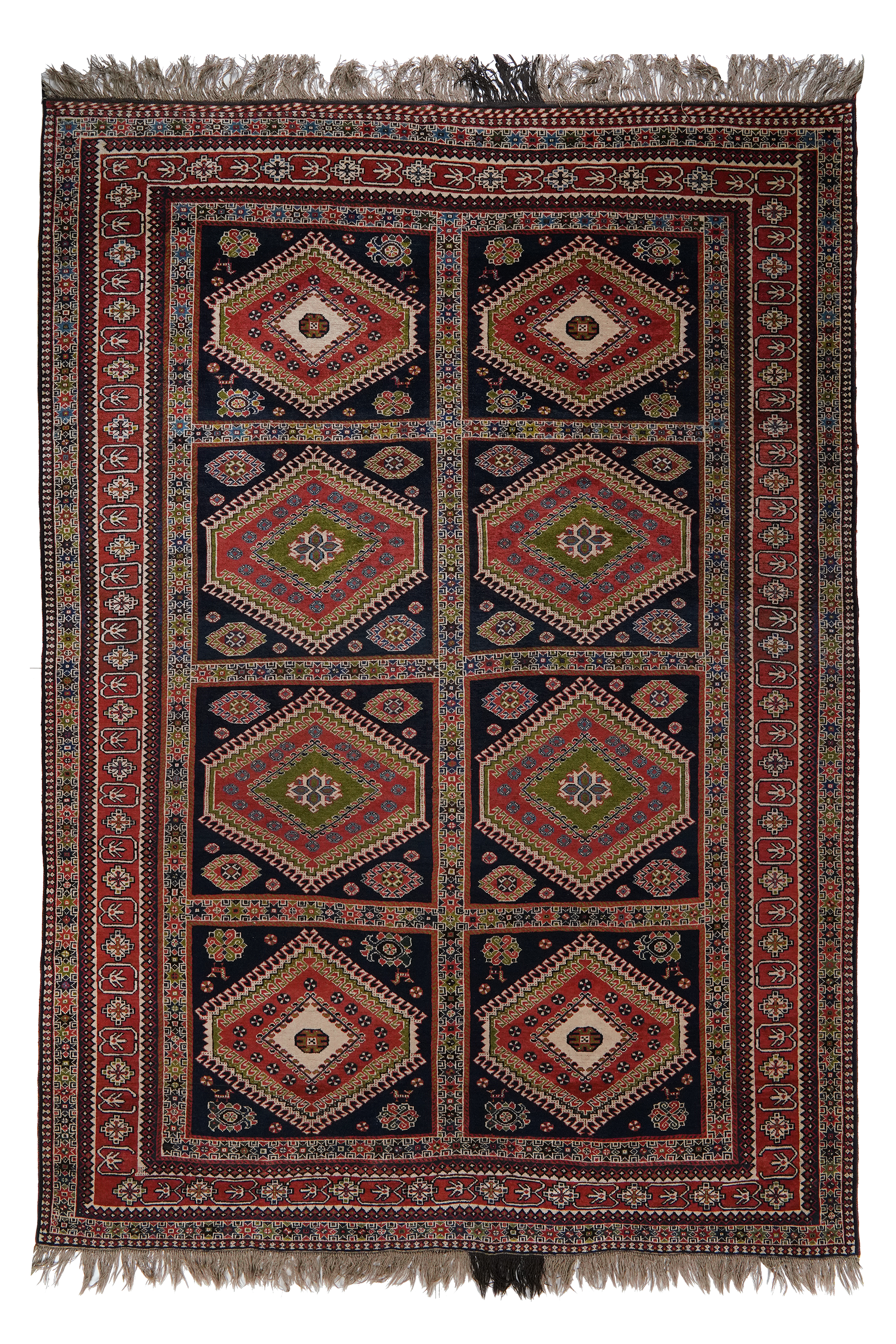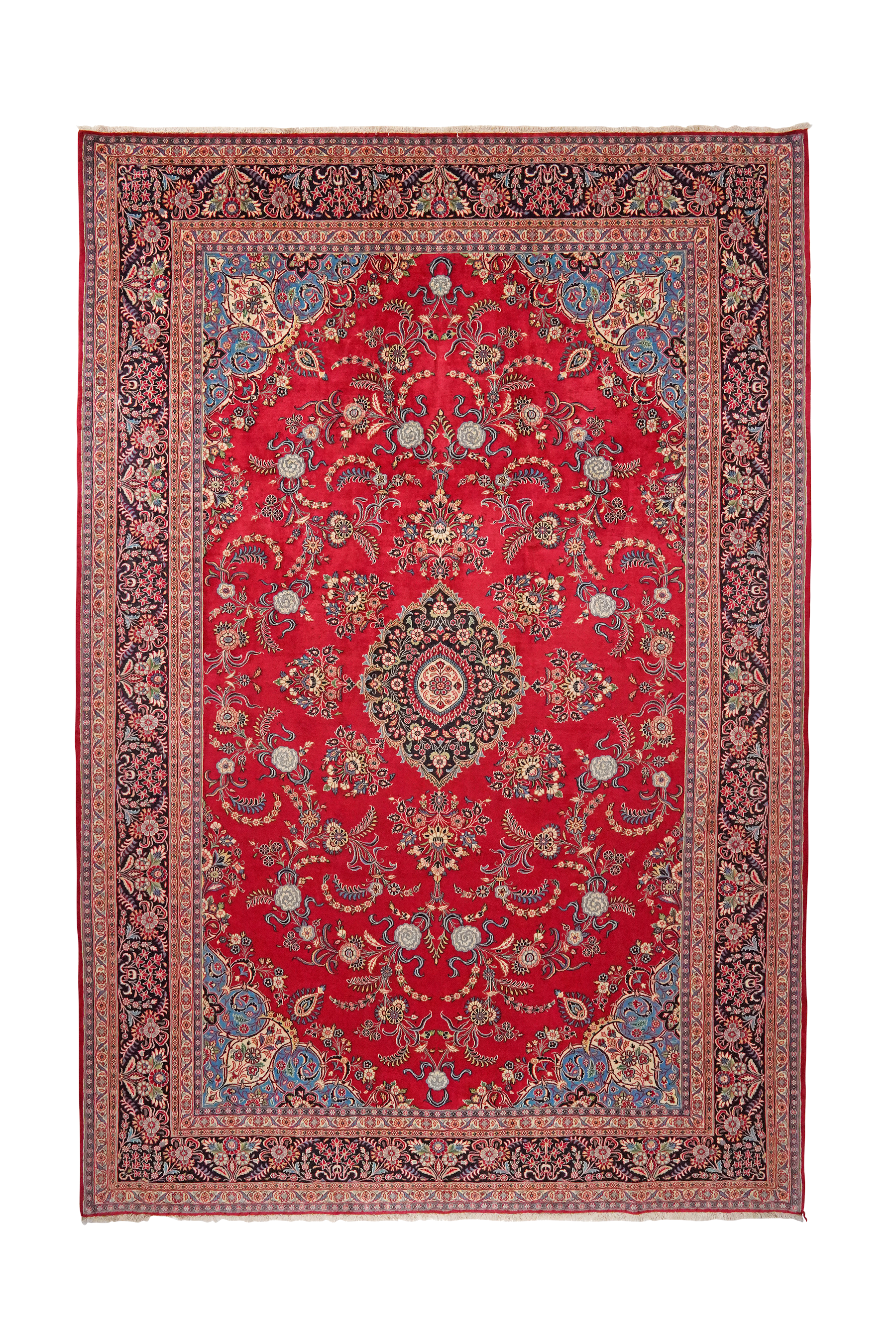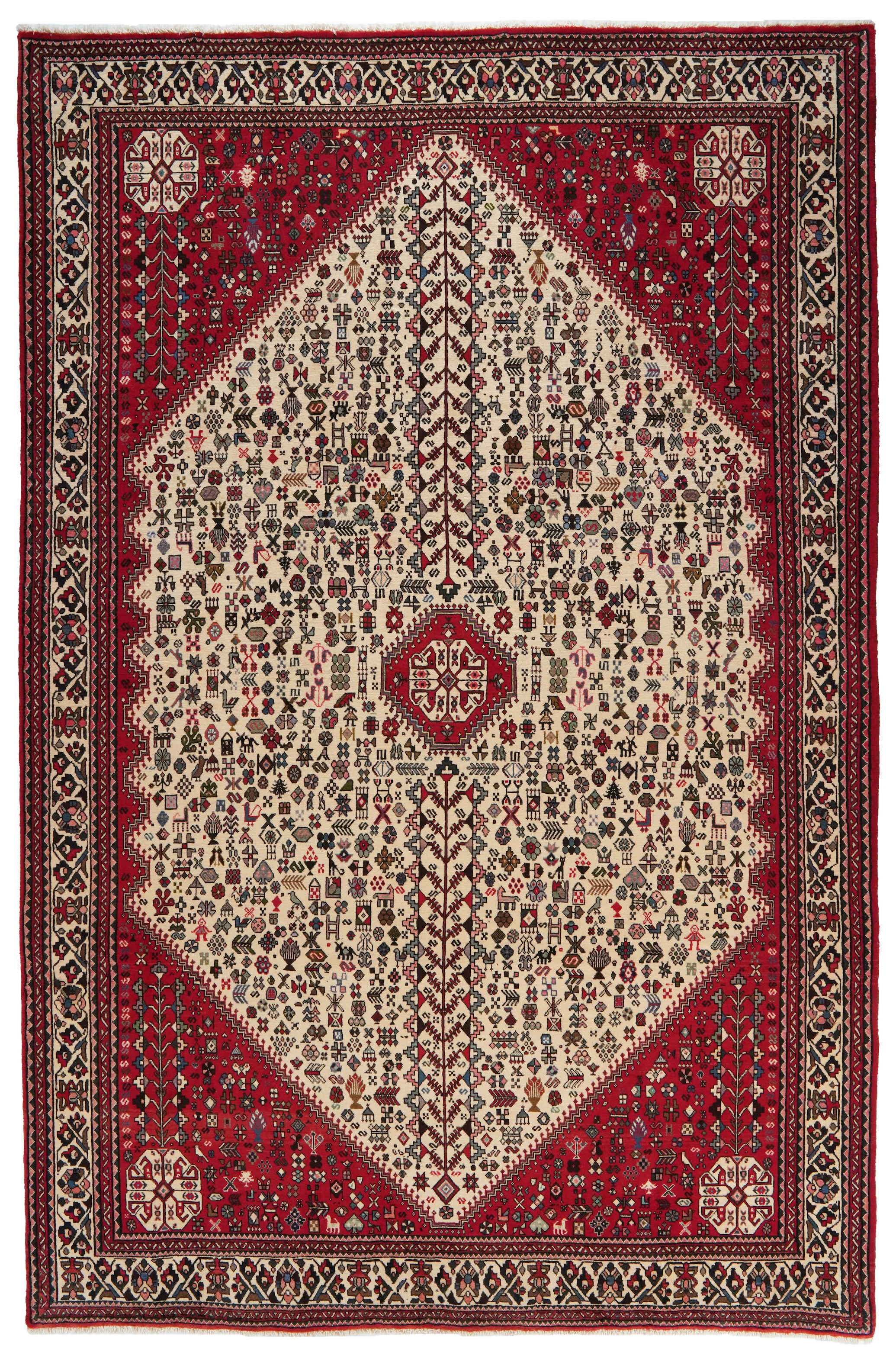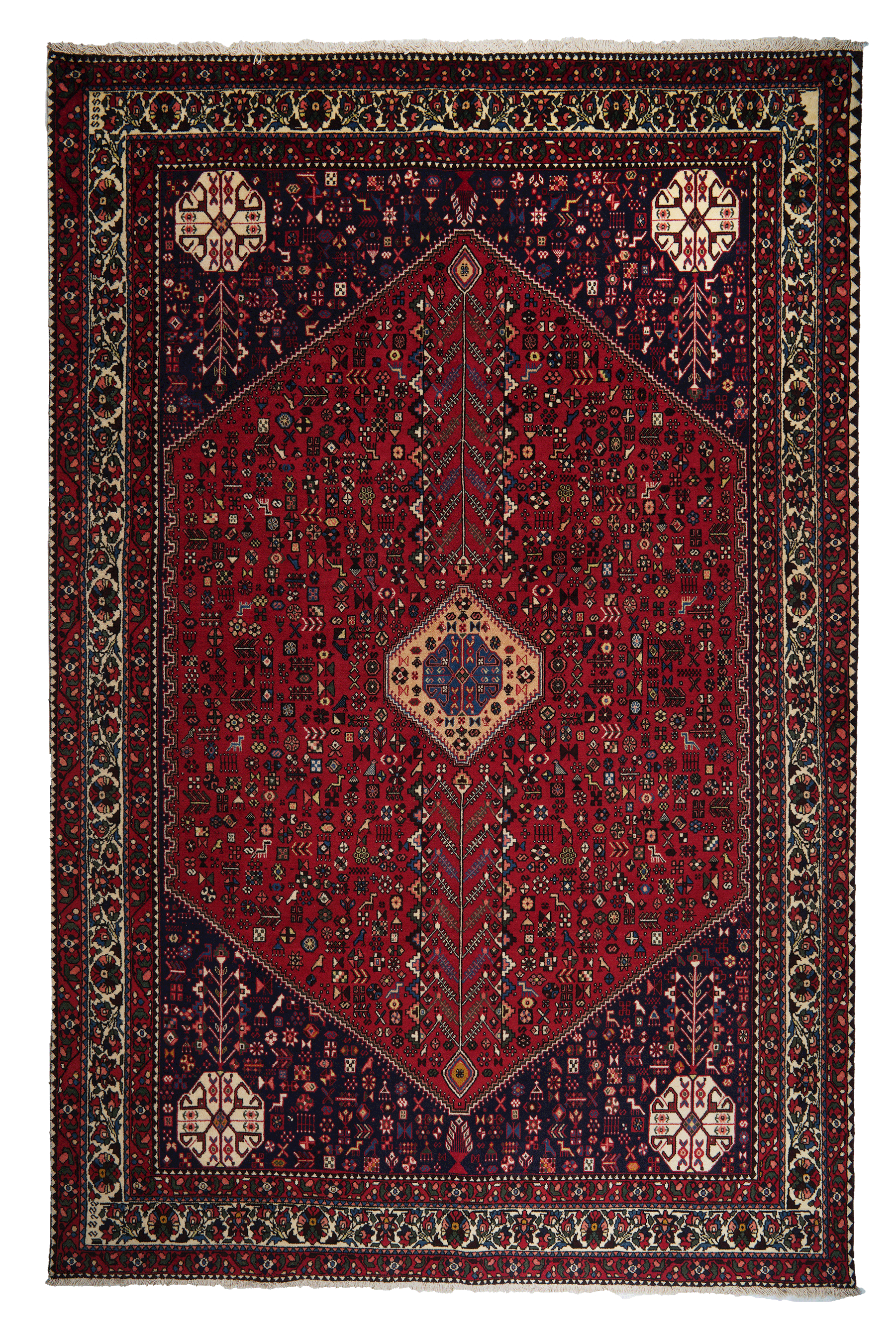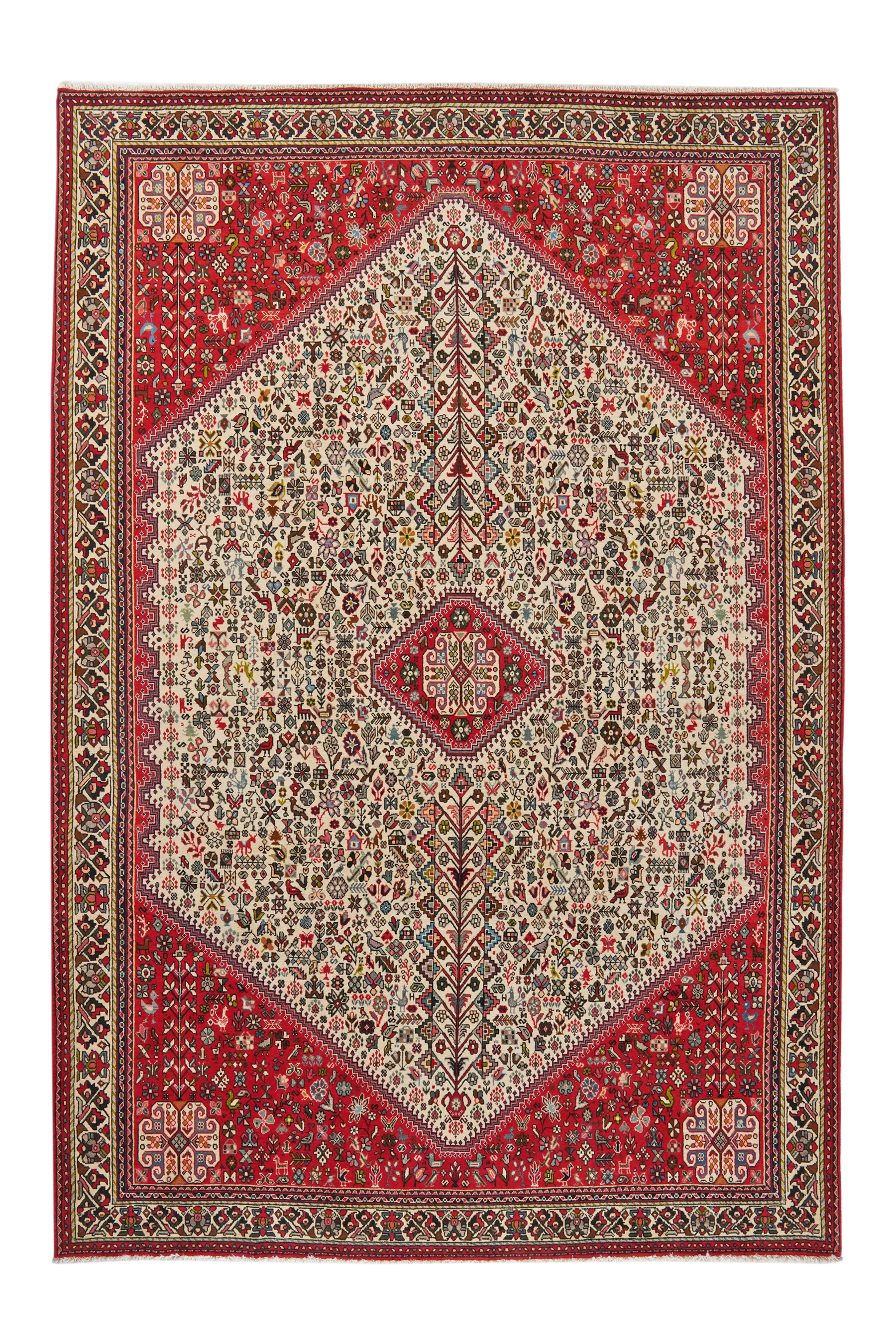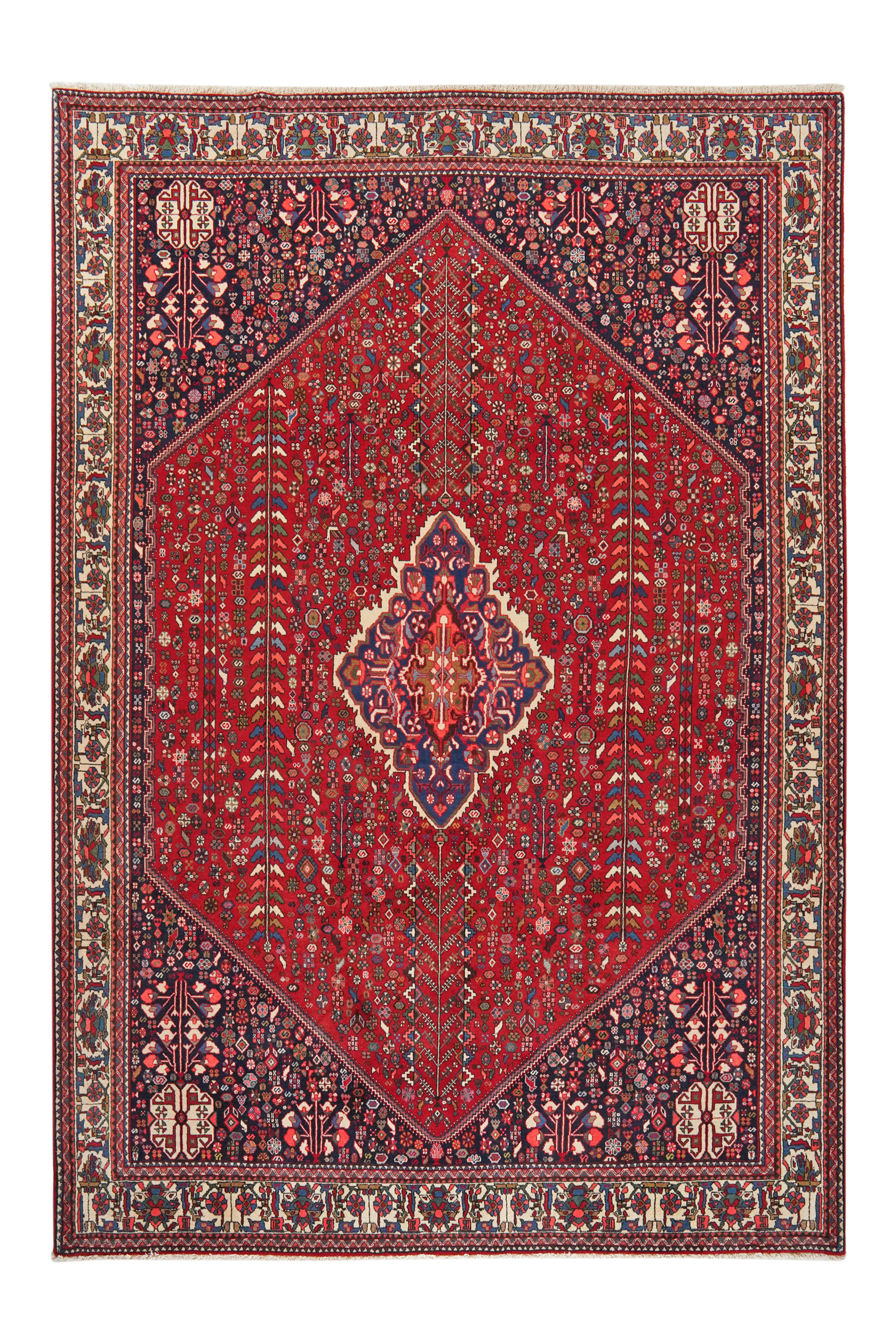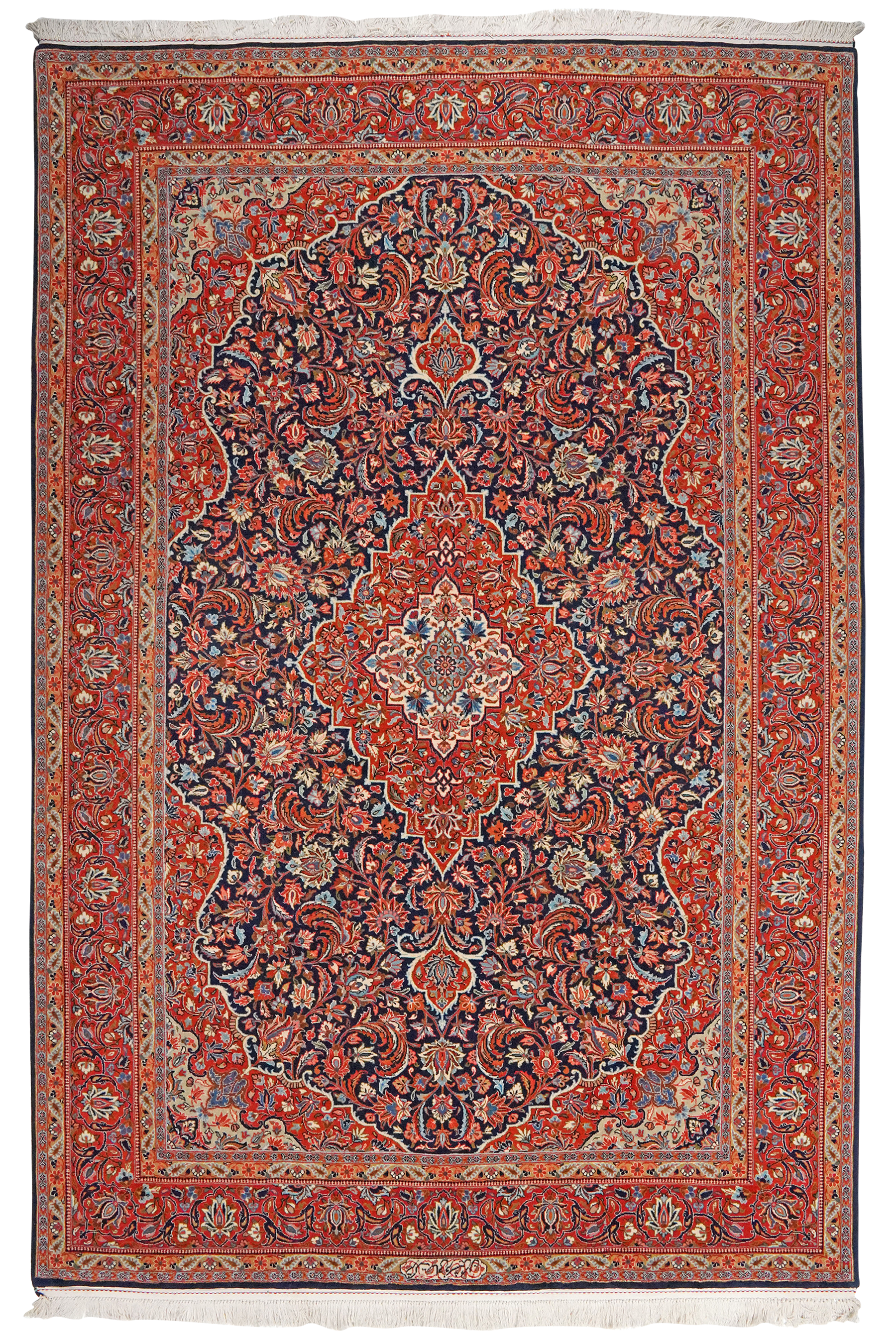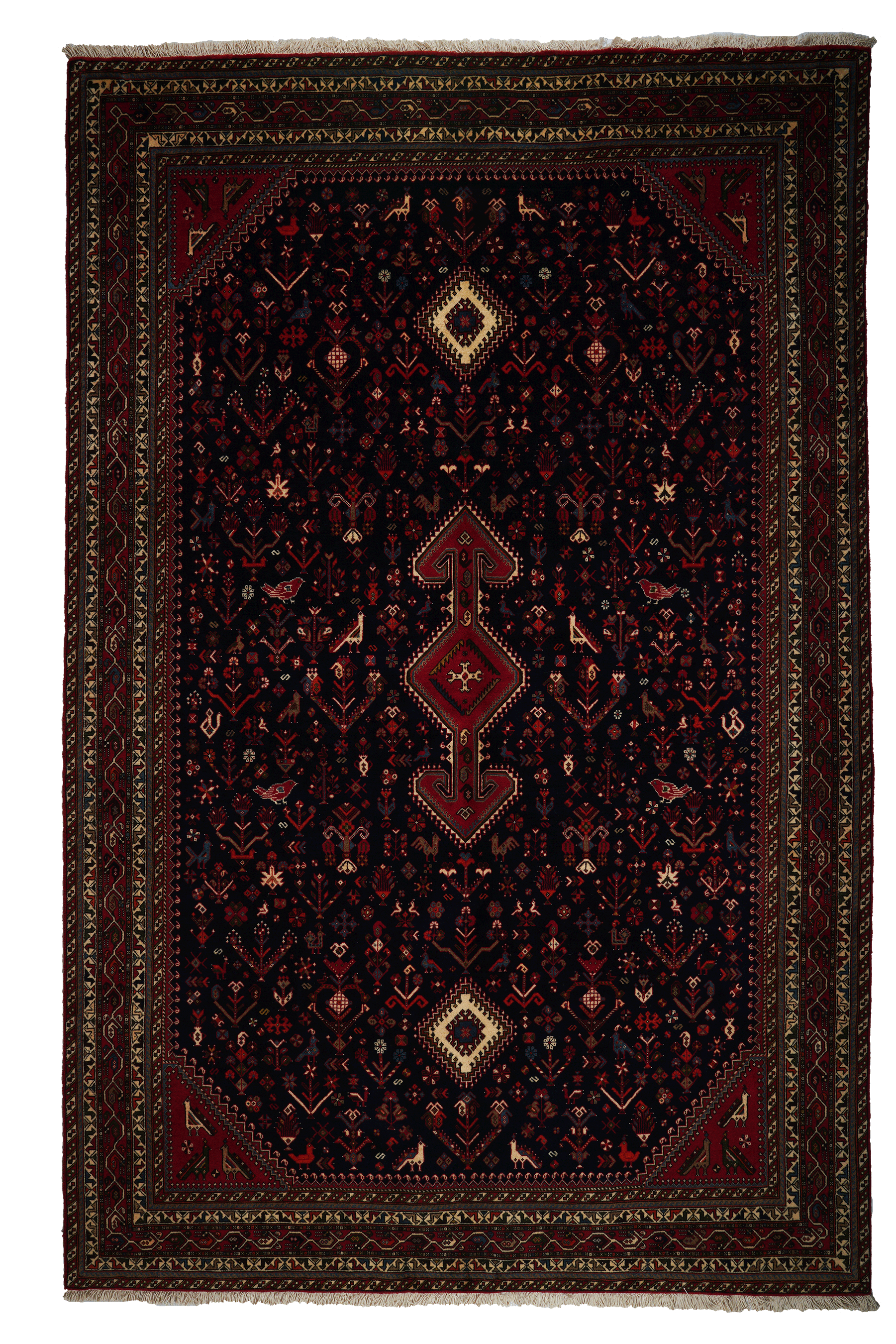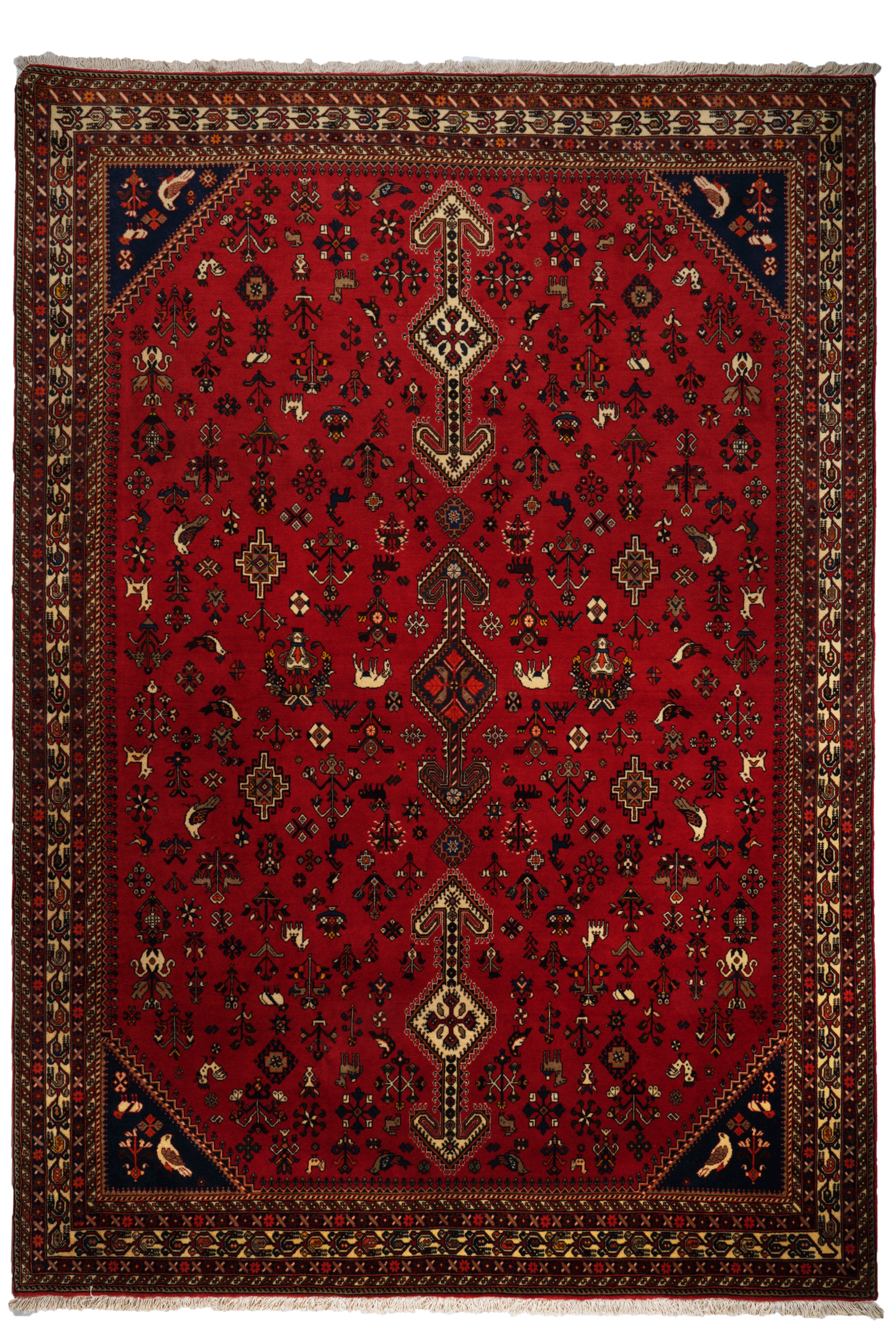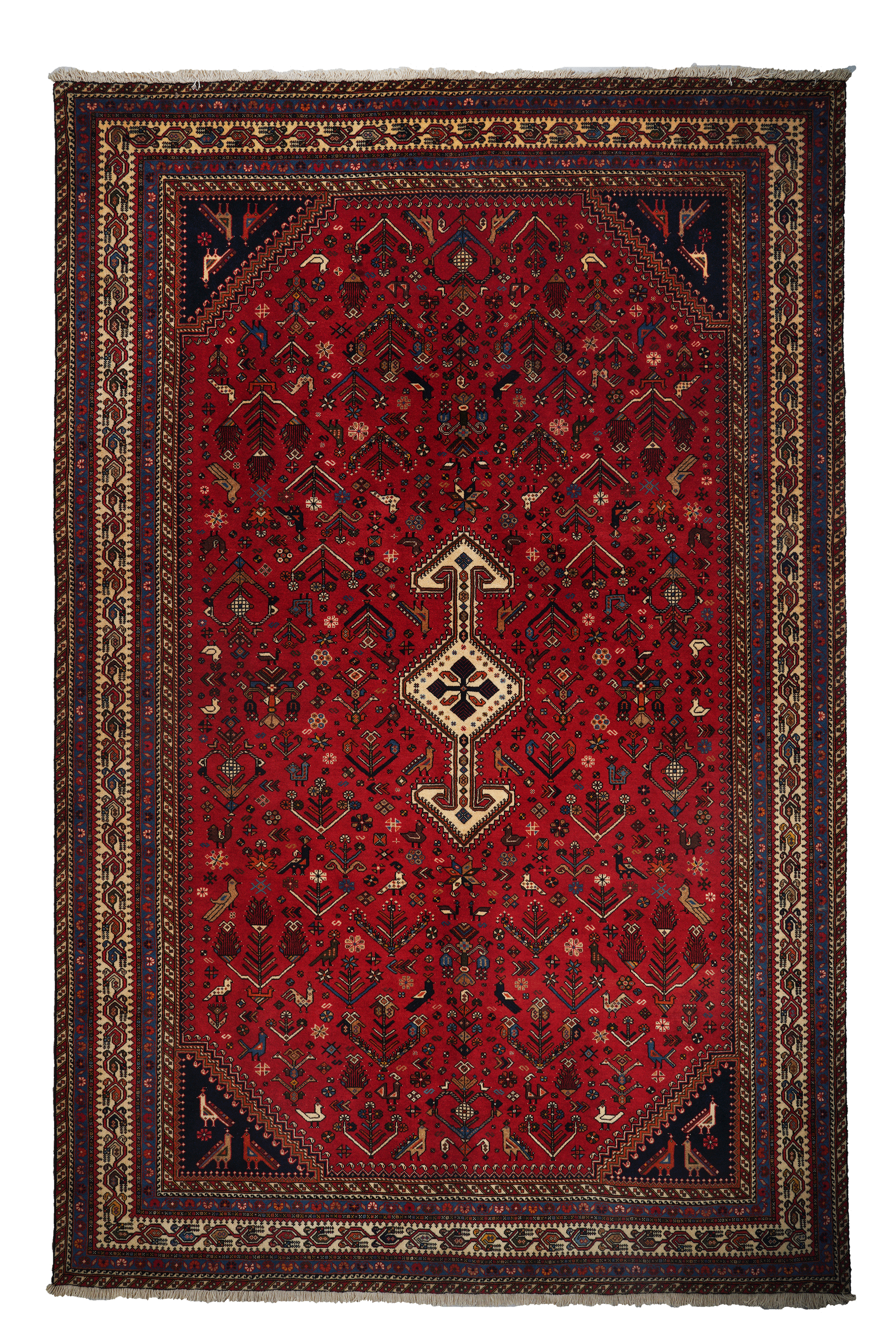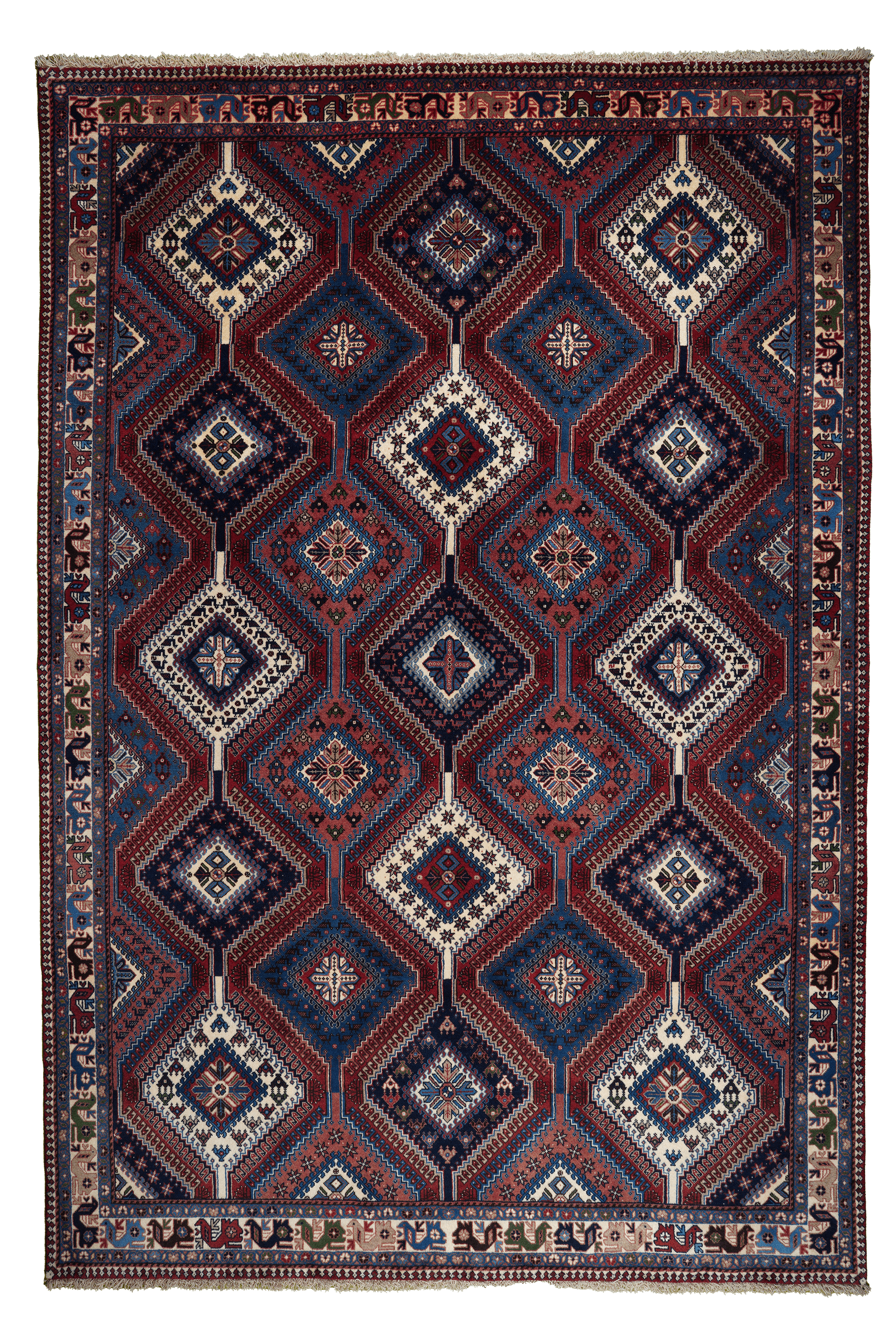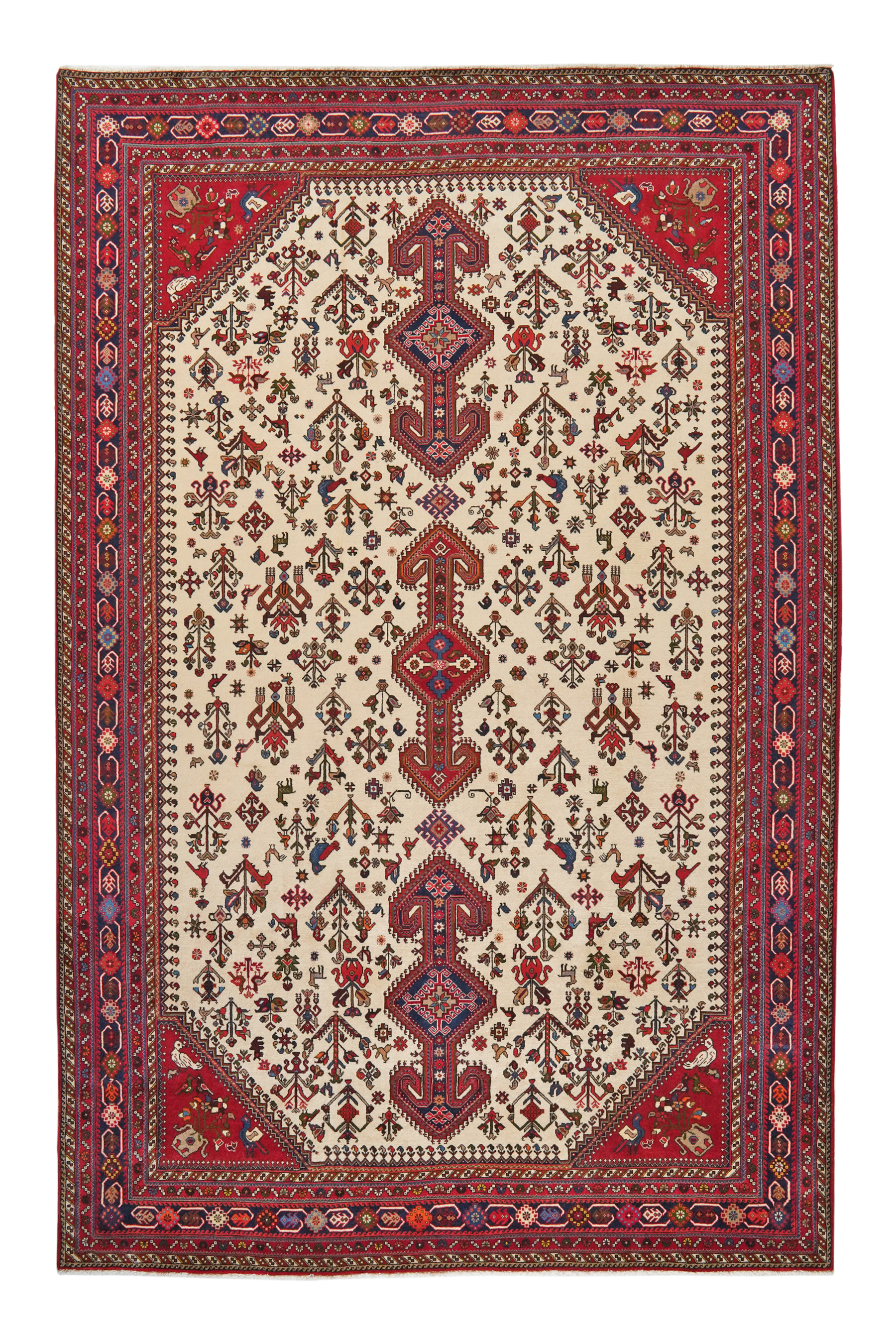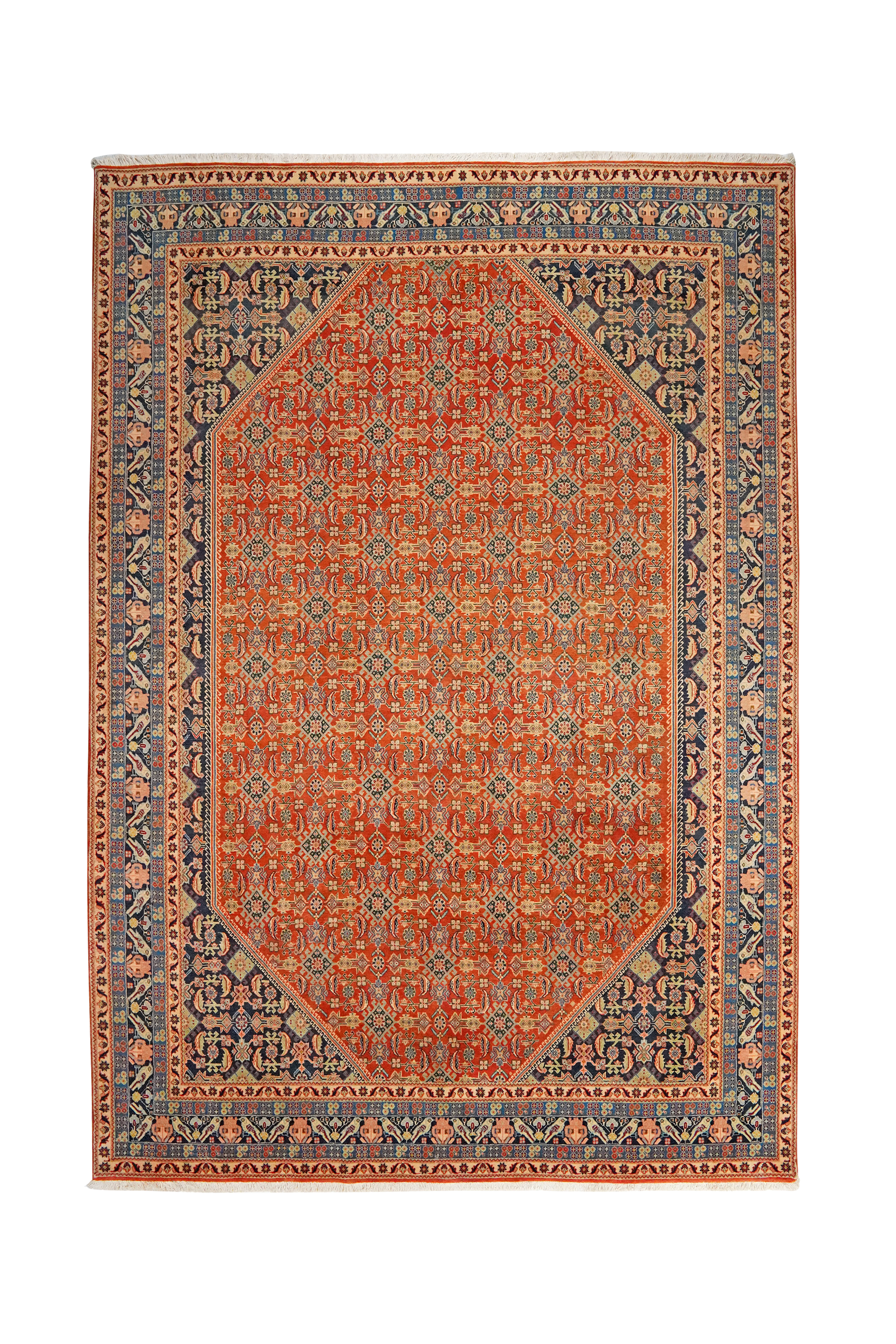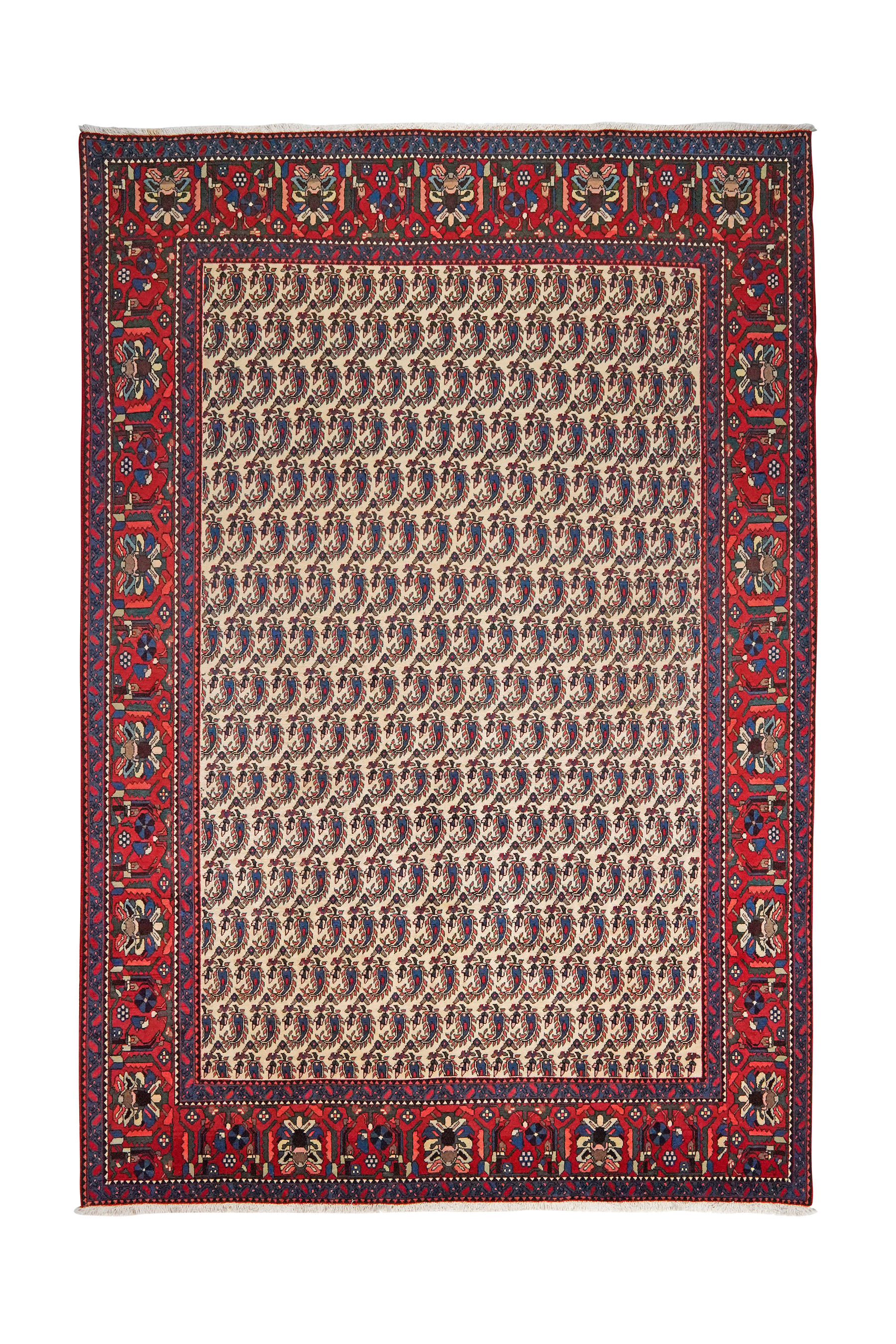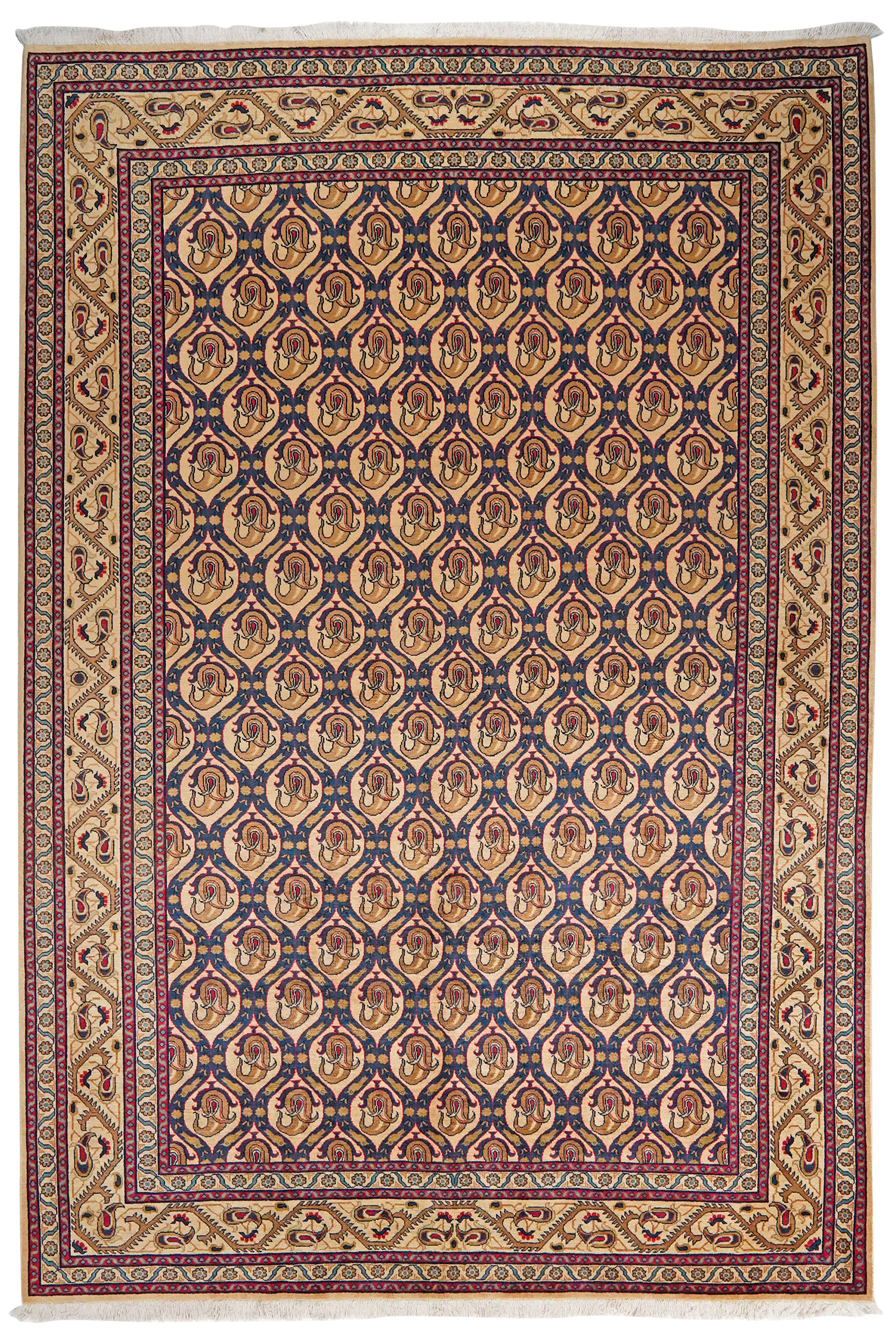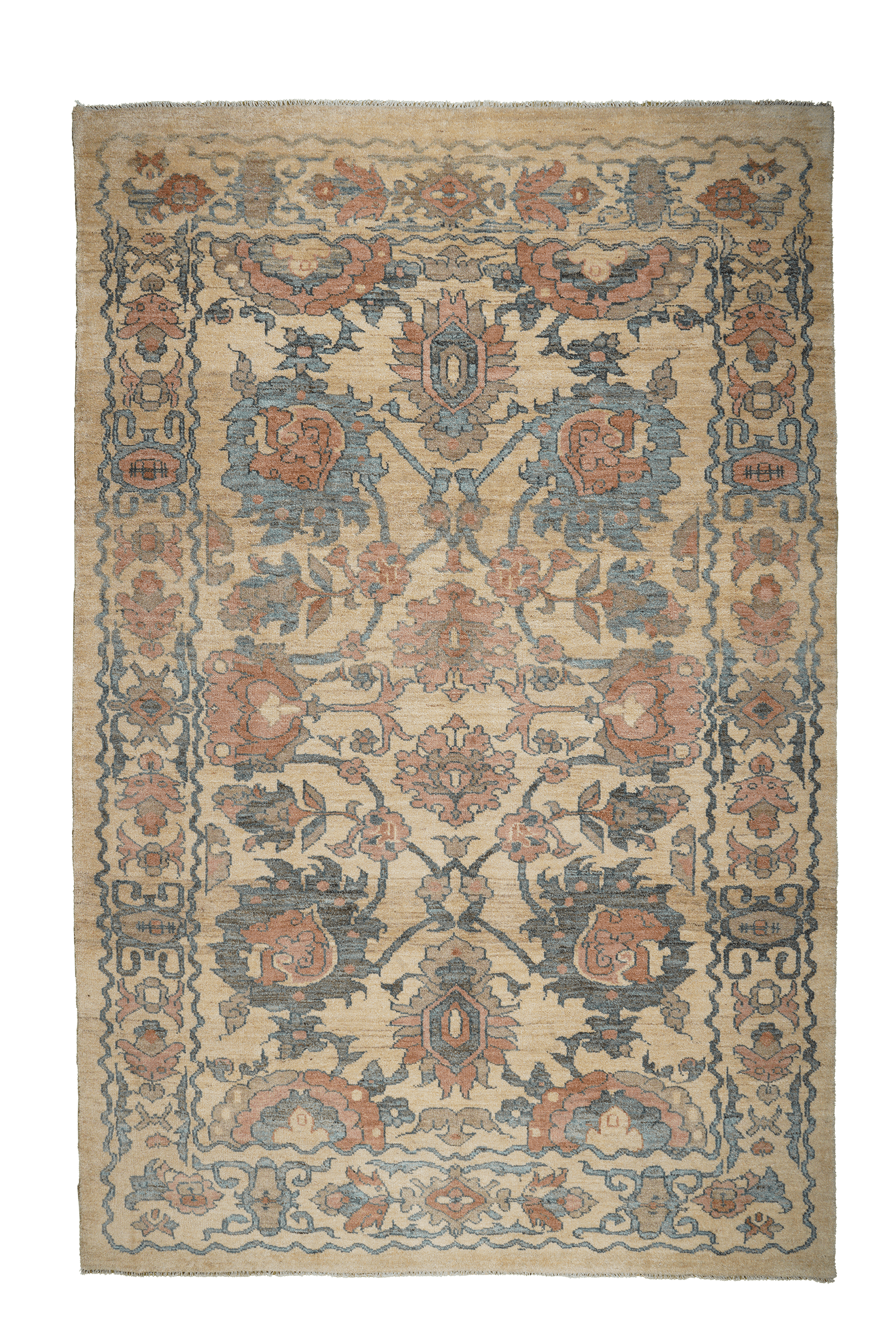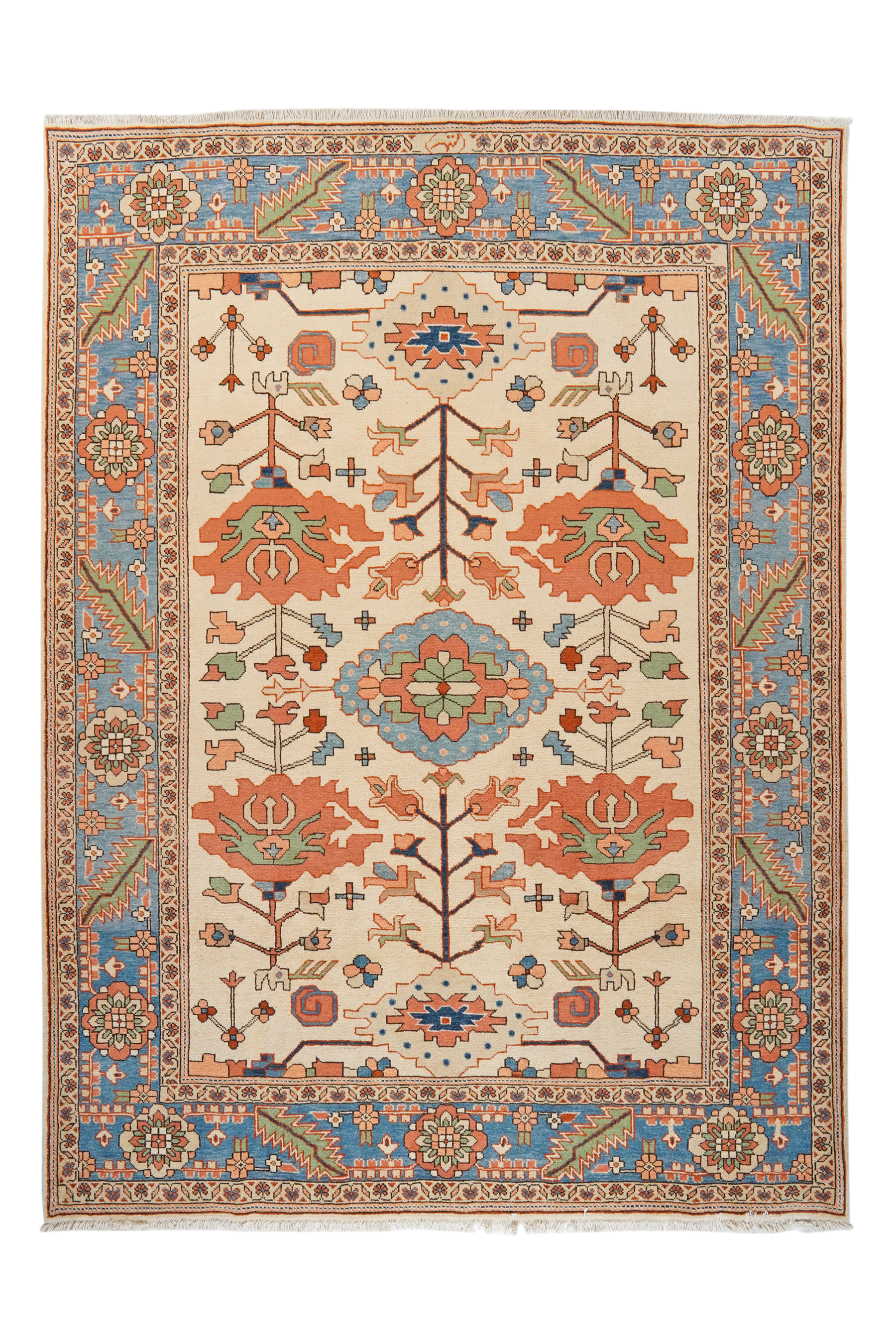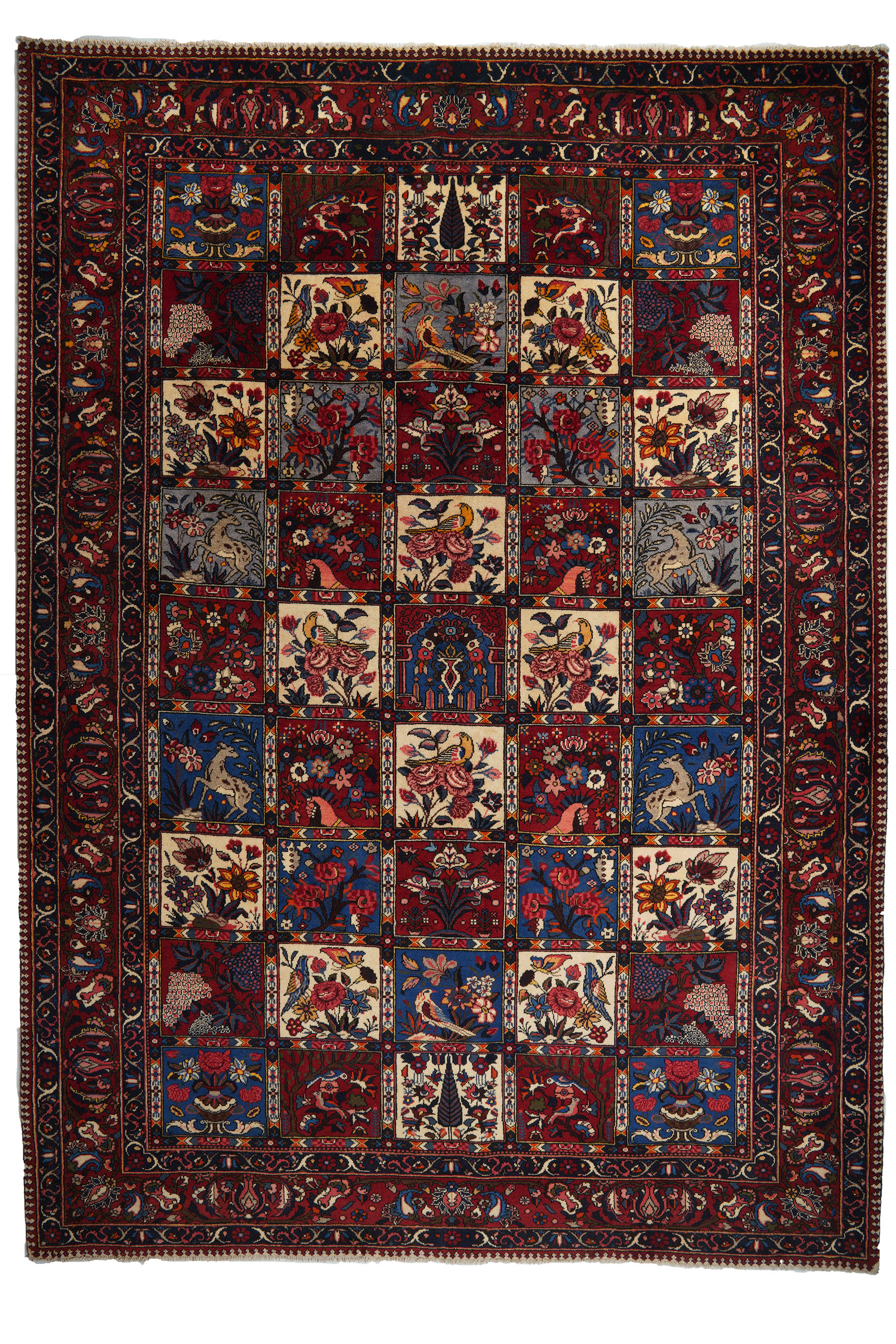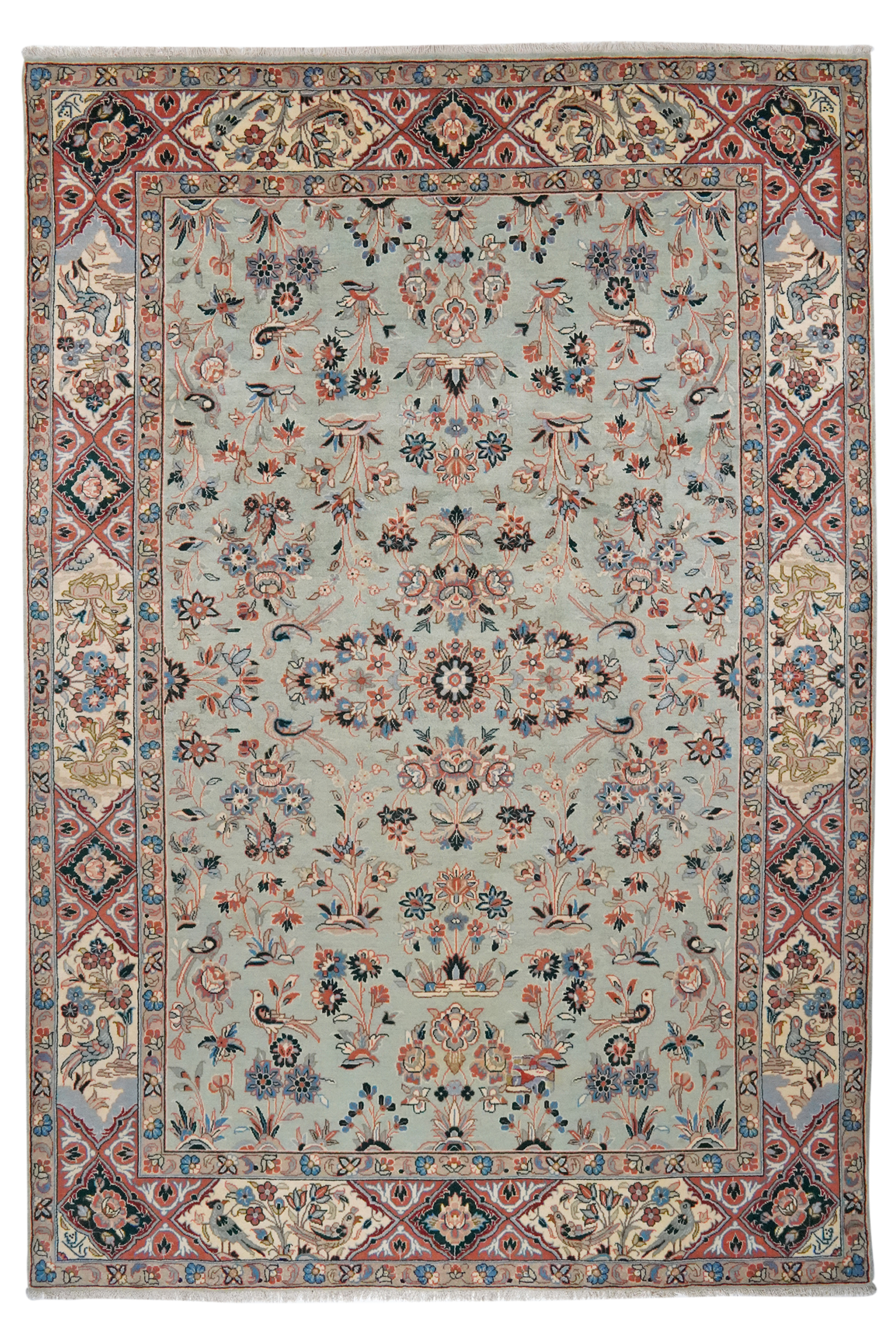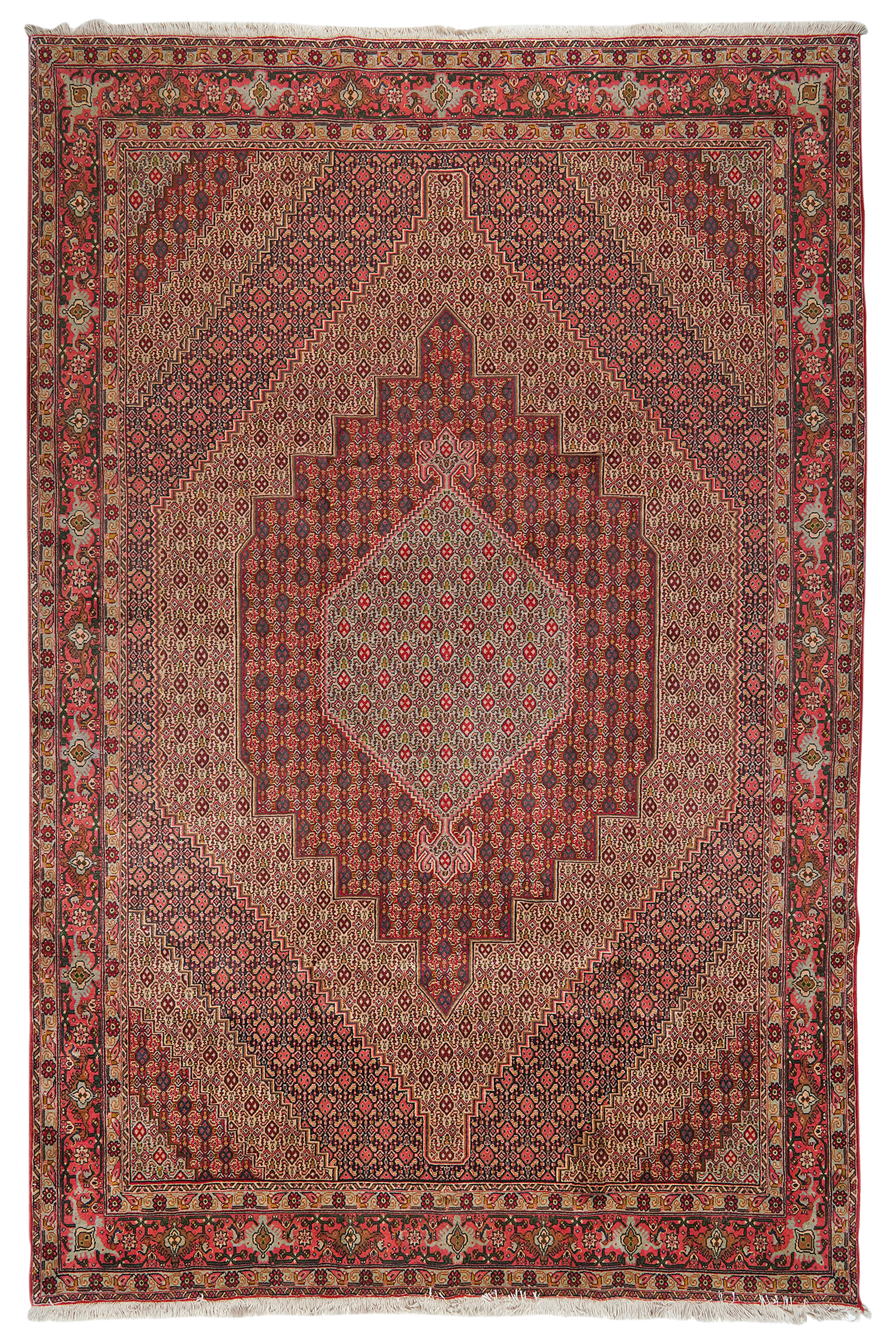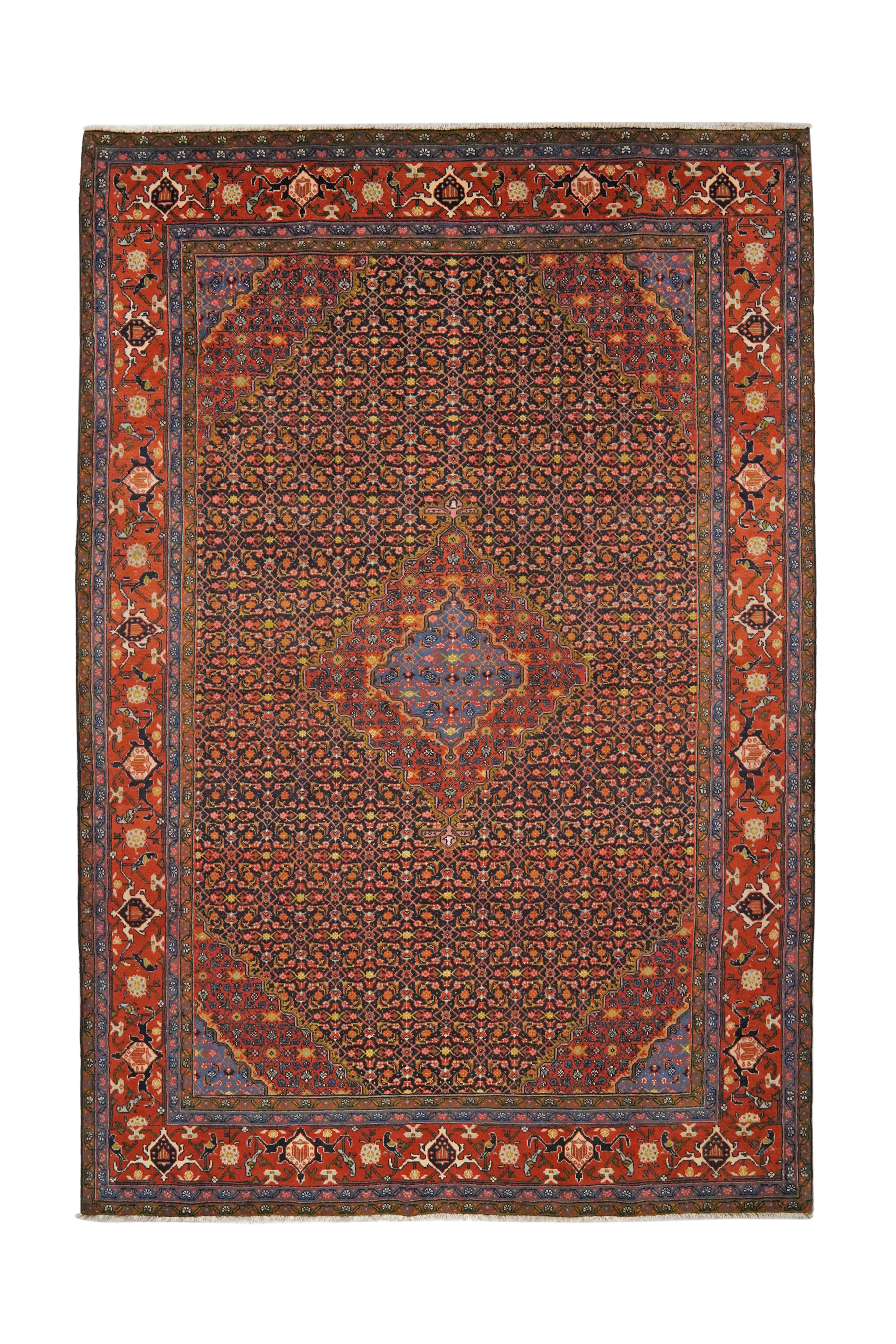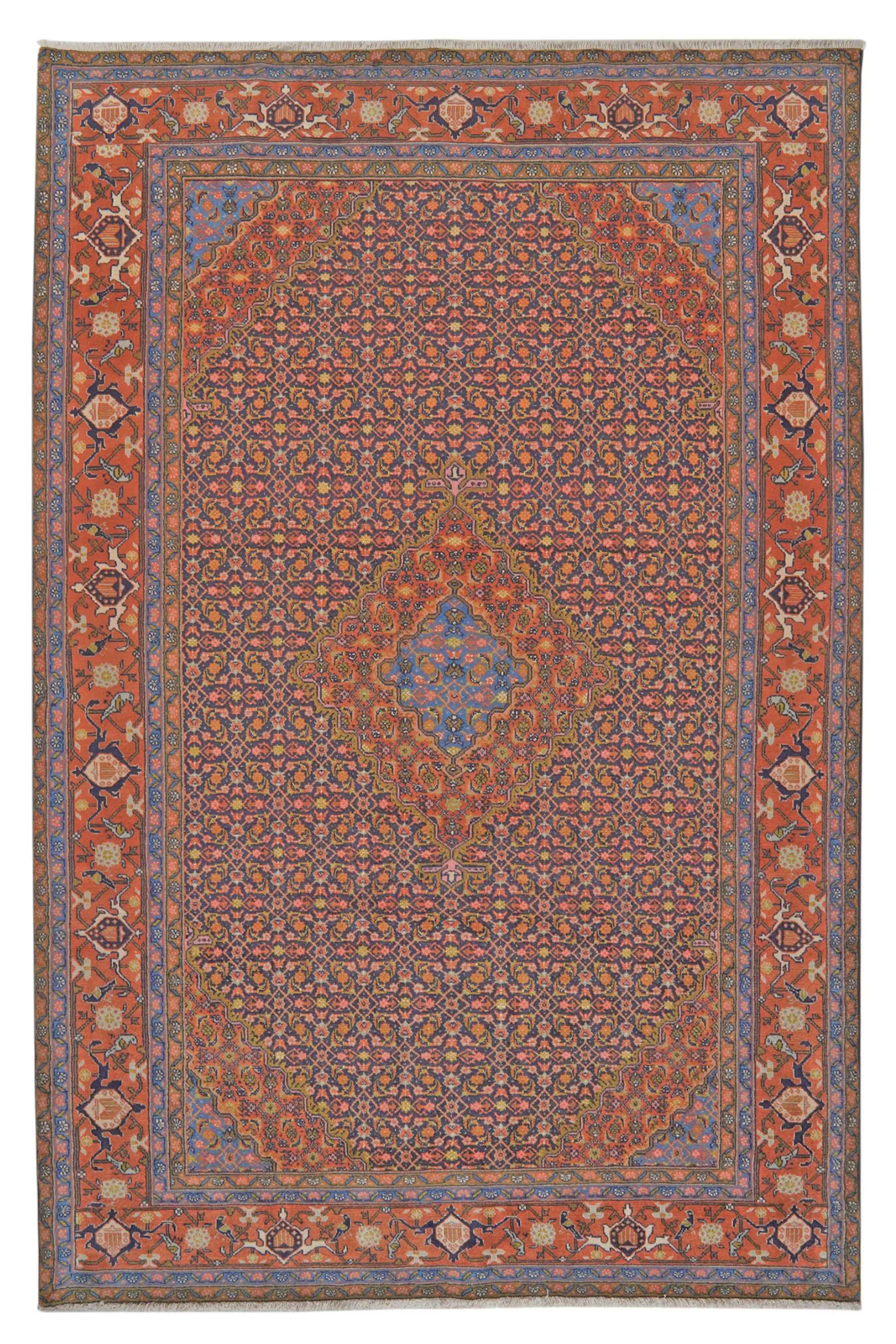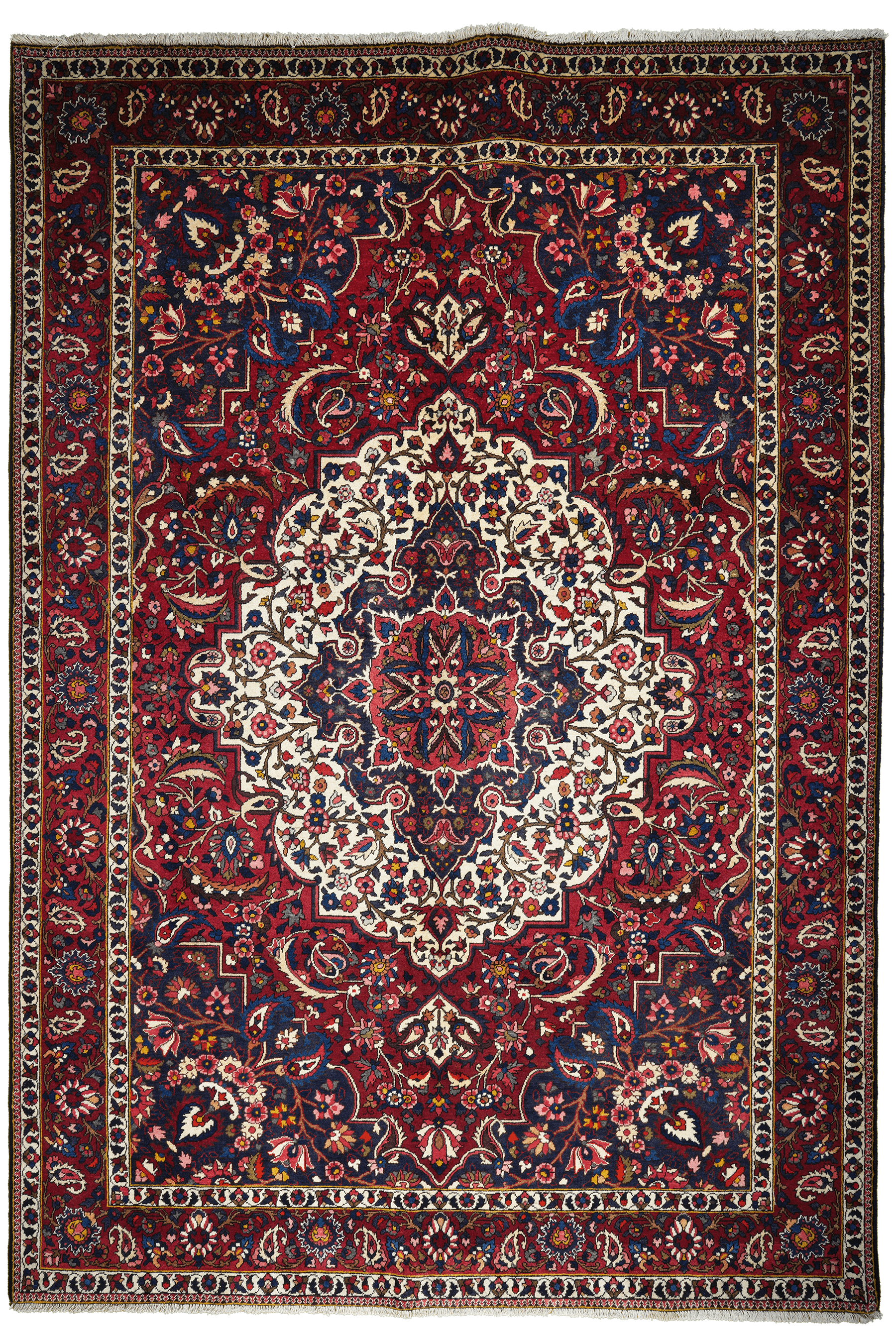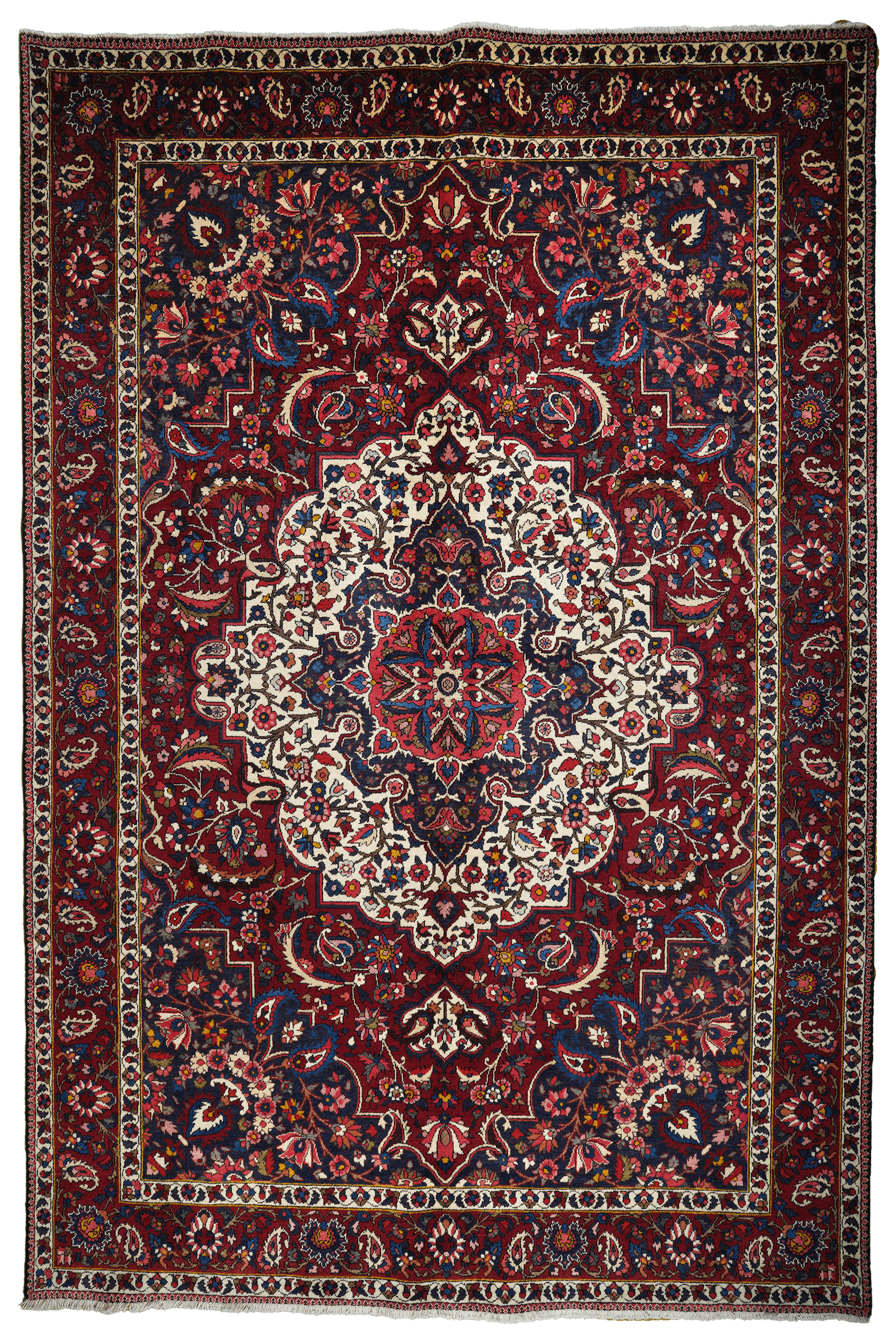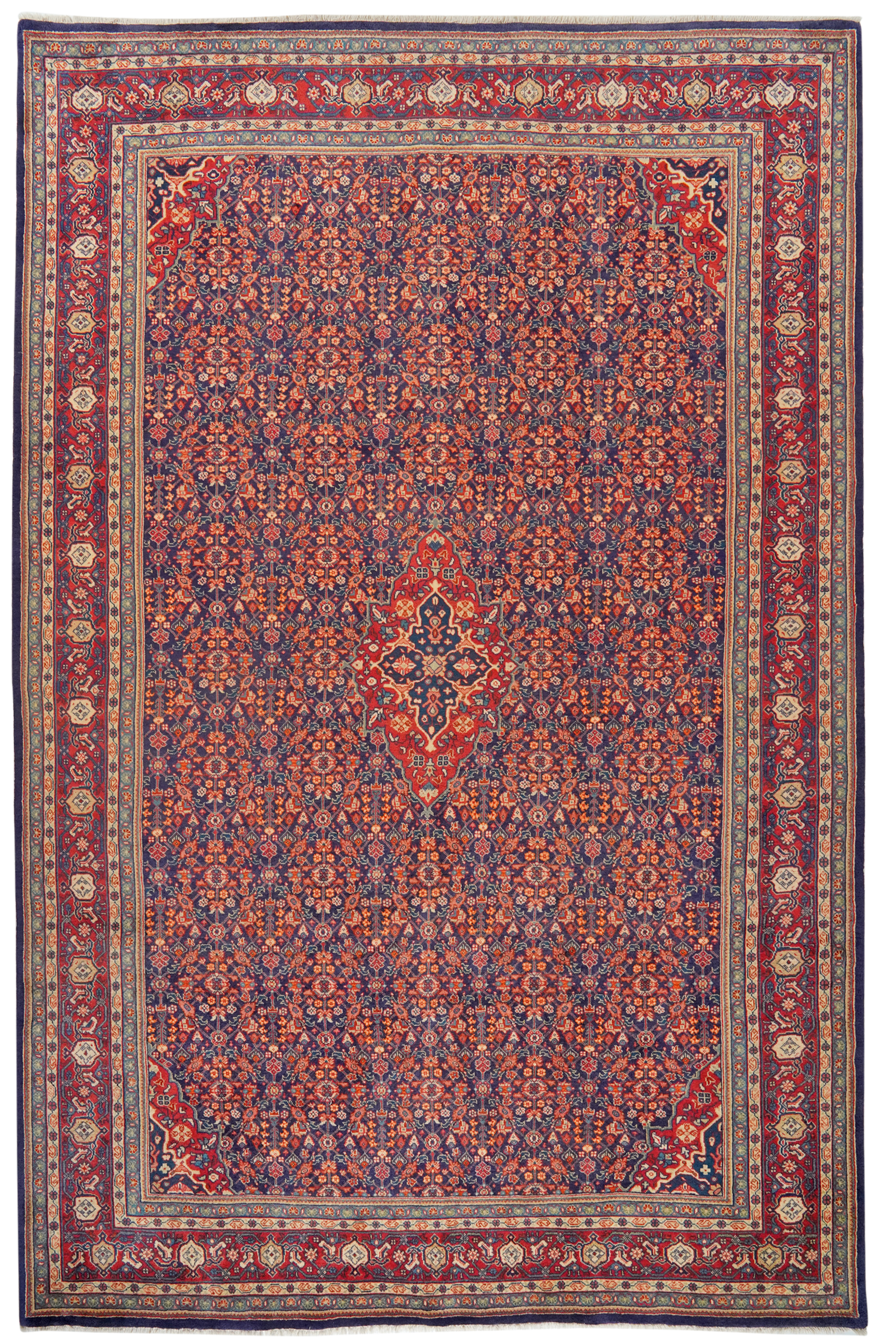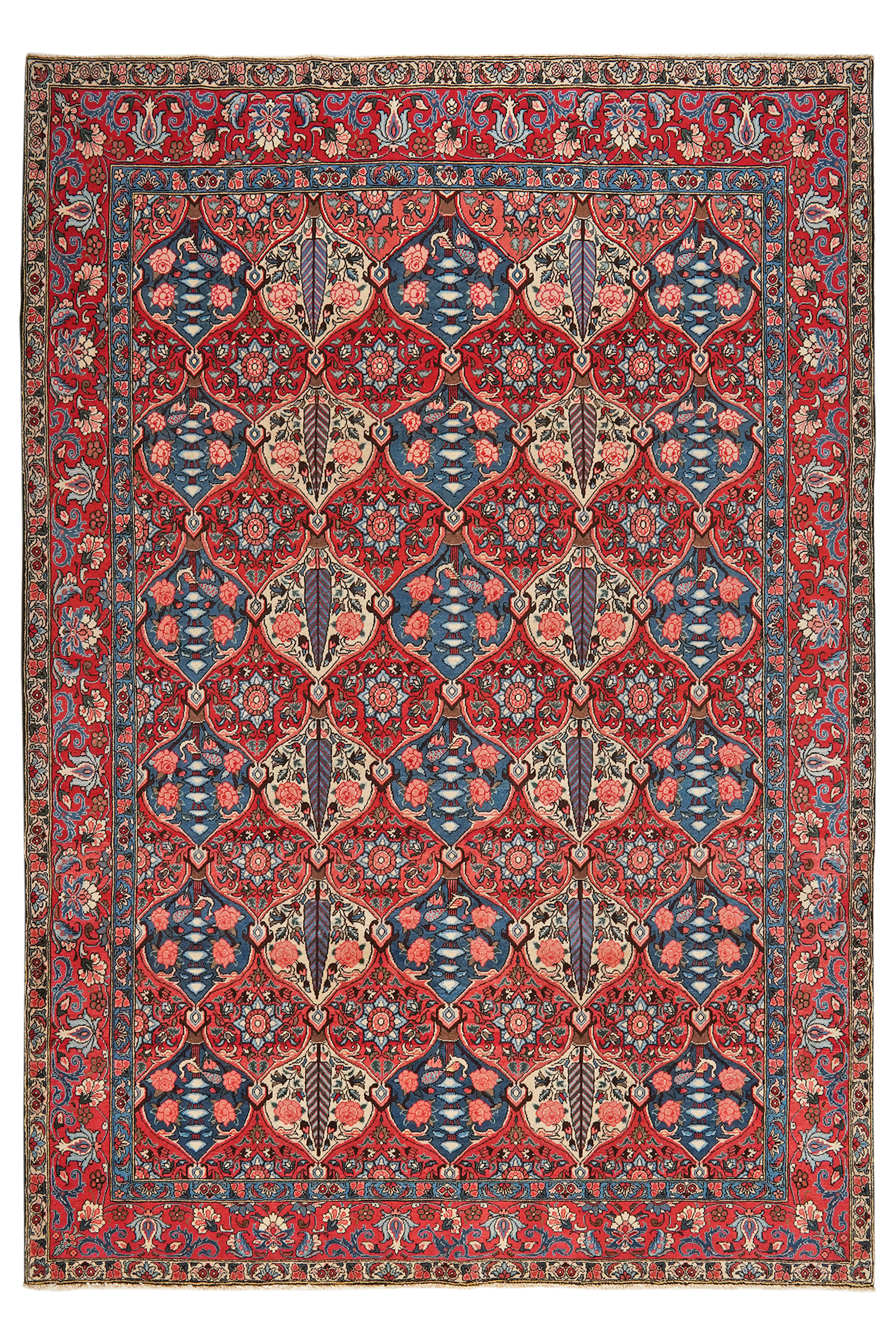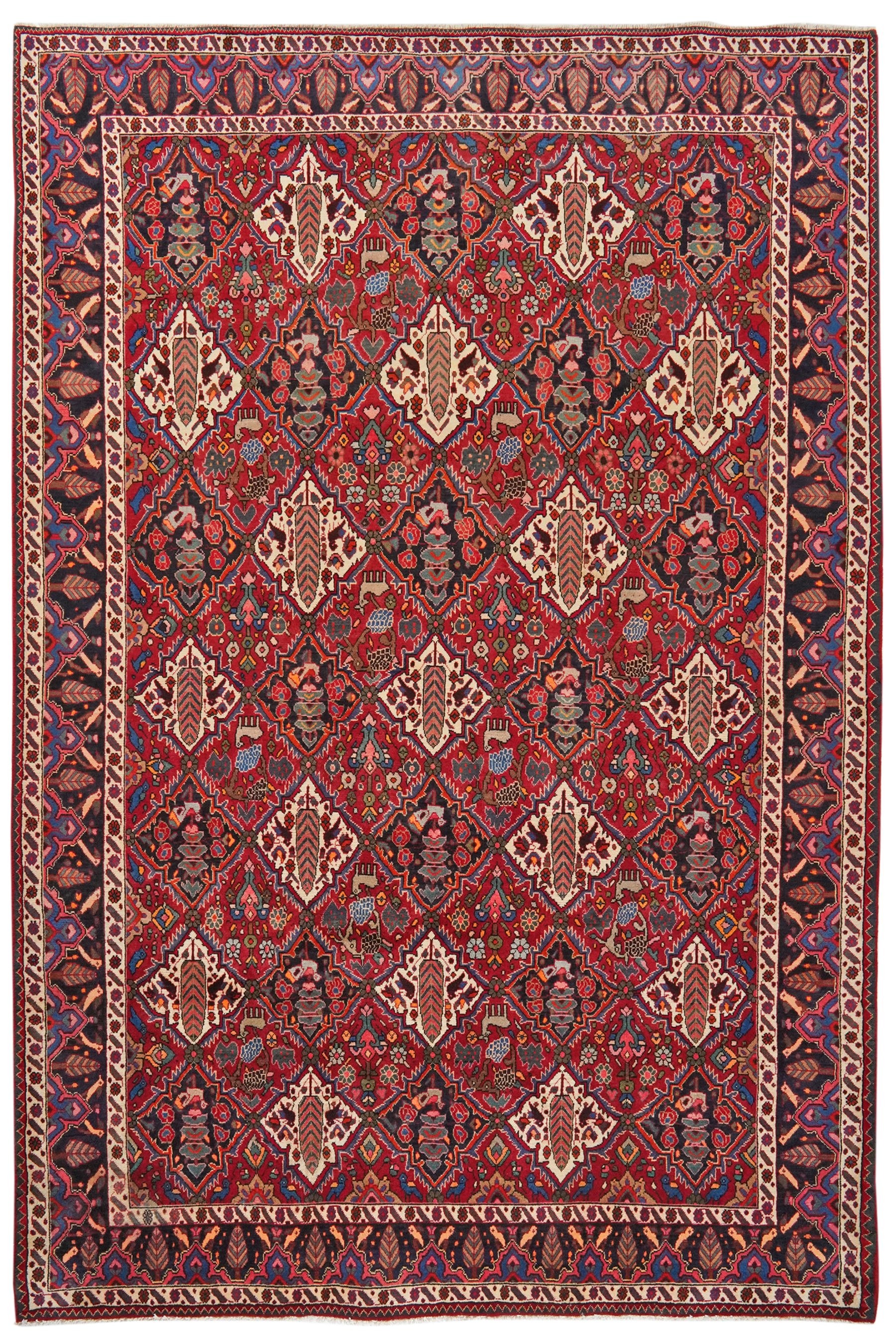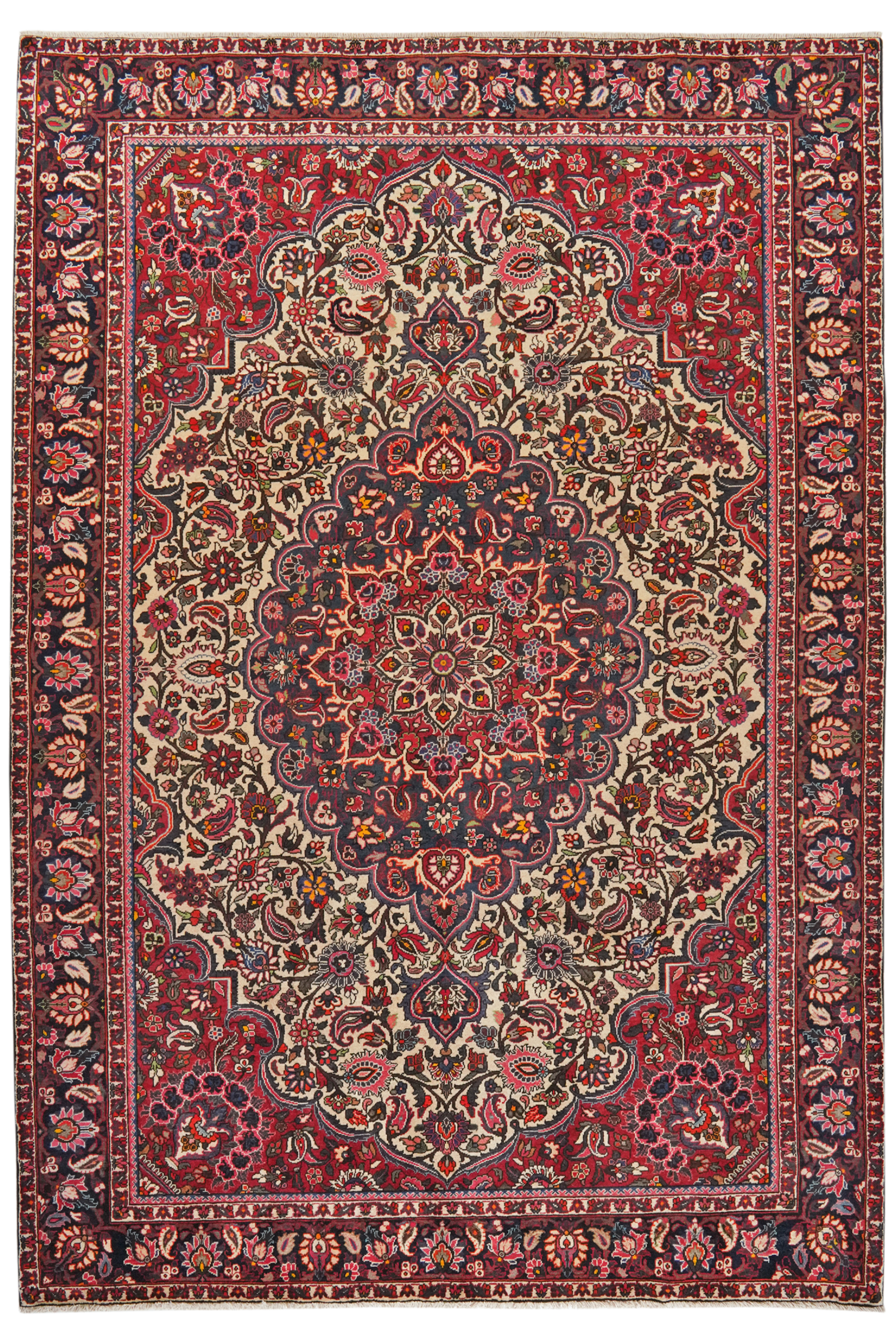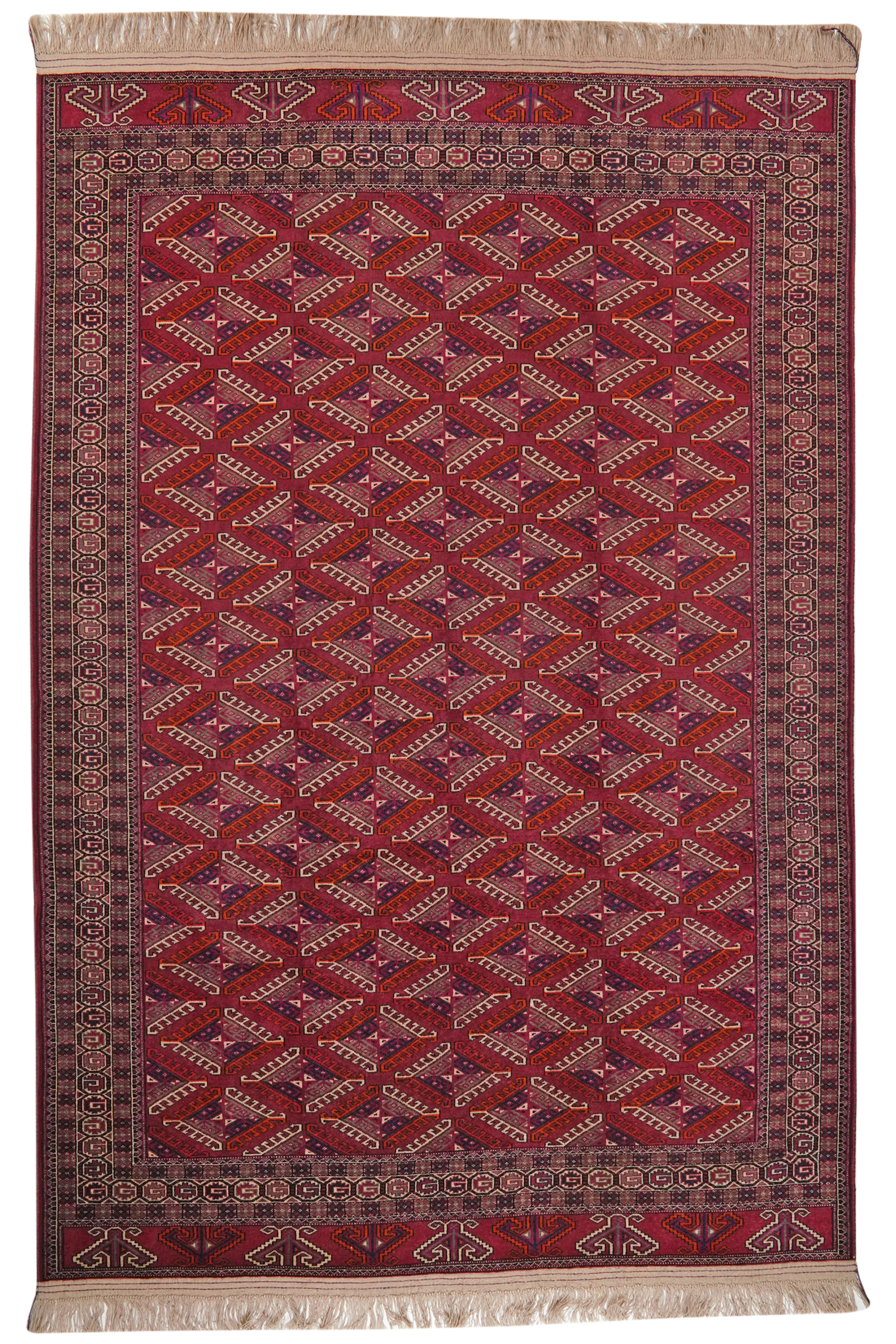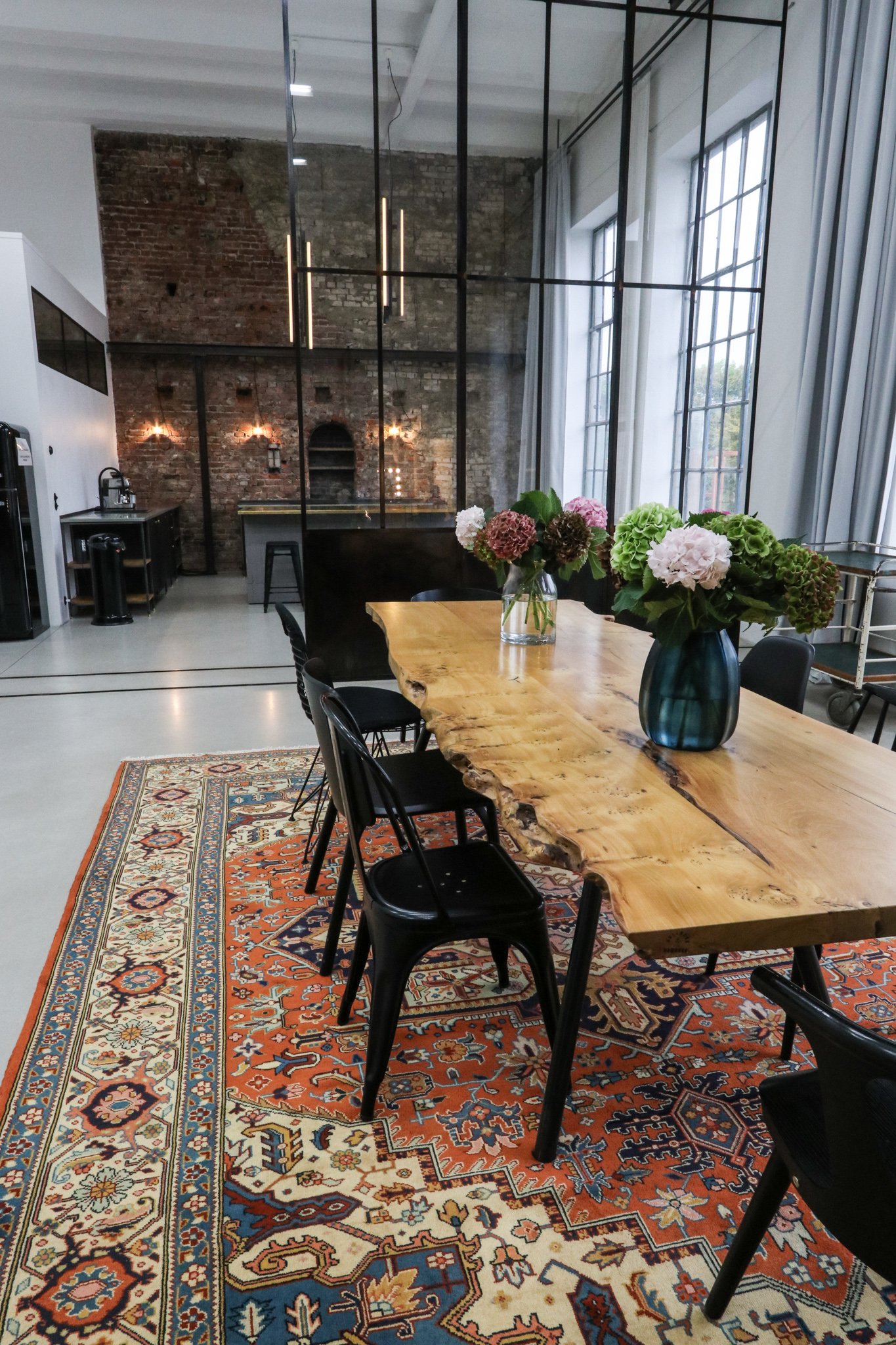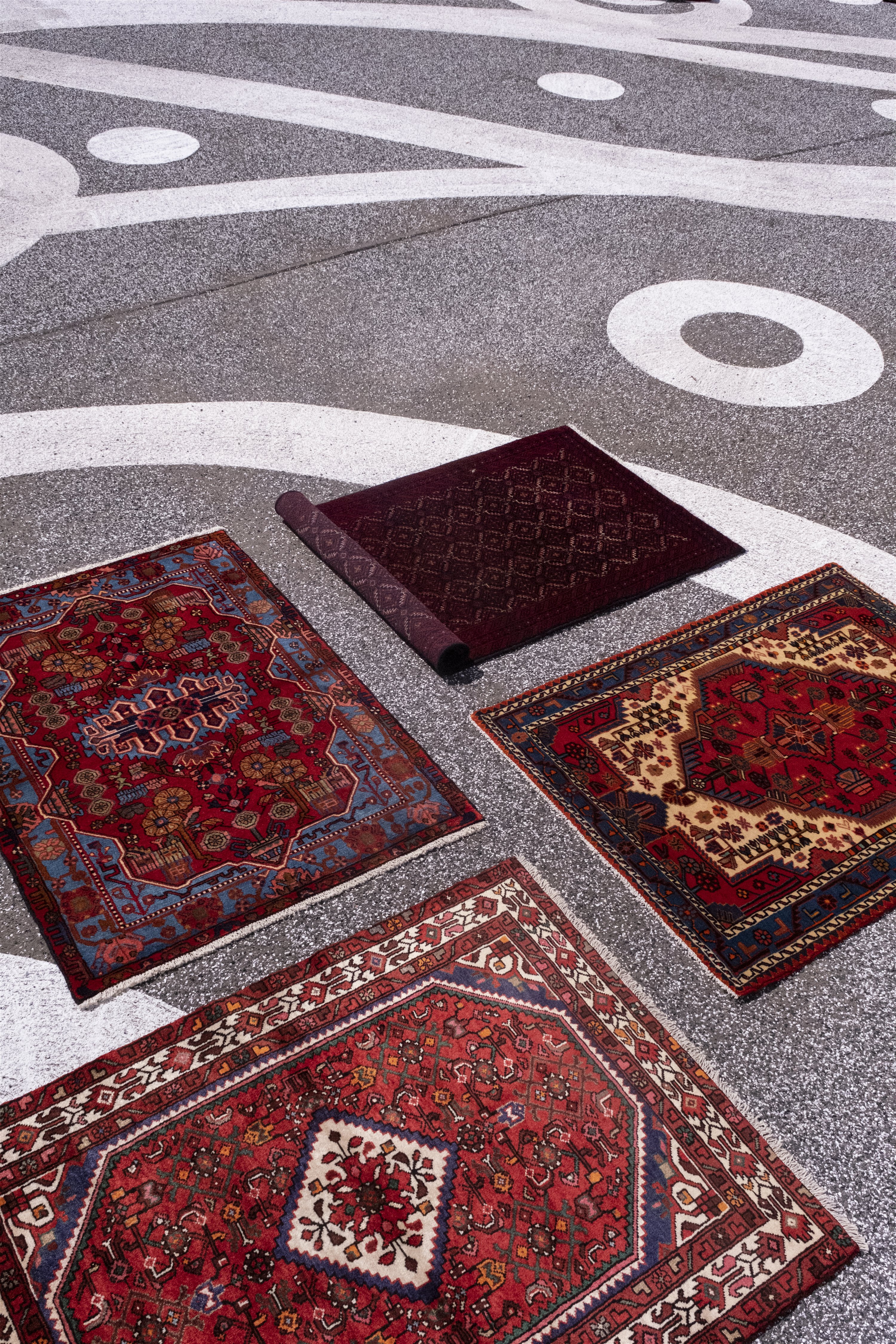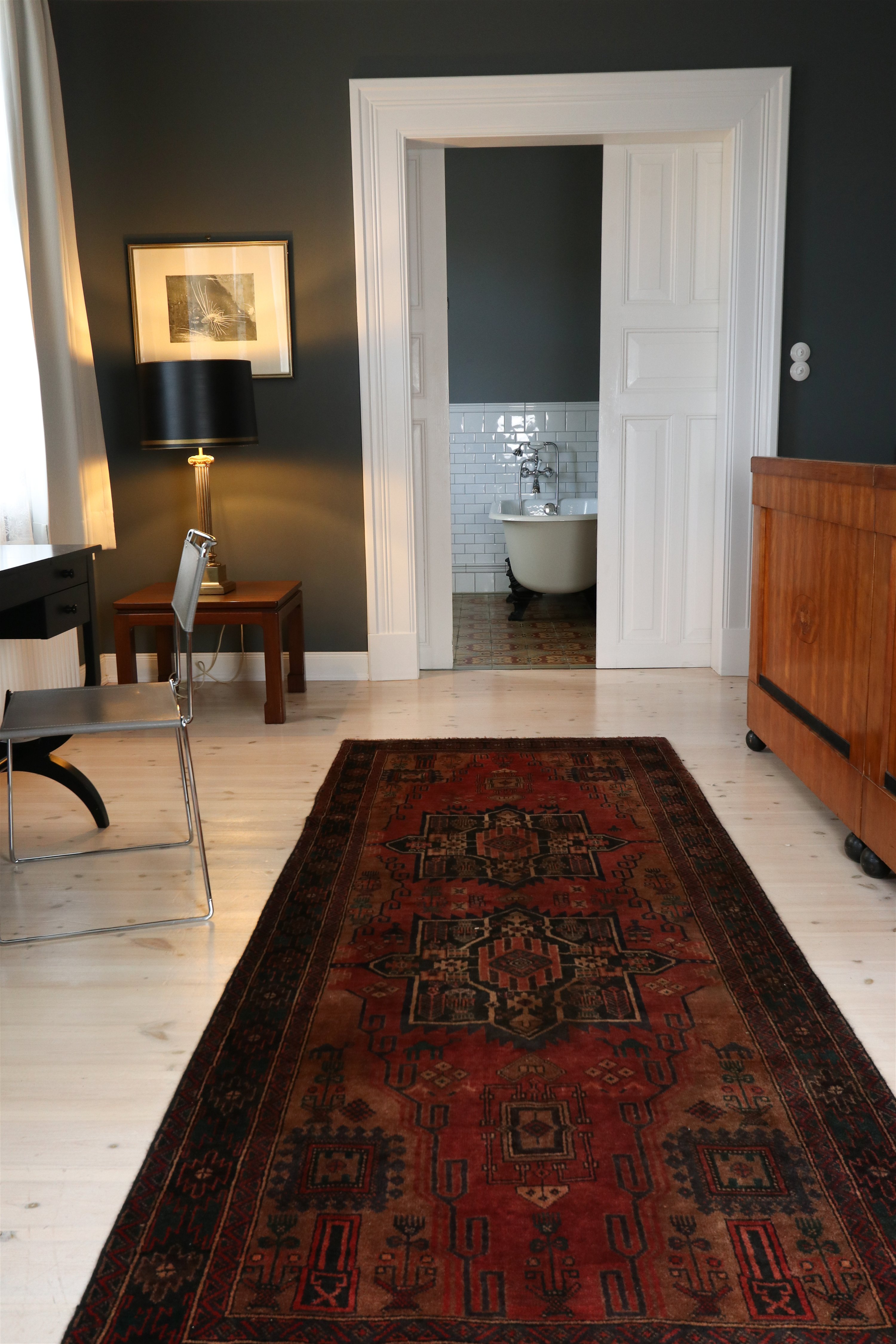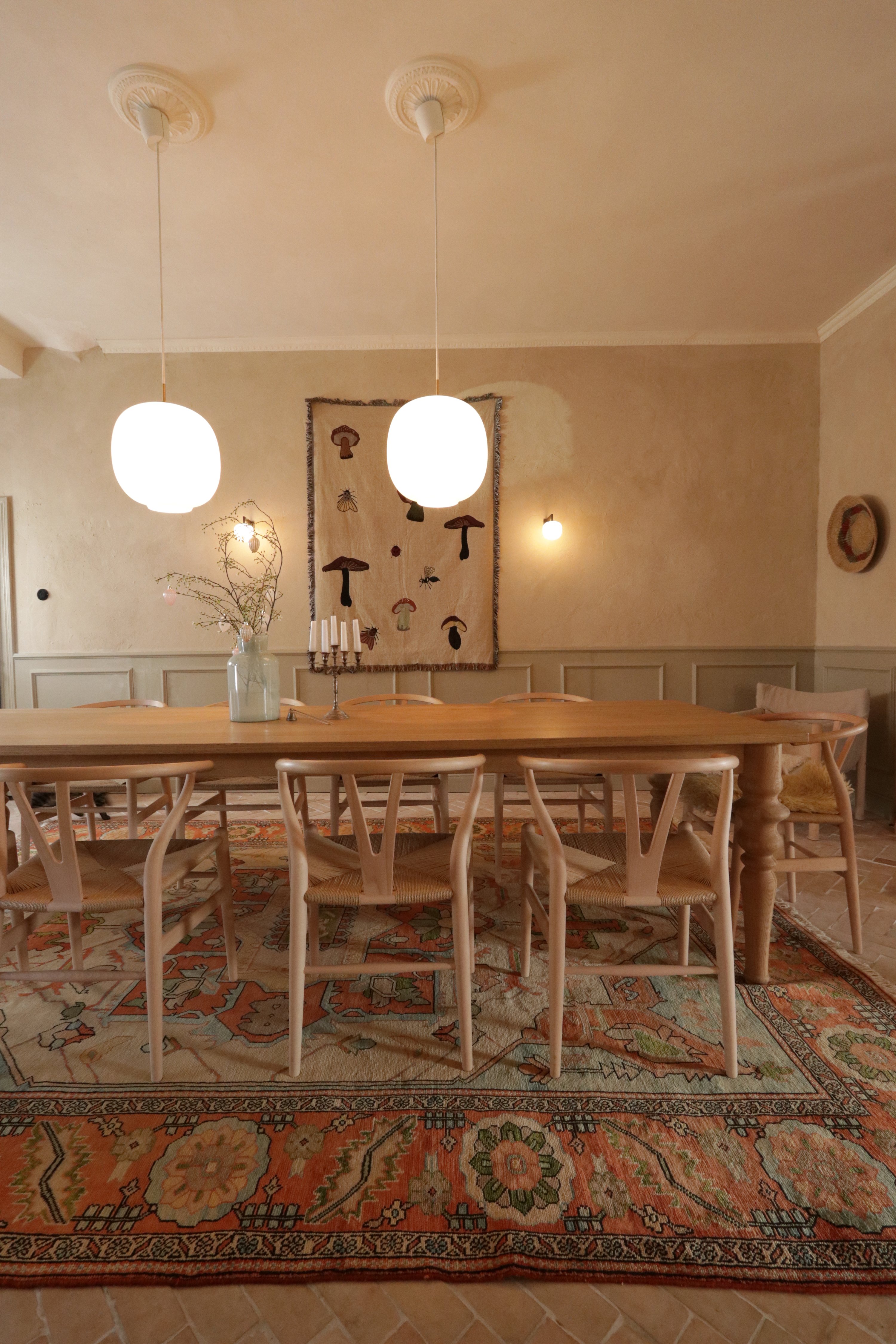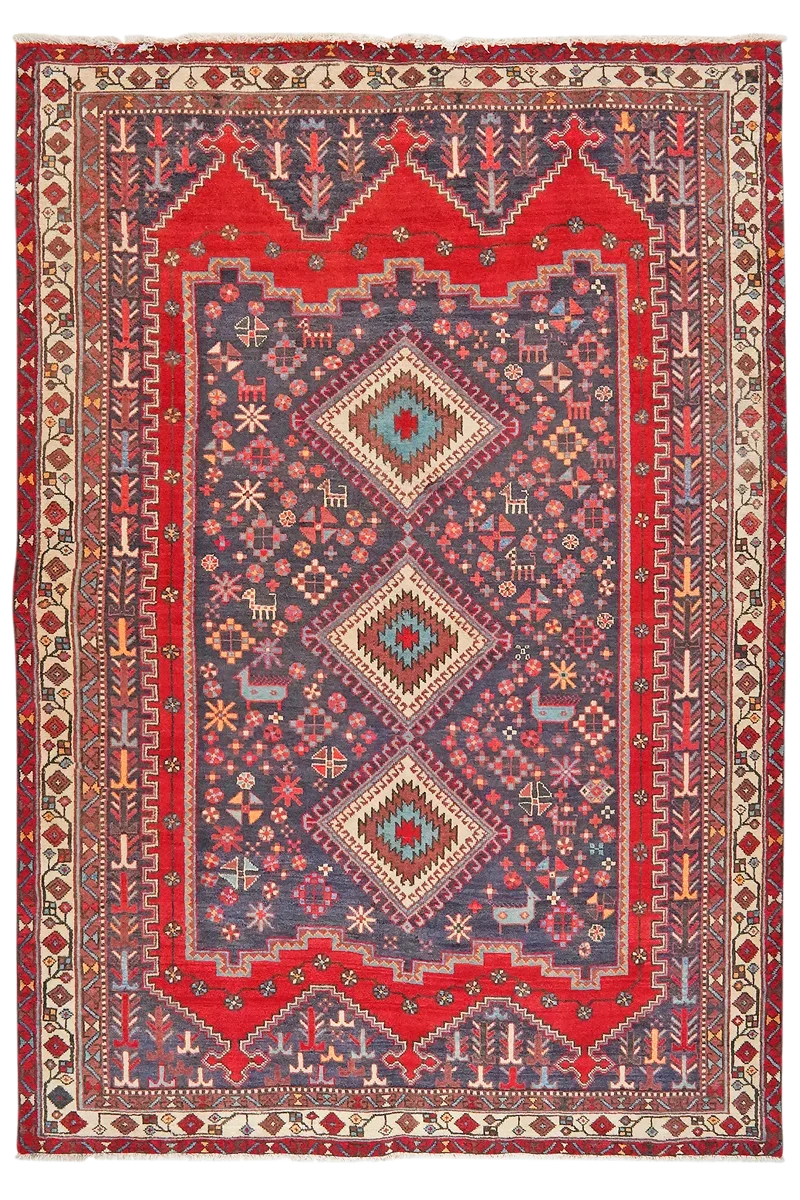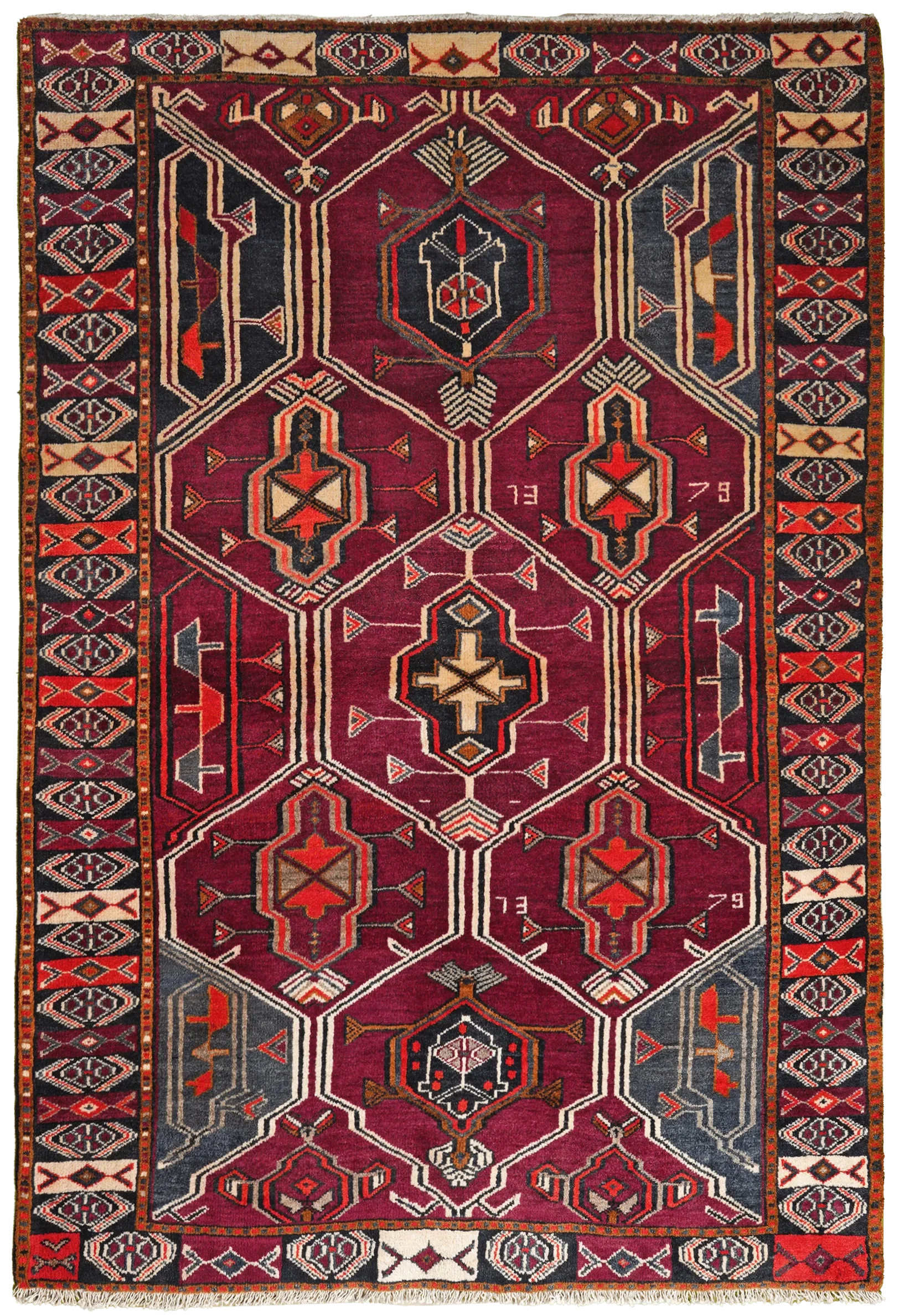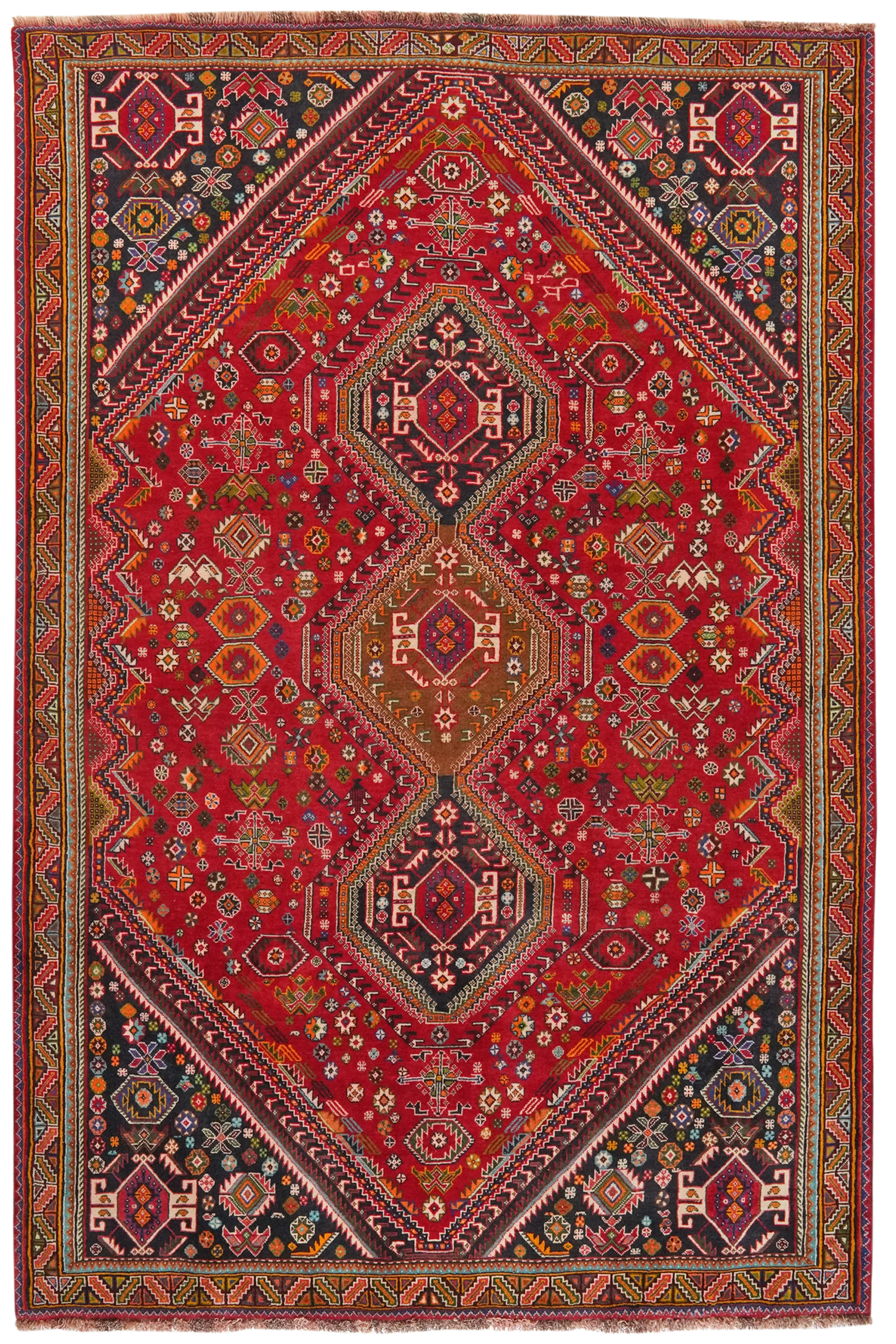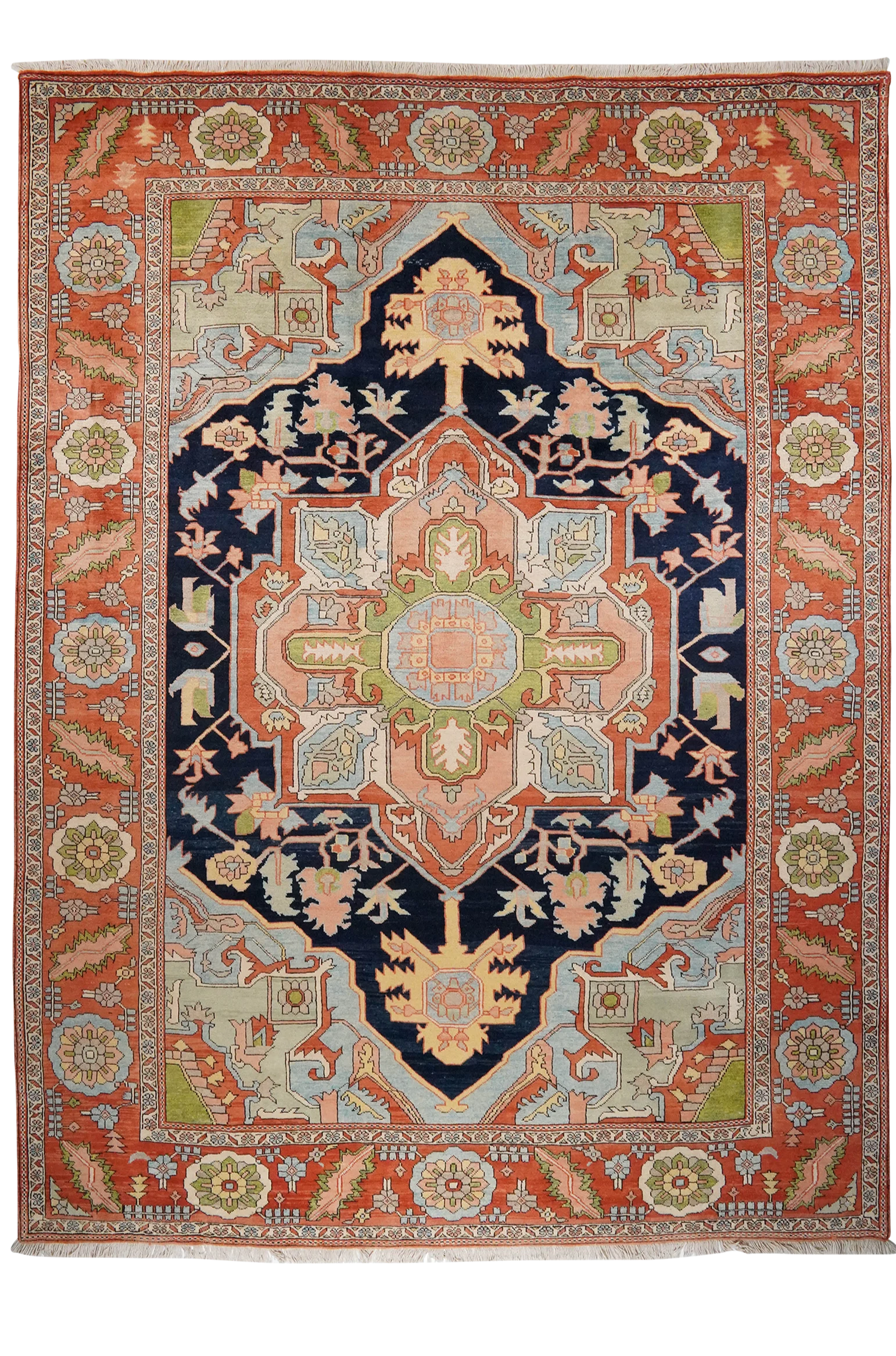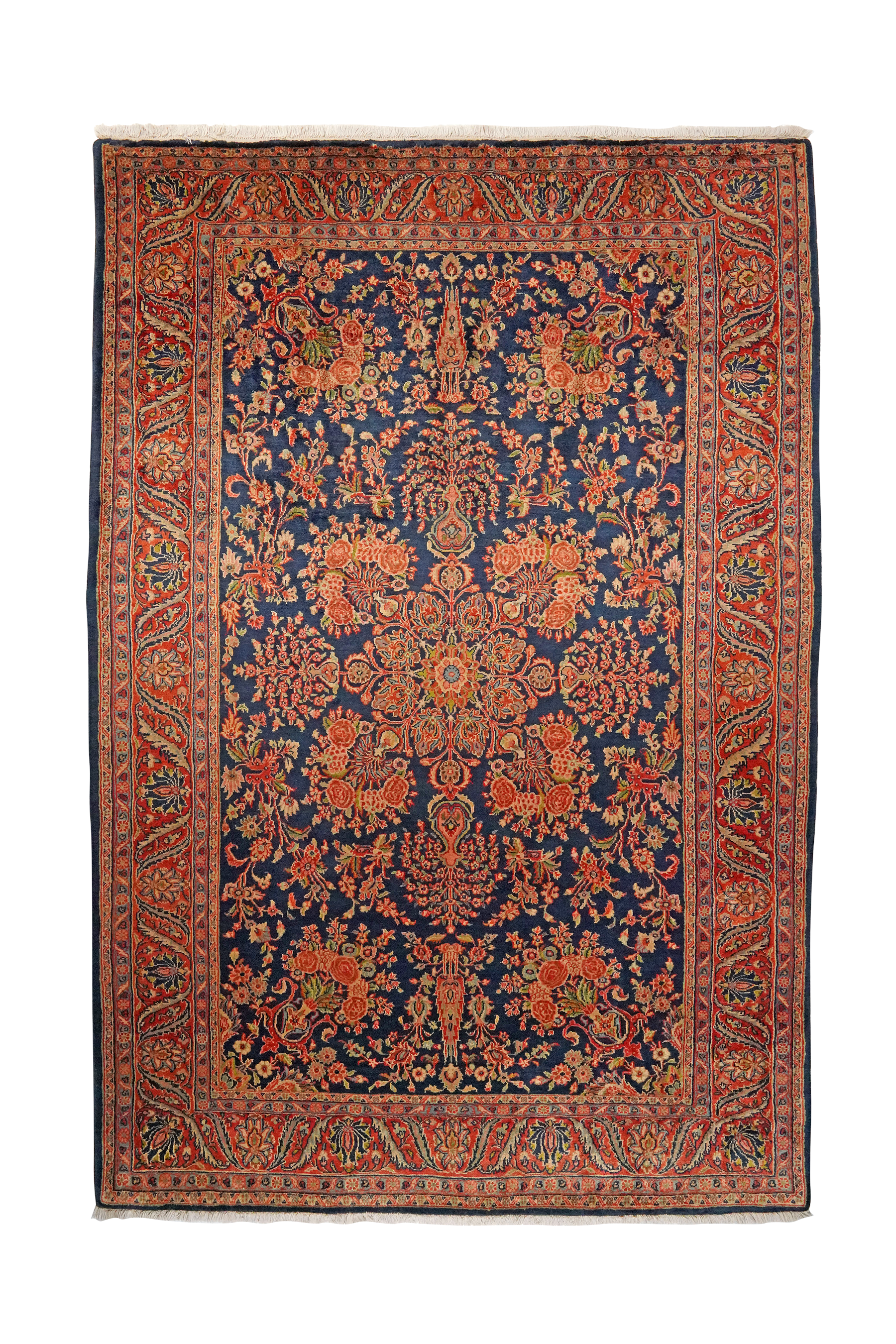
Ekbatan
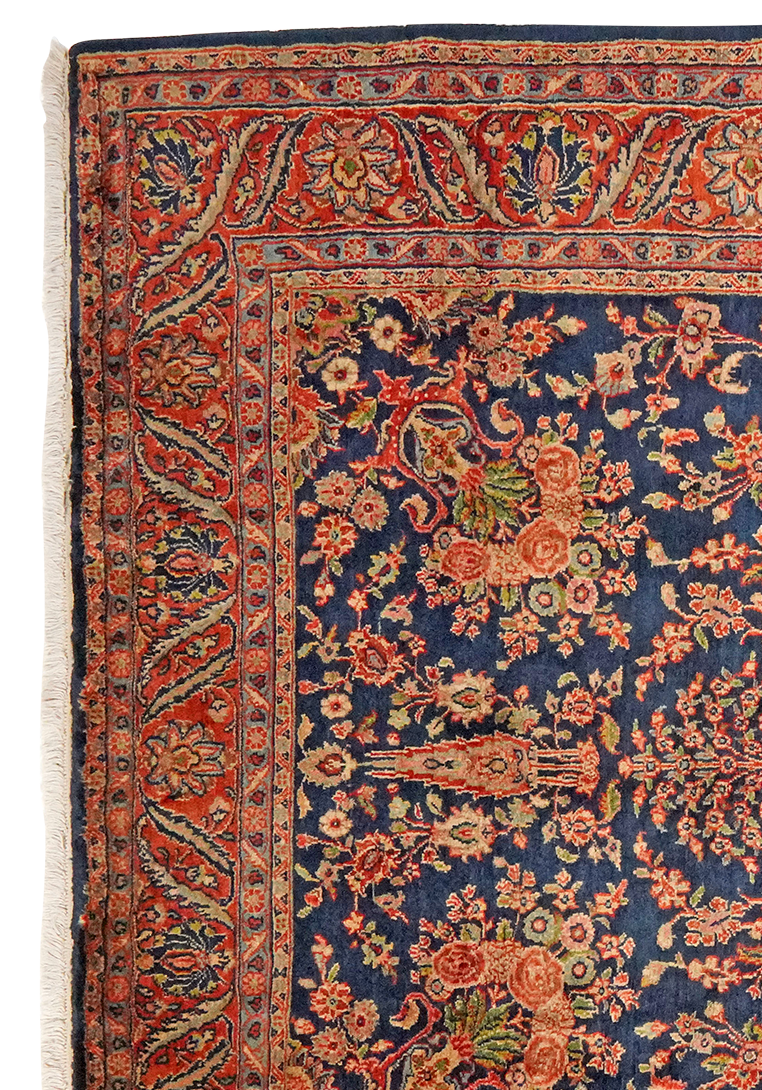
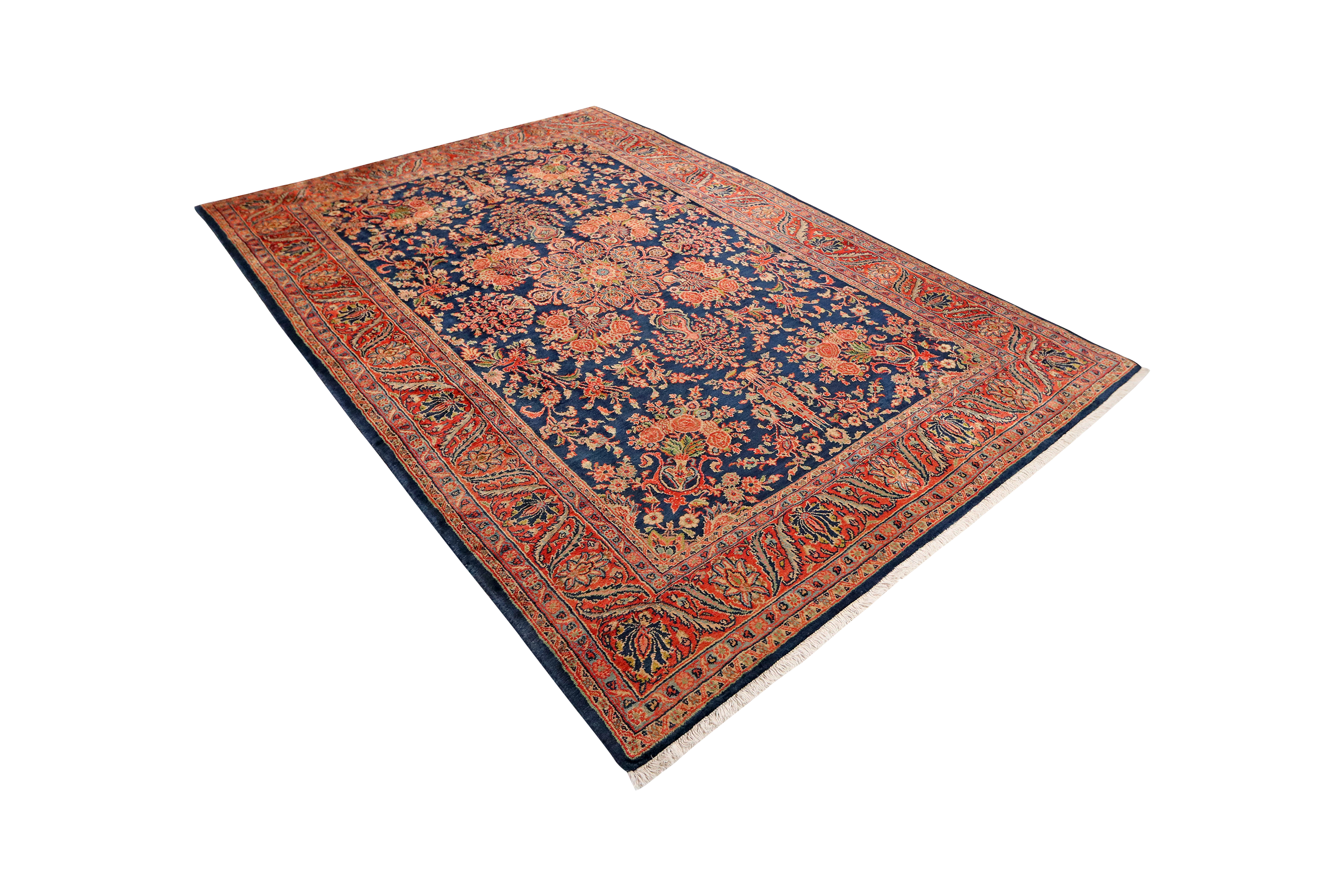
| Kategorie: | Ekbatan |
|---|---|
| Length (in cm): | 293 |
| Width (in cm): | 197 |
| Sqm: | 5.77 |
| Pile (in mm): | approx. 10 |
| Weight (in kg): | ca. 23.08 |
| Knots/m²: | 250,000 - 360,000 |
| Sizecode: | 200x300 |
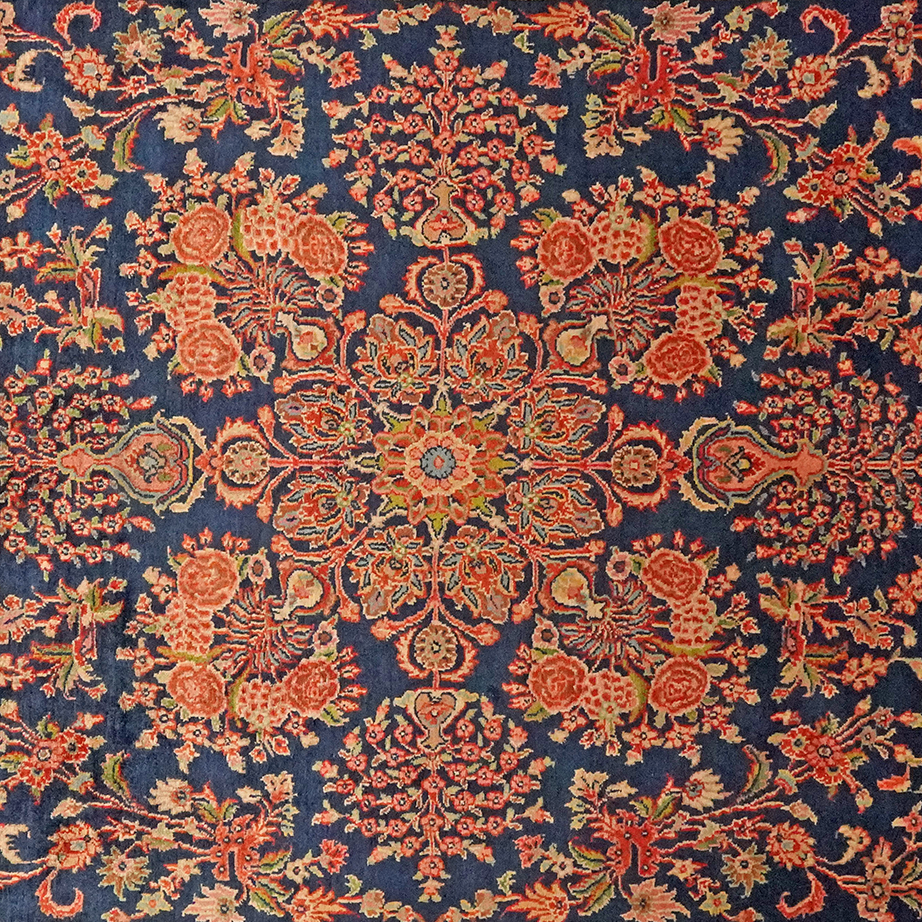
| Color: | Blue |
| border: | Red |
| Pattern: | medallion |
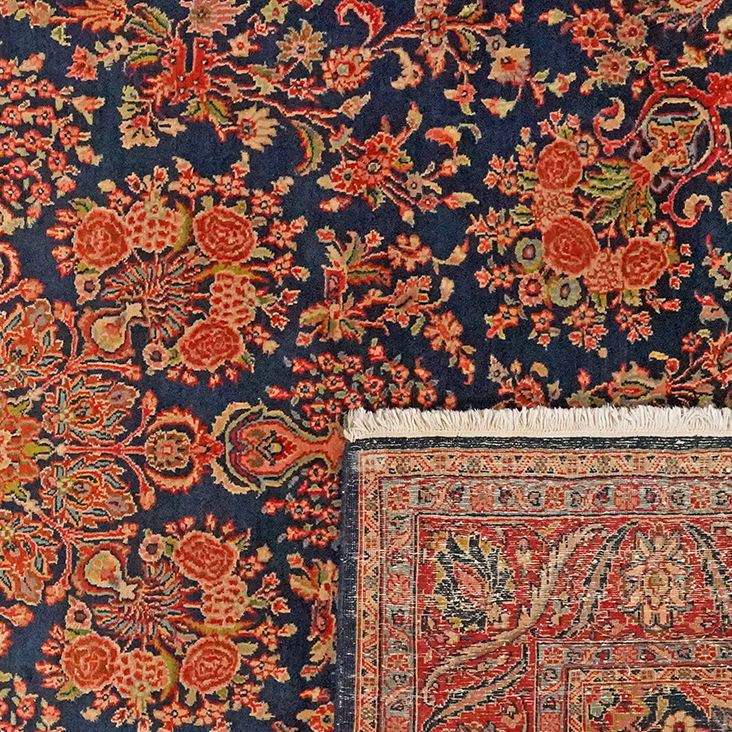
| Usable area: | 100% virgin wool |
| Type of manufacture: | Handgefertigt |
Rugtales Tribal
Experience the fascinating world of Rugtales Tribal! Each rug carries the soul of nomadic adventures and the essence of village life. Crafted from the most powerful threads of ethnic tradition, they unfold a story full of passion and authenticity. In this world, every pattern tells a tale of freedom, courage, and cultural diversity. Rugtales Tribal - unleash the magic of nomadic life and discover true craftsmanship!

Certifications
It is incredibly important to us to financially and socially support the countries from which we source our rugs
Tribal rugs are handwoven carpets made by nomadic or semi-nomadic tribes such as Qashqai, Bakhtiari, Kurdish, Turkmen, and Afshar. They feature bold geometric patterns, natural dyes, and strong wool, giving them a rustic and authentic look.
Tribal rugs are more rustic, with geometric motifs and looser weaves. City rugs are finer, more detailed, and made in large workshops. Tribal rugs show more character and individuality because each piece reflects the tribe’s traditions and the weaver’s creativity.
Yes. All genuine tribal rugs are handwoven on traditional looms using wool from sheep raised by the tribe itself. Slight irregularities are normal and prove authenticity.
Most tribal rugs are woven using 100% hand-spun wool, often dyed with natural plant-based dyes. The foundation may be wool or cotton depending on the tribe.
Absolutely. Tribal rugs are known for strong wool, tight knots, and a dense structure. They are suitable for living rooms, hallways, kitchens, and homes with pets or kids.
These rugs are woven on portable looms in tents or outdoor settings. Unevenness, slight curves, or imperfect symmetry are typical characteristics — and they add to the charm and authenticity of a tribal rug.
Many tribal weavers use natural dyes from plants, roots, and minerals. These dyes age beautifully and give tribal rugs their warm, earthy tones.
Typical motifs include diamonds, animal figures, stars, flowers, and protection symbols. Each tribe has its own design language and cultural meaning behind the patterns.
Yes. Tribal rugs pair perfectly with minimalism, boho, Scandinavian, rustic, and modern interiors. Their geometric forms and earthy colors add warmth and personality to any space.
Vacuum gently and avoid brushing fringes. For spills, use cold water and mild soap. For deep cleaning, choose a specialist who works with handmade Persian or tribal rugs.
The price depends on the tribe, age, rarity, wool quality, knot density, and whether natural dyes were used. Qashqai, Kurdistan, and old Turkmen pieces are often more valuable.
Yes. Antique or semi-antique tribal rugs are highly collectible because they preserve original weaving traditions and natural dyes that are no longer common.